Yaskawa Humanoid Robot: Executive Aims to Launch by 2030, but Task-by-Task Training Remains a Hurdle
Yumie Kubota, a director and executive officer at Japan's Yaskawa Electric and General Manager of its AI Robotics Department, said in an interview given by 20 November 2026 that Yaskawa intended to bring an AI-equipped humanoid robot to market by 2030. She also cited the effort needed to train robots one task at a time as a challenge. How the company will apply technologies that could reduce that effort to its humanoid has not yet been shown.
Key points
- What was said: The executive in charge aims to launch by 2030 and said the timing could be brought forward in response to customer requests
- Technology base: Wholly owned subsidiary Tokyo Robotics' technology will be used, with tasks in tight spaces such as farming in view
- The challenge: Technology for robots to learn and act on their own is still developing, and teaching each task takes effort
- What to watch: Plans to apply partners' technology to the humanoid, and figures showing how much training effort is reduced
From a reported "around 2030" to the executive's own words
A report that Yaskawa planned to launch a humanoid robot around 2030 had already appeared in October 2026. That report said the robot's lower body would be a wheeled cart rather than two legs, but it was not a company announcement.
This time Kubota, who heads the AI Robotics Department, said Yaskawa intended to bring the robot to market by 2030. She said the timing could be brought forward depending on customer demand, and that Yaskawa aims to catch up with the US and Chinese makers that are ahead and to win market share. This was a statement in an interview, not a formal company announcement.
What is new is the development base and the challenge. As the base, she cited technology from Tokyo Robotics, a humanoid robot start-up Yaskawa acquired in 2025. As the challenge, she cited the effort of training robots one task at a time. She said Yaskawa would explore solutions through collaboration with Fujitsu and US-based NVIDIA.
The target is work existing robots cannot reach; the robot's specifications are undisclosed
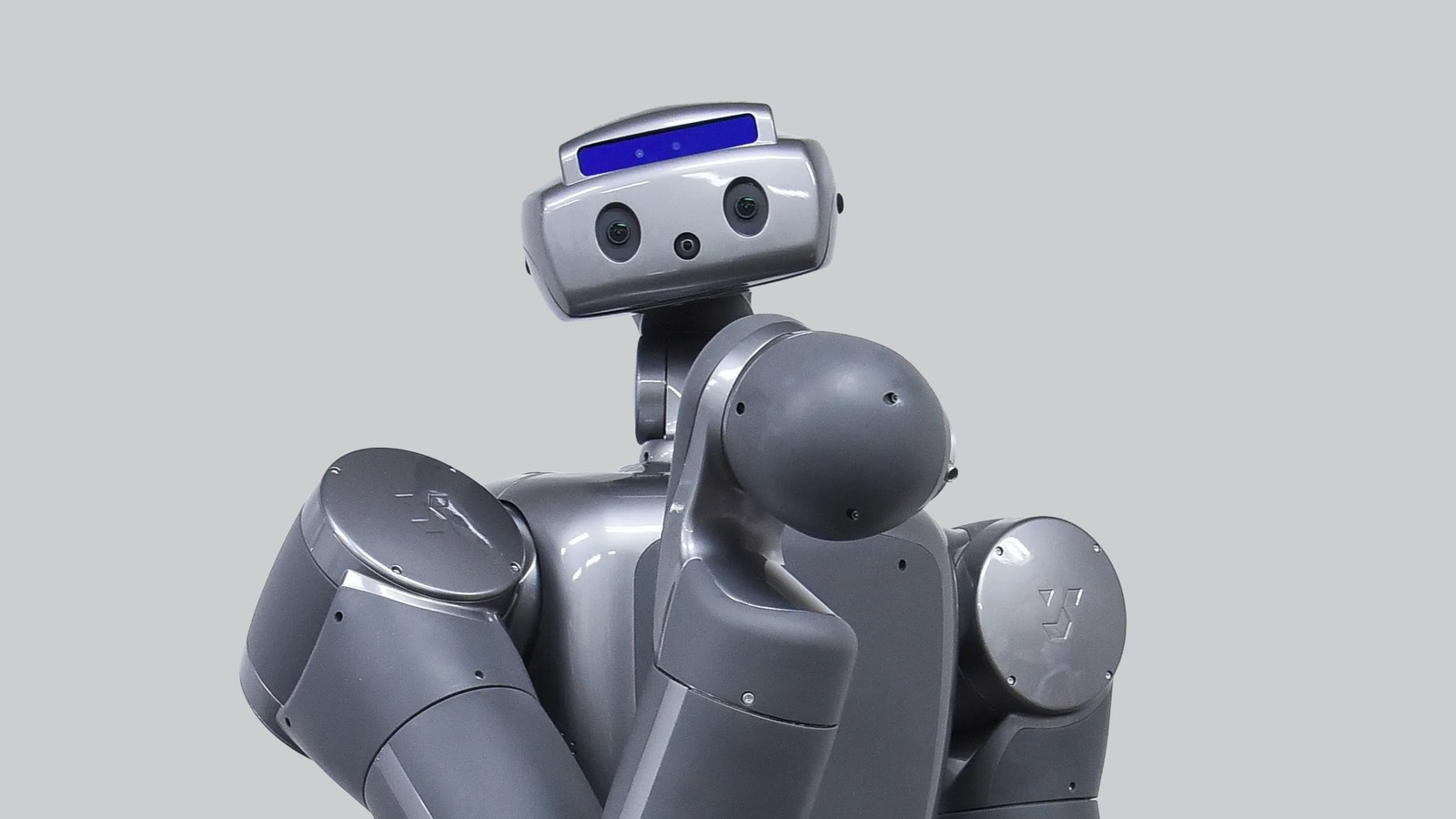
Tokyo Robotics, founded in 2015, develops humanoid robots, and its company profile lists Yaskawa Electric as its sole (100%) shareholder. Its "Torobo" humanoid, still under development, is about 1.6 metres tall, close to human size, and has two seven-axis arms, which move much like human arms, on an omnidirectional wheeled base. Torque sensors, which measure applied force, are fitted at every joint in the arms and waist, so the robot can adjust its force while handling objects.
The wheeled configuration matches the lower body described in the October report. However, it has not been disclosed whether the robot to be launched by 2030 will share Torobo's configuration or specifications. Kubota said she wants AI robots to take on work that existing robots cannot automate, and cited farming, where flexible movement in tight spaces is needed, as one possible use.
The Yaskawa humanoid robot challenge: teaching each task takes effort
According to Kubota, technology that lets robots learn and act autonomously is still developing, and teaching robots each task one by one takes time and effort. Yaskawa has said that conventional industrial robots, which replay motions taught by a person (the "teaching playback" method), struggle with some tasks, and it is developing ways to generate robot motion with AI.
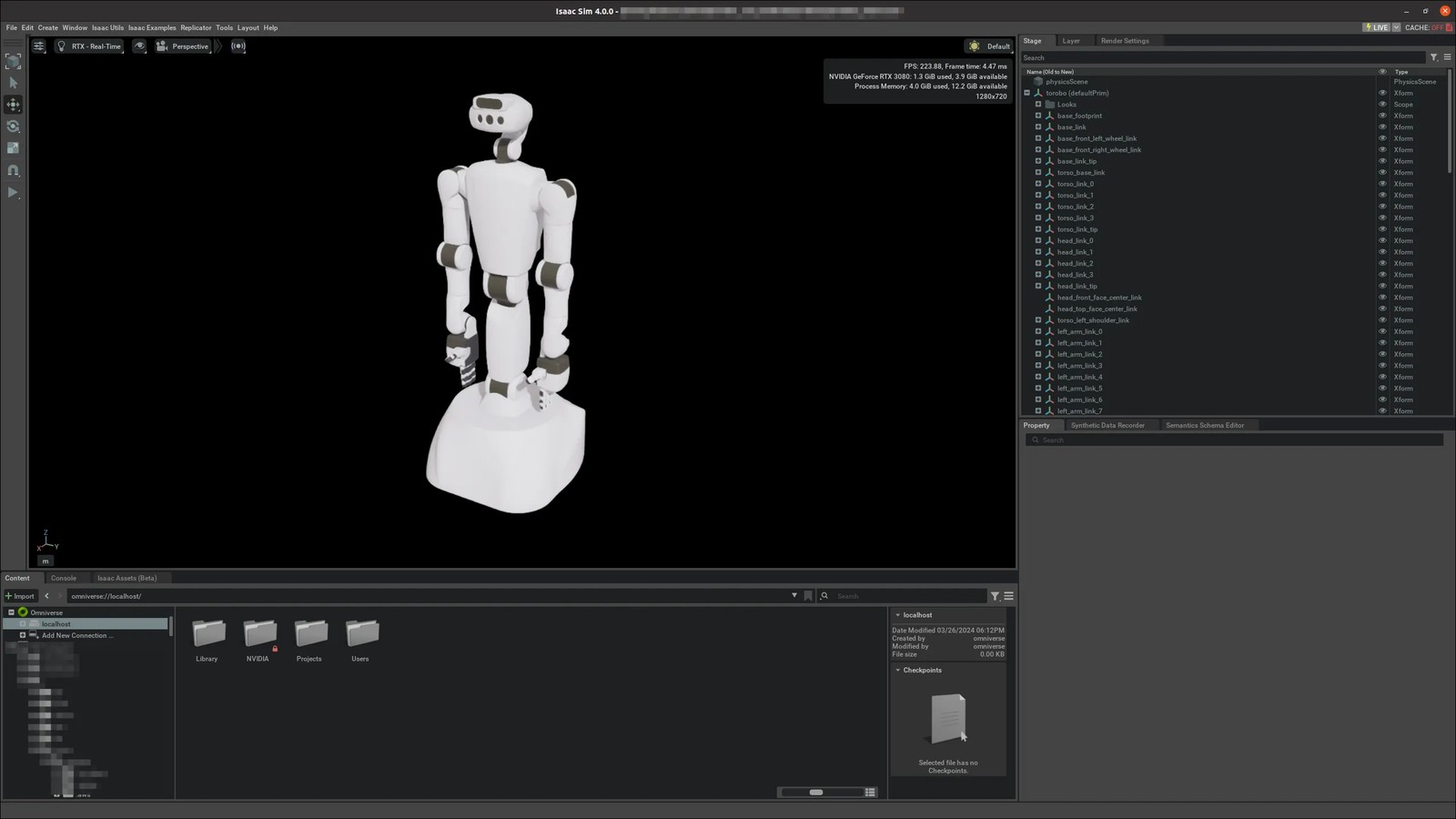
Several related projects have been announced. For "MOTOMAN NEXT", an autonomous AI robot launched in 2023, a June 2026 technical report described training an AI model for a box-packing task inside an NVIDIA simulator. In July, Yaskawa and SoftBank announced a demonstration that, they said, made the development process "dramatically more efficient", from collecting robot motion data to AI training and evaluation and feeding results back to the robot, though no figures such as time saved were given. Also in July, Yaskawa said it had developed a system linking MOTOMAN NEXT with Google DeepMind's generative AI so that the robot plans its own work steps, but it has not disclosed where it will be applied or when it will be offered.
These projects address different issues: training in simulation, a more efficient development process, and automatic generation of work steps. All are initiatives involving MOTOMAN NEXT rather than evidence from the planned humanoid, and the company has not shown how they will be used in the 2030 humanoid or how far they will reduce the effort of teaching each task.
The Fujitsu platform initiative remains at the business-study stage
Fujitsu, which Kubota named as a partner, announced in July 2026 that it had begun studying physical AI business with FANUC, Yaskawa Electric and Kawasaki Heavy Industries, incorporating NVIDIA technology. Physical AI refers to AI that perceives the real environment and acts through machines. Fujitsu said physical AI requires an AI infrastructure built on high-quality data from the shop floor, and that there are limits to what a single company can develop and spread on its own.
The initiative also aims to make it more efficient to train robots in simulation and transfer the results to real machines. It remains, however, at the business-study stage, and a technology-development and commercial roadmap has yet to be drawn up. Its relationship to the 2030 humanoid, whether in adoption or timing, has not been stated.
A common platform study joined by three major robot makers
Fujitsu's study aims to develop common software for physical AI and hardware interface specifications so that different robots and equipment can be linked more easily. It plans to offer the result as an open platform together with participating companies and research institutions.
If the platform is realised, sites that combine robots from different makers could find it easier to connect them. It is not clear, however, whether the companies will share training data or methods for teaching tasks.
2030 remains a launch target, with limited evidence on execution
What can be confirmed at this stage is that the executive in charge intends to launch by 2030 and has named the effort of teaching each task as a challenge. No plan has been disclosed for applying the results of partner projects to the humanoid, and no figures have been given showing how much training effort can be reduced. 2030 should therefore be read as a launch target, not as a sign that commercialisation has become more certain. Until quantitative evidence emerges, such as reductions in training time or in the amount of data required, it remains a target set out by the executive.