Japan's Yokogawa Adopts Maxell Solid-State Battery: First PLC Design Win for the Cell
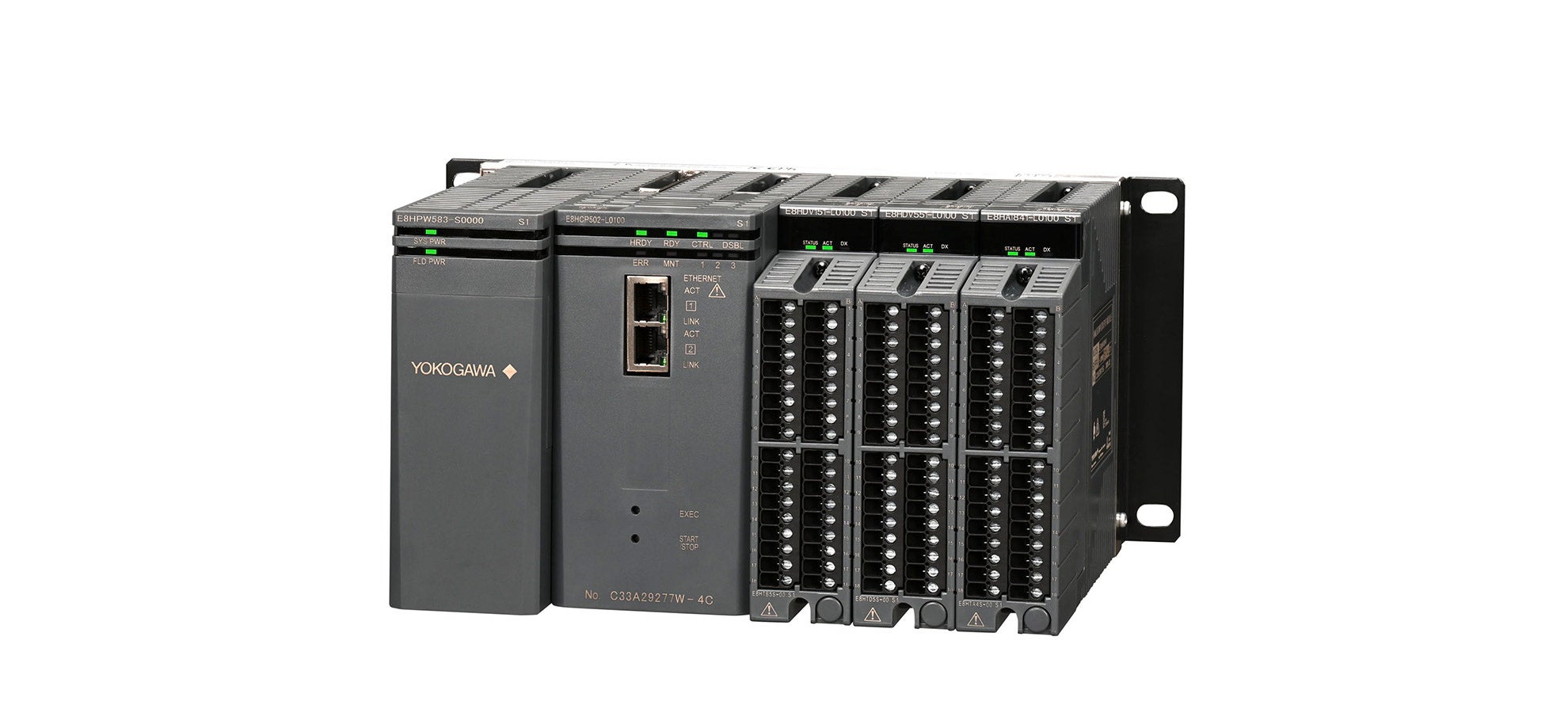
Japan's Maxell says its "PSB401010H" solid-state battery has been adopted in a programmable logic controller (PLC) for the first time, in a new Yokogawa Electric product that went on sale on 26 November 2026. The cell supplies backup power to the controller's real-time clock during a power loss so it keeps its time data, a job normally done by a single-use battery that requires periodic replacement, so its value lies in reducing replacement work and the risk of associated equipment downtime rather than in energy density. The open question is whether this design win can lead to enough repeat orders to move Maxell materially towards its FY2030 sales target.
- What was decided: Yokogawa adopted Maxell's "PSB401010H" as the clock-backup battery in its new PLC, which Maxell calls the first PLC adoption
- What it is: The PSB401010H is an 8 mAh cell measuring 10.5 × 10.5 × 4.0 mm, used in a controller aimed at small and mid-sized process plants
- The gap: Maxell's solid-state battery sales are a few million US dollars, against a target of about US$190m by FY2030
- What to check next: Whether other PLC and robot makers follow Yokogawa, and how Maxell's disclosed solid-state battery sales develop
Yokogawa marks the cell's first product-level PLC adoption
Before Yokogawa's launch, the "PSB401010H" had been used in factory trials and in other products. Subaru began trial use of a power module carrying the cell in industrial robots and PLCs at its Oizumi plant in Gunma Prefecture in August 2025. Kyocera started a similar trial on robots and their controllers at its Kagoshima Sendai plant in January 2026. The cell is also used in Nikon's multi-turn absolute encoder and in the "iXAM Vision Engine" image-recognition unit.
Yokogawa's adoption moves the cell from factory trials into the design of a controller offered for sale. A controller maker has built the cell into the CPU module of a new product it sells, rather than a user testing it on a few machines. The "OpreX Universal Autonomous Control System R1.01" currently comprises only its basic package, the control node lite model. Yokogawa says it will add greater robustness and autonomous control functions later.
Separately, Maxell said on 14 October 2026 that mass production of four backup-module models was scheduled to begin in early November, for sale to industrial-equipment customers in Japan. These are modules built around the cell, designed to replace existing single-use batteries.
Replacing a clock-backup battery can still require equipment downtime
A PLC is an industrial computer that operates equipment according to sensor signals. Most carry a real-time clock (RTC) that keeps time data when power is cut, and the backup source is usually a single-use primary battery. Replacing it can require the equipment to be stopped, which Maxell says may lower utilisation, and operators must also check remaining charge and replacement timing on a schedule. Subaru says such equipment typically needs a new battery every one to two years, and the spent cells become industrial waste.
Yokogawa says that with a solid-state battery in the CPU module, battery replacement is unnecessary for many years. Its product page adds that the cell carries an extremely low risk of leakage, fire or explosion.
Yokogawa targets high-performance chemicals, renewable energy, pharmaceuticals, food, water and wastewater, electrical and electronic equipment, and batteries. Typical uses include energy management systems, pure steam generators and water-for-injection systems. In such applications, replacing a backup battery may require the affected equipment to be taken offline, adding maintenance work and potentially interrupting part of a controlled process.
The crux: a tiny cell must become a business of scale
Nominal voltage is 2.3 V and standard capacity is 8.0 mAh. It weighs 1.4 g, mounts on a circuit board by reflow soldering, and can be charged between -20 and 115 degrees Celsius and discharged between -50 and 125 degrees Celsius. Yokogawa has supplied about 31,000 CENTUM distributed control systems across 120 countries, which gives the adoption signalling value, although that installed base is not a disclosed addressable market for the new PLC. Neither company has disclosed how many cells go into each controller, the purchase price or any volumes, so the revenue from this one adoption cannot be estimated.
The current sales base remains far below Maxell's FY2030 target. In March 2026, Maxell's solid-state battery sales were reported at only a few million US dollars, while the company aims for about US$190m in the year ending March 2031 (FY2030). Fuji Keizai forecasts that the global solid-state battery market will reach about US$55bn in 2045, but that figure includes large uses such as vehicles and says nothing about PLC backup power.
Maxell's president, Keiji Nakamura, sees modules as the short-term lever. If each robot carries four modules, a robot could use up to 20 cells, so demand for the cell itself would rise with module sales. That is the company's own estimate, not a result. The path to the target therefore runs through multiple design wins across PLCs, robots and encoders, rather than through this single adoption; the value of each win will depend on unit volumes and the number of cells used per system.
Nakamura also said Maxell intends to keep its manufacturing process know-how proprietary and will initially seek a position in Japan, Europe and the US.
Conditions: field reliability and a longer list of design wins
Three conditions will decide how far this spreads. The first is proof over time. The controller has only just gone on sale, and confidence in a long maintenance-free life will depend on accumulated field data alongside accelerated-life testing. The second is acceptance by equipment designers. Unlike a primary cell, a rechargeable cell requires a charging circuit, and both types must be designed within their specified temperature limits. The third is repetition. The Subaru and Kyocera factory trials, Yokogawa's product-level PLC adoption and Maxell's standardised backup modules are different routes to market, and growth depends on additional design wins and disclosed volume shipments.
There is also a competitive backdrop. TDK, Murata Manufacturing, Taiyo Yuden and Panasonic Energy are also developing small solid-state batteries. FDK began sampling a new type in December 2025, and cited the difficulty of reading the market as a challenge. Maxell's Nakamura has said he would like adoption to spread somewhat faster.
Ripple effects: maintenance planners, equipment designers and primary cells
For plant maintenance, the proposed shift is from scheduled battery changes to a rechargeable backup source that Yokogawa says will not require replacement for many years. Fewer battery transport runs, fewer replacement man-hours and less discarded battery waste are the reasons Maxell gives for lower total cost of ownership. Maxell also says the cell supports systems in cold regions, hot regions and offshore sites where PLCs with primary batteries struggle, though Yokogawa's controller itself is rated for -20 to 70 degrees Celsius.
For designers of PLCs, robots and encoders, Maxell's backup modules offer output voltages matching the existing 3.6 V thionyl chloride lithium (ER) and 3.0 V manganese dioxide lithium (CR) primary cells. The matching voltages are intended to ease replacement of ER- and CR-type backup batteries, although equipment-level redesign needs will vary. The four models offer rated capacities of 11 to 22 mAh and an expected service life of more than 10 years.
For incumbent primary-cell suppliers, the modules target applications now served by 3.6 V ER and 3.0 V CR batteries. Any displacement of those batteries will depend on equipment redesign and adoption volumes, neither of which has been disclosed.
Judgement: industrial equipment may come first, and Yokogawa is the signal to watch
Solid-state batteries are usually discussed in terms of electric vehicles. This case suggests that industrial backup power, where the benefit is less upkeep rather than a larger energy store, could become an early commercial foothold for Maxell's small solid-state cells. That is an interpretation, not a fact, and a single design win for an 8 mAh cell in a clock-backup application does not by itself prove a market.
Formal adoptions by other PLC and robot makers, volume shipments of the backup modules and Maxell's reported solid-state battery sales, measured against the target for the year ending March 2031, will test that thesis. Until those indicators move, Yokogawa is best treated as a technical validation signal, not as evidence that Maxell has built a business of scale.