'The Next Industrial Revolution Will Be Made in Japan': NVIDIA's Bet Behind a Fujitsu-Led Robotics Study
"The next industrial revolution will be made in Japan." On 16 July 2026, at an event in Tokyo, NVIDIA founder and chief executive Jensen Huang said exactly that — and pointed to Japan's factory floor. That day, four Japanese companies — Japan's Fujitsu, FANUC, Yaskawa Electric…
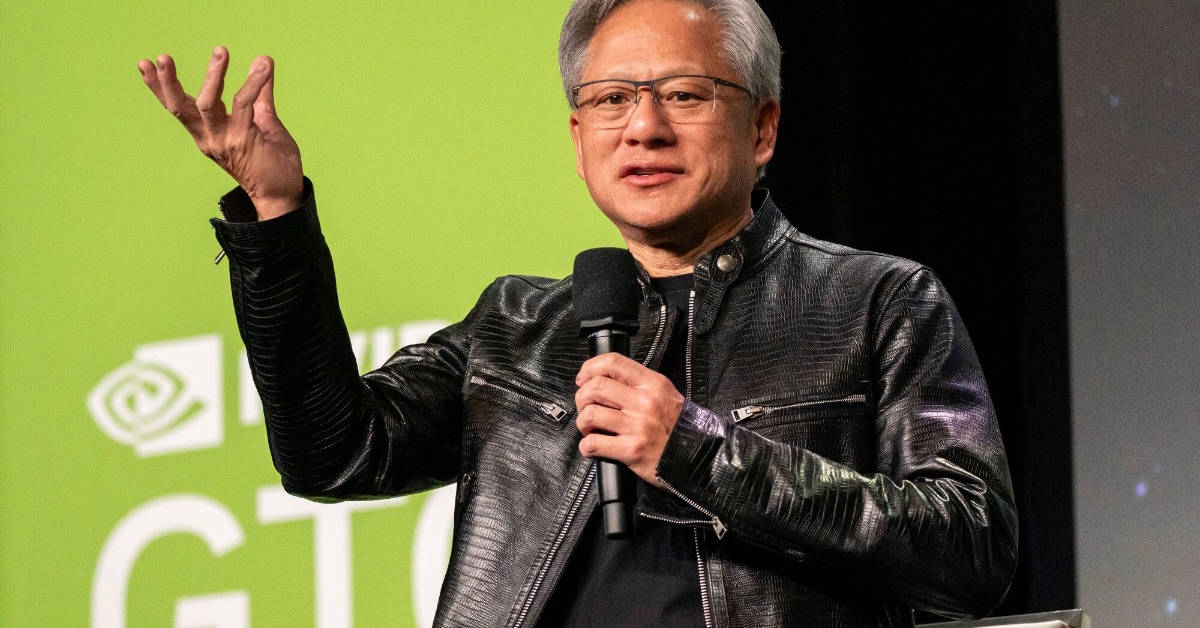
"The next industrial revolution will be made in Japan." On 16 July 2026, at an event in Tokyo, NVIDIA founder and chief executive Jensen Huang said exactly that — and pointed to Japan's factory floor. That day, four Japanese companies — Japan's Fujitsu, FANUC, Yaskawa Electric and Kawasaki Heavy Industries — announced they would begin a business study into deploying "physical AI," AI that thinks and moves on its own, with technical support from NVIDIA. The plan is to bind Japan's leading industrial robots and NVIDIA's AI platform onto a single control layer.
Read through Huang's own lens — why he believes the next revolution will originate in Japan — the alliance carries two things at once: genuine admiration for Japanese industry, and a careful strategy to run that competitiveness on NVIDIA's own platform.
Key points
- Fujitsu, FANUC, Yaskawa Electric and Kawasaki Heavy Industries announced on 16 July 2026 that they would begin a business study in physical AI, with NVIDIA providing technical support. What has been agreed is the start of a study — not a joint venture, and not a commercial launch.
- NVIDIA's Huang called the next industrial revolution "made in Japan," positioning the country's mechatronics and materials science as its greatest assets for the physical-AI era.
- The four will develop a shared platform linking business applications to robot control. Fujitsu calls it a "sovereign collaborative control platform" and frames it as an open foundation that multiple makers can build on.
- Application fields are divided: manufacturing (Fujitsu with FANUC), retail and logistics (Fujitsu with Yaskawa) and healthcare (Fujitsu with Kawasaki).
- The first version of the platform is to be installed at Fujitsu's Kasajima plant (Kahoku, Ishikawa Prefecture) by the end of September 2026 for in-house validation, provided to the three robot makers by December 2026, with a second version brought to market in 2027.
Why Huang is betting on Japan: 'Made in Japan means the highest quality and precision'
Huang's praise for Japan is specific. "Made in Japan means the highest quality and the highest precision," he said, singling out the country's craft culture — takumi (master craftsmanship), kaizen (continuous improvement) and kanban (just-in-time production control) — alongside its mechatronics, the fusion of machinery and electronic control. "Nowhere in the world practises this at as high a level as Japan," he added.
That admiration is tied to the nature of the technology itself. Physical AI is AI that autonomously perceives, decides, plans and acts in the real world. Unlike generative AI, which produces text or images on a screen, it does its work with a body — a robot — in physical space. Huang notes that physical AI is deeply bound up with physical laws such as gravity and collision. That, in his view, is precisely why Japan's decades of building and moving precise machines matter. He also cited materials science as a Japanese strength: the chemistry and materials that underpin a robot's structure and components are, on his reading, another foundation of physical AI.
The alliance gathers those Japanese players in one place. On stage were Fujitsu President and CEO Takahito Tokita, FANUC President and CEO Kenji Yamaguchi, Yaskawa Electric Vice Chairman and Executive Officer Masahiro Ogawa, Kawasaki Heavy Industries President and Executive Officer Yasuhiko Hashimoto, and Huang. FANUC is a global leader in the industrial robots and CNC (numerical control) systems at the heart of factory automation; Yaskawa in servo motors and AI robots; Kawasaki in robots ranging from industrial to medical. In the precision of arm motion, in positioning accuracy and in component technologies such as motors and encoders, Japanese firms have long held the edge. To Huang, this line-up is the best possible body on which to mount physical AI.
Tokita revealed that the five had shared a meal before the announcement, saying they had talked things over and concluded that "between the five of us, we can solve this." For the heads of Japan's leading robot makers to sit at the same table as the company that controls AI's computing platform is, in itself, an unusual sight for Japanese industry.
Huang's reading: physical AI is 'far harder' than language AI — so why unite now
Huang does not treat physical AI as an easy extension of what came before. "Physical AI is far harder than the AI that handles language," he says. The reason is safety. "Machines are heavy and can be dangerous. Mistakes are not permitted, so the technology has to operate at extremely high precision." A flawed sentence can be rewritten; a robot malfunctioning in the real world leads directly to accidents. It is here, in his logic, that the accuracy and reliability Japanese firms have accumulated carry weight.
Because it is hard, Huang argues for a shared platform and for speed. He has long said that in the physical-AI era "every industrial company becomes a robotics company." For a robot to adapt on the fly to unfamiliar situations, the old method of a human pre-programming every movement cannot keep up. In Yaskawa's own phrase for its AI robots, the challenge is to automate the domain "you cannot write with if-statements" — tasks such as picking randomly piled parts or handling soft objects, where the branching logic cannot be written out by hand. That requires the infrastructure to train AI on large volumes of data and let it learn by trial and error in a virtual space — which is where NVIDIA's strength lies and where Japanese firms struggle to go it alone.
That is why Huang is in a hurry. "We have to move fast. This is a once-in-a-generation opportunity. We must not miss it." Basic technical superiority is not enough; speed to commercialisation decides the outcome. His message is plain.
The shared platform is what is meant to deliver that speed. What the four will jointly develop is the common software Fujitsu calls a "sovereign collaborative control platform." It is the layer that seamlessly joins the business-side plan on a factory or logistics floor — what to do, in what order and how — to the control that actually moves the robots, with NVIDIA's physical-AI technology built in. Rather than locking makers in, it is designed as an open foundation compatible with ROS 2, the software framework widely used across the robotics industry, and the Python programming language. The division of labour is concrete. According to Fujitsu, in manufacturing it will work with FANUC on optimising production plans and automating on-site adaptation; in retail and logistics with Yaskawa on automating transport tasks and reducing labour requirements; and in healthcare with Kawasaki on automating the transport of medicines and specimens and reception and visitor guidance.
What each side brings mirrors the balance of power between them. Fujitsu contributes its next-generation CPU "FUJITSU-MONAKA" and its physical-AI operating system "Fujitsu Kozuchi Physical OS," taking the business-planning and robot-control layers. NVIDIA supplies its world foundation model "Cosmos" — an AI model trained on how the physical world behaves; its industrial simulation and digital-twin platforms "Omniverse" and "Isaac" (a digital twin is a virtual replica of a real site); and its edge AI "Jetson," which runs on the device itself. Japanese firms hold the body and the business layer, but NVIDIA holds the computing platform that underpins the AI's learning and validation. The schedule is staged: the first version goes into Fujitsu's Kasajima plant (Kahoku, Ishikawa Prefecture) by end-September 2026 for in-house validation, reaches the three makers by December 2026, and an improved version comes to market in 2027.
It is worth stating the stage precisely. What has been agreed is the start of a business study — not the founding of a joint venture, and not the launch of a commercial service. The distance between Huang's "once-in-a-generation" excitement and something that actually ships is still long.
Huang's 'don't outsource intelligence' — and the paradox of a sovereignty run on someone else's platform
What best captures Huang's viewpoint is his reference to sovereignty. "Neither companies nor nations should outsource their intelligence," he said, adding: "Japan's intelligence is fundamental intellectual property for Japan. It should be developed here and nurtured here." Use foreign technology, but keep the intelligence it produces at home — that is the argument. It chimes almost perfectly with Fujitsu's repeated banner of a "sovereign collaborative control platform," because factory production data and hospital-floor data are the very stuff of corporate and national competitiveness.
Yet here lies a paradox. The one preaching against outsourcing intelligence is also the supplier of the platform on which that intelligence runs. Japanese firms hold the business-planning and robot-control layers; the core that handles the AI's learning and validation — the world foundation model, the simulation platform, the computing hardware — stands on NVIDIA's technology. It is a structure in which a platform that flies the flag of sovereignty depends, at its heart, on a foreign one. Huang's "sovereignty" argument rests on this double structure: it urges Japan to keep its intelligence assets at home while NVIDIA holds the ground on which that intelligence runs.
This is also Huang's consistent strategy. He is not trying to win any single robot. By holding everything from the computing hardware to the models to the development software, he holds the very ground on which all robots run — that is NVIDIA's winning move. If "every industrial company becomes a robotics company," the one who owns the platform they all stand on is strongest. His praise for Japanese firms is likely genuine, but so too is the calculation of pulling Japan's strong manufacturing base onto his own platform. Whether "sovereignty" is real for Japan will be decided by which rights it can hold: the platform's specifications, the production data gathered from the floor, the business know-how (intellectual property) built on top, and the point of contact with customers. If Japanese firms can keep these, the core of leadership remains even with a borrowed computing platform. But so long as control over pricing, specification changes and supply sits with NVIDIA, a banner alone will not make sovereignty real.
That this is no stand-alone deal also speaks to the scale of Huang's design. The announcement came as part of a public-private "Physical AI Initiative" launched the same day by NVIDIA and Japan's Ministry of Economy, Trade and Industry, with Economy Minister Ryosei Akazawa attending. The same framework lines up Toyota, which uses NVIDIA's platform for factory digital twins; Hitachi, partnering NVIDIA on critical infrastructure; SoftBank, building AI networks; and Riken, deploying large volumes of GPUs. Huang has arrayed Japan's major players — from industrial robots to finance, drug discovery and infrastructure — across NVIDIA's platform. The four-company alliance is the industrial-robot chapter of that wider design.
Who captures the value: how a shared platform shifts the axis of competition
If Huang's world reaches implementation, the axis of competition in industrial automation shifts. Japanese industrial robots have long differentiated on hardware precision and reliability. But in the physical-AI era, value moves to how cleverly a robot adapts on site, and the centre of gravity moves from the arm itself to the software and learning platform that move it. What Huang holds is precisely that destination.
That shift divides the standing of those who sat at the table. Fujitsu, which oversees the shared platform, and NVIDIA, which holds its core, occupy the high-value positions — the business layer and the AI layer. The three robot makers, by contrast, risk looking more like hardware suppliers the more their robots are handled within one common framework. If the platform is truly open and every maker's robot rides on it equally, users find it easier to choose hardware — but makers become easier to compare on price and precision. To keep their value, the three must accumulate control know-how and deployment records unique to their own robots on top of the platform, becoming hard to replace. Dividing the fields into manufacturing, logistics and healthcare looks like a device to ease the friction of three rivals sharing one platform; if that line blurs, a contest for leadership within the alliance surfaces.
The implementation layer on the ground is affected too. If a shared platform spreads, part of the site-by-site customisation long handled by system integrators — the firms that assemble robots and production equipment on site — is absorbed into the platform. Standardising that work benefits users, but for the integrators who have earned revenue from it, it shifts value away from them. Building a shared platform reorders who holds added value and bargaining power — not only among makers, but among the firms that carry out implementation.
On the supply chain, the spread of physical AI lifts demand for computing hardware (GPUs), sensors and edge devices. The more autonomously a robot moves, the more it needs "sensory organs" such as vision and force sensing (measuring the force applied) and the computing hardware to process them. That, too, works to deepen dependence on NVIDIA. The more Huang preaches "don't outsource intelligence," the more, ironically, demand for NVIDIA's computing hardware grows. Whether Japanese firms can make sovereignty real turns on how many of their own options they can hold at this computing-and-sensor layer. The footing for differentiation lies in precision and reliability — and in the vast installed base of robots already bolted to factory floors. How smoothly physical AI can be mounted onto that existing base is Japan's route to holding its edge against later-arriving challengers.
What to watch: is 'made in Japan' a slogan or a reality
Huang urged that this is a "once-in-a-generation opportunity." The first test of whether that call becomes reality is the first-version installation at the end of September 2026. Fujitsu's in-house validation at the Kasajima plant — how far, and which tasks, can be automated — will decide whether the alliance moves from concept to something that runs. What matters is not the ideal but the numbers: manpower and time reduced, utilisation raised.
Beyond that, the question is whether the "scope" of standardisation and the "scope" of sovereignty can be made concrete by the December handover to the three makers. Will the robots of rivals FANUC, Yaskawa and Kawasaki really run equally on one platform? How much of the production data, business know-how and customer contact will Japanese firms hold, and how much will they leave to NVIDIA? Only when both scopes can be drawn in numbers and rights will Huang's "sovereignty" — and Fujitsu's — become substantive rather than remain a slogan.
"The next industrial revolution will be made in Japan" is at once the highest praise for Japanese industrial competitiveness and Huang's deft call to run that competitiveness on his own platform. Japan stands at the summit of industrial robots yet fell behind in the fight to hold their brains. The question is not to be intoxicated by Huang's words, but how far Japan can win back leadership over the brain from the strength of the body. Whether his call becomes Japan's reality — or Japan merely ends up running on NVIDIA's platform — is something the first robot to move autonomously at the Kasajima plant will quietly begin to answer.