Japan's Okuma Reports Record Half-Year Orders of ¥161.4bn, with Operating Profit Nearly Doubling
Japan's Okuma booked record orders of ¥161.4bn in the April-September 2026 period (first half of the financial year ending March 2027), up 44.4% from a year earlier, and operating profit rose 98.8% to…
Japan's Okuma booked record orders of ¥161.4bn in the April-September 2026 period (first half of the financial year ending March 2027), up 44.4% from a year earlier, and operating profit rose 98.8% to ¥12.0bn. Net profit grew 2.6-fold but included a ¥3.7bn gain on the sale of investment securities. The company points to demand from aerospace, defence and data-centre customers in the United States and Japan, while its sales to China fell by about a fifth. It left its full-year forecast unchanged. The question now is whether Okuma can turn record orders into second-half sales while holding the margin that improved in the July-September quarter.
Key points
- Consolidated orders for April-September 2026 were ¥161.4bn (up 44.4% year on year), a record. The order backlog stood at ¥144.7bn, about 40% above ¥103.0bn a year earlier.
- Sales rose 12.3% to ¥118.1bn and operating profit rose 98.8% to ¥12.0bn, lifting the operating margin from 5.8% to 10.2%. For July-September alone, the margin was 11.5%.
- Net profit rose 2.6-fold to ¥11.6bn, but a ¥3.7bn gain on investment securities was booked as an extraordinary gain. Operating profit is the better measure of underlying growth.
- Sales to the United States rose 26.5% to ¥34.7bn, while sales to China fell 20.9% to ¥18.2bn. China's share of sales dropped from 21.9% to 15.4%.
- The full-year forecast (sales of ¥260bn, operating profit of ¥26bn) stays at the level raised in August.
Orders accelerated in July-September, and margin improvement came before sales
Okuma announced its April-September 2026 results (first half of the financial year ending March 2027) on 4 November 2026. Orders and profit both rose sharply. The company says machine tool demand expanded across a wide range of industries and increased strongly in the second part of the half, mainly in the United States and Japan.
The quarterly split shows momentum building. Orders in April-June were ¥75.3bn (up 38.9% year on year). In July-September they reached ¥86.2bn, about 50% above ¥57.6bn a year earlier. Sales for July-September were ¥66.2bn, up only 9.3%, yet operating profit rose 71.5% to ¥7.6bn and the margin improved from 7.4% to 11.5%. Margin gains have come before the acceleration in orders shows up in sales.
The order backlog of ¥144.7bn equals 1.23 times first-half sales. Divided mechanically by average monthly sales in the half, that is the equivalent of about 7.4 months of sales, but the company does not disclose the backlog by delivery date.
A mechanical breakdown attributes most of the ¥6.0bn profit gain to gross margin
Net profit rose from ¥4.6bn a year earlier to ¥11.6bn, but that figure includes the one-off ¥3.7bn gain on investment securities. Operating profit, which reflects the core business, rose from ¥6.0bn to ¥12.0bn, nearly doubling.
Breaking down the income statement mechanically shows the structure. Gross profit increased by about ¥8.4bn, from ¥31.7bn to ¥40.2bn. Applying last year's gross margin of 30.2% to this year's higher sales gives an effect from higher revenue of about ¥3.9bn. The remaining ¥4.5bn or so comes from the gross margin rising to 34.0%. Selling, general and administrative expenses rose by about ¥2.4bn, so operating profit increased by about ¥6.0bn. On this calculation, more than half of the profit gain came from the higher gross margin rather than from sales growth.
The company said it improved the margin despite increased investment in human capital, higher material costs and persistently high freight costs, using production efficiency gains, expanded in-house manufacturing and the pass-through of costs into selling prices. It does not quantify how much each factor contributed, or how far currency and product mix played a part.
The US and Japan grew, as large Chinese projects ran their course
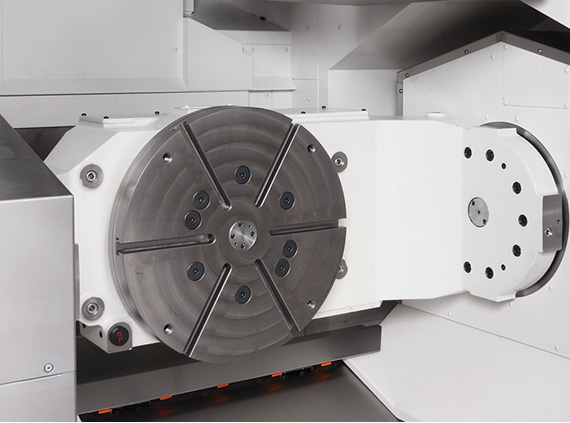
Okuma does not disclose orders by region, so the regional figures below are sales. Sales to the United States rose 26.5% to ¥34.7bn, lifting the US share of total sales from 26.0% to 29.4%. According to the company, demand in the US stayed strong among large customers in aerospace, space and satellites, defence, and data-centre and energy-related fields, and some small and mid-sized companies resumed capital spending. The growth in yen-denominated sales, however, mixes volume, price, product mix and exchange rates, and the disclosed materials do not show how much of the 26.5% reflects higher demand.
In Japan, the company says capital spending spread across a wide range of industries, including semiconductor manufacturing equipment, shipbuilding and general industrial machinery, in addition to aerospace, space, defence, and data-centre and energy-related fields. By location of Okuma's operating bases, operating profit in Japan rose from ¥2.0bn to ¥7.8bn and in the Americas from ¥1.5bn to ¥5.2bn. Profit by operating location covers a different scope from sales by customer location, so these figures do not show the profit margin on sales to the United States.
Sales to China fell 20.9% to ¥18.2bn. The company says the large investment projects that supported orders in the previous financial year have eased, while demand from semiconductor manufacturing equipment and general industrial machinery makers remained firm. In Europe, the automotive sector in Germany and elsewhere remained sluggish, but investment in aircraft and defence was active and the region was solid overall. By location of operating base, Europe recorded an operating loss of about ¥120m and Asia-Pacific an operating loss of about ¥50m.
Multitasking machines gain share, in line with the mid-term plan's direction
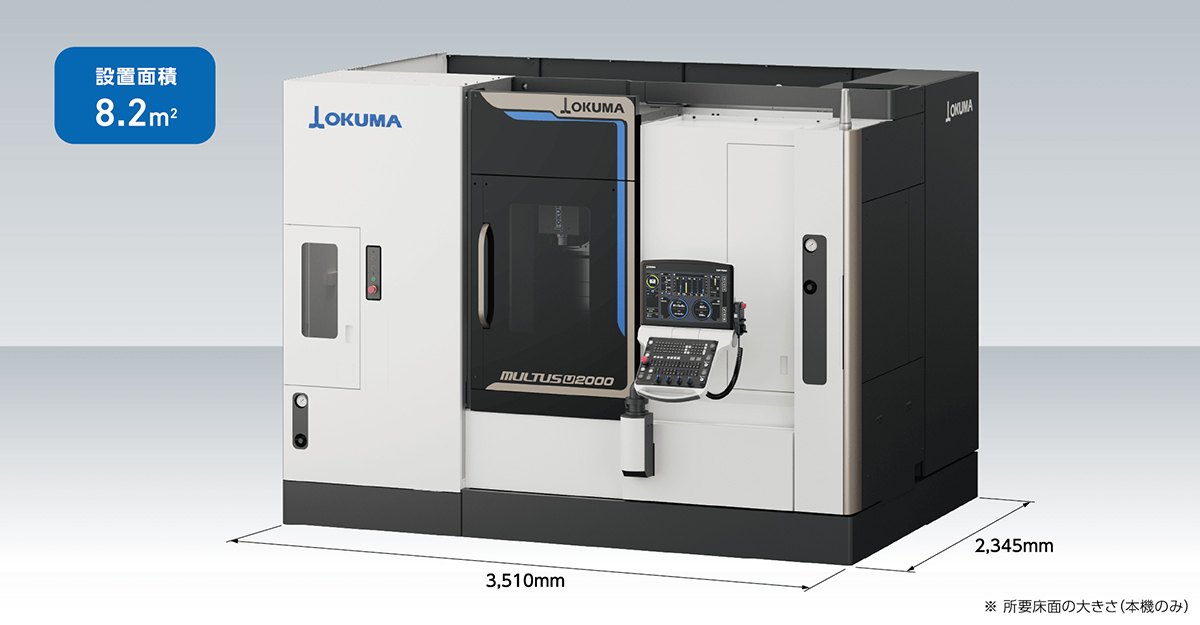
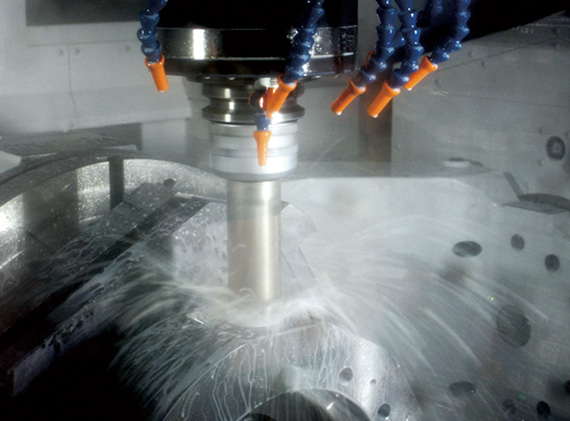
By product, machines that consolidate processes stand out. Orders for multitasking machines, which combine turning and milling in a single machine, rose 57.2% to ¥45.6bn, and their share of total orders increased from 26.0% to 28.3%. The backlog for these machines nearly doubled, from ¥19.1bn to ¥35.8bn. Orders for CNC lathes more than doubled to ¥25.4bn, and orders for machining centres rose 27.6% to ¥84.6bn. The multitasking share of sales also rose, from 26.6% to 28.6%.
Okuma's mid-term management plan, announced in May 2026, aims to raise the sales share of higher-margin machines such as five-axis machines and multitasking machines and multitasking machines and to build up maintenance service revenue. Aerospace and defence parts have complex geometries and demanding precision requirements, which suit machines that consolidate processes. The rising share of multitasking machines is in line with the plan's direction. The profitability of the orders booked and the durability of this demand are not disclosed, however, and only one half-year period of data is available so far.
The company is also strengthening its production and service set-up. At its new plant "Dream Site Engineered Solutions" in Konan, Aichi Prefecture, which began operating in January 2026, the plant centralises production of automated production lines and also assembles machine tools to cope with higher demand. At its US subsidiary in Charlotte, North Carolina, it has opened a "Global Repair Center" to repair spindles and controllers. The capacity added by the new plant and the actual service revenue have not been disclosed.
The second half requires about 20% more sales than the first
The company kept its full-year forecast at the level raised in August: sales of ¥260bn and operating profit of ¥26bn. Working back from first-half results, the second half needs sales of ¥141.9bn and operating profit of ¥14.0bn. That implies an operating margin of 9.8%, below the 10.2% of the first half. The required sales, however, are 20.1% above the first half, so the sales target is the harder hurdle. The order backlog of ¥144.7bn is close to the sales needed in the second half, but with no breakdown by delivery date, not all of it can be assumed to ship in the period. It is too early to judge the forecast's prudence from the margin alone.
The order outlook also remains uncertain. In August the company had raised its full-year order forecast to ¥276bn. First-half orders of ¥161.4bn already equal 58% of that figure, so if the forecast stands, second-half orders would be about 30% below the first half.
The next test is whether Okuma can convert the ¥144.7bn backlog into second-half sales of ¥141.9bn while holding an operating margin of 9.8%. Whether Okuma itself faces supply constraints, such as parts procurement, cannot be confirmed from the current disclosures. The third-quarter results will provide the first evidence of whether the 11.5% July-September margin is being sustained, and whether the gross margin improvement is temporary or structural.