University of Tokyo and Japan's Kyocera Test Temperature-Controlled Cutting Tool Using 76% Less Coolant in a Controlled Experiment
Researchers at the University of Tokyo in Japan and Japan's Kyocera have developed a cutting tool system with a built-in temperature sensor and internal cooling channels. It adjusts the coolant flow a…
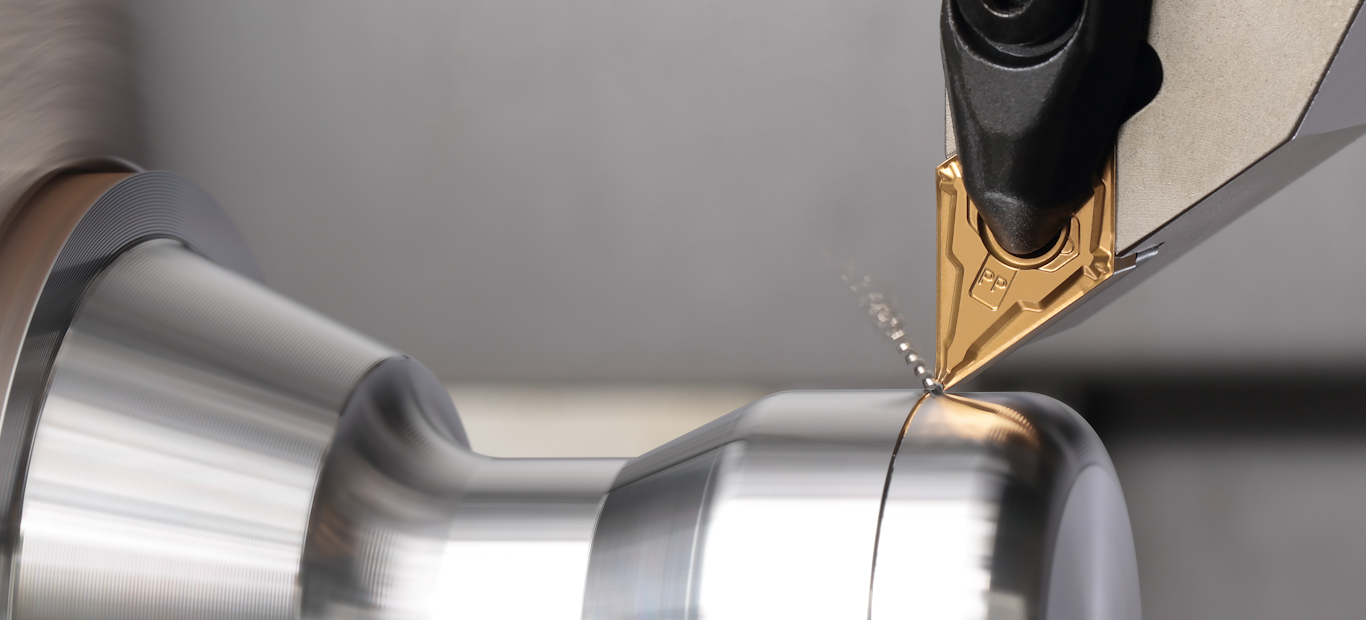
Researchers at the University of Tokyo in Japan and Japan's Kyocera have developed a cutting tool system with a built-in temperature sensor and internal cooling channels. It adjusts the coolant flow automatically according to the temperature near the cutting edge. In cutting experiments, the system supplied about 76% less coolant than was used under the maximum-flow condition in the same test where coolant ran continuously at maximum flow. This is a research-stage result, and it is not known whether the approach could replace cutting fluid for lubrication or chip evacuation. Even so, the idea of measuring temperature inside the tool and controlling cooling from there could prompt manufacturers to reconsider how they use coolant.
Key points
- Project researcher Chao Wang and associate professor Toru Kizaki of the Department of Mechanical Engineering, Graduate School of Engineering, The University of Tokyo, together with three Kyocera researchers, published results on a cutting tool system with a temperature sensor and internal cooling channels in an international academic journal in October 2026.
- The tool body is a lattice of cemented carbide (WC-Co) formed by 3D printing and infiltrated with copper, which improves heat conduction inside the tool.
- A water-based coolant, which the research group positions as environmentally friendly, flows through the tool interior, and the flow is adjusted according to the temperature near the cutting edge. In cutting experiments, the temperature near the edge was kept stable.
- Compared with the condition in the same test where coolant ran continuously at maximum flow, the coolant supply was about 76% lower, and the quality of the machined surface stayed within an acceptable range. The workpiece material and target temperature are not given in the abstract.
- Kyocera has not announced a product. This is a research-stage result.
Coolant supply fell about 76% within the experimental conditions
The results appeared in October 2026 in the international materials processing journal Journal of Materials Processing Technology. The co-authors include researchers from the Department of Mechanical Engineering, Graduate School of Engineering, the University of Tokyo, and three researchers from Kyocera.
The baseline for the 76% figure is the condition in the same cutting experiment where coolant was kept flowing at maximum rate. It is not a comparison with normal factory operation or with conventional systems that apply coolant from outside the tool. The published abstract does not give the absolute coolant flow rate, the test duration, the workpiece material, the target temperature or the criteria used to judge surface quality. It cannot be read as meaning that annual coolant purchases or waste fluid volumes would fall by the same proportion.
Copper-infiltrated lattice improves heat transfer in cemented carbide
The technical starting point is a weakness of cemented carbide. It is hard and wear-resistant, so it is widely used for cutting tools, but its thermal conductivity is low, and under severe cutting conditions temperatures near the cutting edge can rise rapidly. Heat can cause tool wear and thermal deformation, reducing machining accuracy.
The new tool uses a 3D-printed cemented carbide lattice infiltrated with copper, which conducts heat well. A temperature sensor and coolant channels are embedded in the tool, and the flow is varied while the temperature near the edge is measured. The group also built a simplified thermal model that can predict tool temperature quickly, and used it to evaluate how far the flow can be reduced while keeping the temperature near the edge under control.
The technical precursor is a lattice-structure carbide tool that University of Tokyo researchers presented at an international conference in June 2025. Kyocera researchers are named in the acknowledgements of that work as advisers on 3D printing. In a test in which air was blown over tools heated to 150 degrees Celsius on a hot plate, the surface temperature after about 10 seconds was about 100 degrees Celsius for the tool without a lattice and about 60 degrees Celsius for the tool with the coarsest lattice. The result showed that the more surface area the lattice adds, the more easily the tool cools.
The same 2025 presentation also showed weaknesses. The 3D-printed tools were about 10% lower in hardness than conventional tools made by powder metallurgy, and up to about 10% lower in density. After facing the end of S45C carbon steel, edge wear was about 5 micrometres, compared with about 3 micrometres for the conventional tool. Easier cooling may have been traded off against hardness and wear resistance. These figures are for tools before copper infiltration and do not necessarily apply to the new tool. The abstract does not show how copper infiltration changed this trade-off.
The study addresses heat management, not lubrication or chip evacuation
Cutting fluid is widely used in metalworking and has three roles: cooling, lubrication and chip evacuation. The research group points out that common cutting fluids contain mineral oils and chemical additives, which can cause environmental pollution and health risks. For machining sites, too, the cost of buying fluid, managing its concentration and deterioration, and disposing of waste fluid is a burden. In Japan, a system that automatically manages water-soluble cutting fluid was also presented at JIMTOF 2026, the Japan International Machine Tool Fair.
What this study can confirm is only the role of carrying heat away from the tool. The abstract does not show whether the water-based coolant reaches the cutting point, or whether it can replace conventional cutting fluid for lubrication and chip evacuation. It is better viewed not as a technology that makes cutting fluid unnecessary, but as one that manages tool temperature with less reliance on high coolant flow rates.
Practical use needs a design that spans the tool and the machine tool
Supplying coolant through the inside of a tool is not new in itself. The distinctive feature of this study is that temperature is measured inside the tool and cooling is adjusted automatically according to that value.
Practical use would require a design spanning the whole value chain, not just the tool: the toolholder, the coolant supply unit and flow control on the machine tool side, sensor wiring and power, and handling at tool changes. This is an area that a single tool maker finds hard to complete alone.
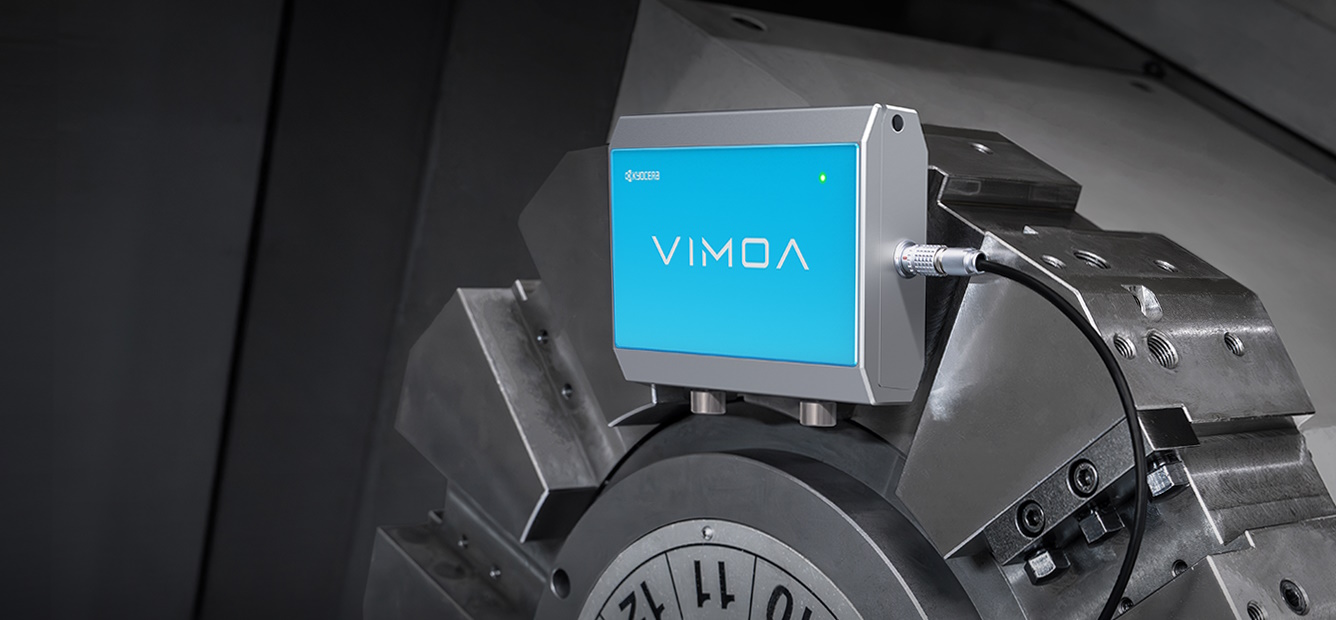
Kyocera is already working on related sensing technologies. From September 2025 the company began renting out, in stages, VIMOA, a sensing tool that measures vibration during cutting, and in May 2026 it added a plan that uses AI to detect machining anomalies. However, this is a vibration sensor retrofitted to a machine tool, which differs from the in-tool temperature measurement of this study in both structure and stage of commercialisation. No product plan linking the two has been announced.
Factory trials must test tool life, waste volumes and cost per part
What the research showed is temperature stabilisation within the experimental conditions, a reduction in coolant supply, and surface quality judged to be within an acceptable range. What factories want to know lies beyond that. Whether waste fluid volume, management effort, tool life and total cost per machined part fall has to be verified separately. The added sensors and flow control could even increase the management burden.
Challenges also remain for mass production. The lattice structure, copper infiltration and embedded sensors involve a manufacturing process very different from the conventional mass production method of pressing powder in a die, and the manufacturing cost per tool has not been given. Possible applications include machining where the cost of defects caused by temperature swings exceeds the cost of adding sensors and controls. However, the abstract does not show the workpiece materials or machining methods, so there is not yet enough information to identify suitable machining applications.
The experiments showed that coolant can be limited to what is needed. Whether the system can beat conventional methods once tool life and cost per machined part are included is what will help decide whether this research leads to a tool product.