The Day Toyota Becomes a Robot Maker: Research Unit Reorganised, a 400,000-Robot Bet Entrusted to Its Production Chief
Japan's Toyota Motor announced on 5 November 2026 that it will set up a company-wide robotics organisation in January 2027. The unit will be led by the head of production, and the company is closing i…
Japan's Toyota Motor announced on 5 November 2026 that it will set up a company-wide robotics organisation in January 2027. The unit will be led by the head of production, and the company is closing its future-technology research division at the same time. Toyota assumes 400,000 robots will be deployed across its supply chain between 2028 and 2040. Whether Toyota actually becomes a robot maker depends less on that unit count than on whether it can turn data from the factory floor into better robot performance.
Key points
- Toyota will launch "Toyota Robotics", a company-wide organisation, on 1 January 2027. Operating Officer Takefumi Shiga, the Chief Production Officer, will head it concurrently and pull together robotics knowledge, people and functions now scattered across the company.
- The same reorganisation abolishes the Frontier Research Center, which has researched life-support robots and the new robot ELEY, and folds its functions into the Advanced R&D and Engineering Company and the Digital Software Development Center.
- Toyota assumes a cumulative 400,000 robots will be deployed between 2028 and 2040: 150,000 at Toyota and its group companies and 250,000 at suppliers. The figure covers in-house and purchased robots combined. Toyota puts its annual investment in replacing ageing factory equipment at ¥1 trillion.
- Toyota plans to use demand from within Toyota, its group companies and its suppliers to build competitiveness, then extend its offering to other manufacturers, other industries and daily-life uses. Executive Vice President Yoichi Miyazaki said Toyota aims to grow revenue from 2030 onward.
A company-wide unit under the production chief, with research folded in elsewhere
Toyota revealed in September 2026 that it was working on commercialising robots for manufacturing sites and on a plan to use 400,000 of them. The latest announcement gives the organisation that will carry out that plan a formal place as a unit reporting directly to the company.
Shiga, who will head the new unit, is the Chief Production Officer and also general manager of the Manufacturing Engineering Division, which handles production technology. Toyota says the unit will work closely with its development divisions and start from the problems and needs of manufacturing sites to speed up the field deployment, practical use and commercialisation of robots. The structure begins from factory implementation rather than from research. At the earnings briefing, Miyazaki said Toyota will "grow the unit into a new pillar of the business".
The reorganisation also abolishes the Frontier Research Center, the department that has carried out research on the life-support robot HSR and on ELEY, and merges its functions into the Advanced R&D and Engineering Company and the Digital Software Development Center. Toyota has not said whether the centre's research staff or responsibility for ELEY will move to Toyota Robotics. A reorganisation of the unit that studied future technology is therefore running alongside the creation of a unit meant to turn robots into a business. How research results are carried into factory implementation will be the focus of the new structure.
The 400,000 units are a deployment assumption, not a sales plan
According to the earnings briefing materials, Toyota assumes a cumulative 400,000 robots will be deployed between 2028 and 2040. That averages about 31,000 a year. Of the total, 150,000 (37.5%) are at Toyota and its group companies and 250,000 (62.5%) at suppliers, and the figure combines in-house and purchased robots. Miyazaki said that "large-scale investment in factory automation is expected across Toyota's supply chain".
This figure is not a sales plan for Toyota-made robots. Toyota has not disclosed the ratio of in-house to purchased robots, how much of the ¥1 trillion a year for replacing ageing equipment will go to robots, who will fund the suppliers' share, or the pace of deployment year by year. The 400,000 is most accurately read as a pool of potential installations in which Toyota can test its own technology.
Toyota combines three stages in its approach to factory automation: automation built around robots that follow fixed procedures (FA 1.0), automation that synchronises production and logistics systems (FA 2.0), and collaboration between people and robots (FA 3.0). The plan covers not only new AI-driven robots but also conventional automation and logistics systems, which suggests a rebuild of the whole factory.
Craftsmen's data and autonomous-driving know-how are the stated strengths
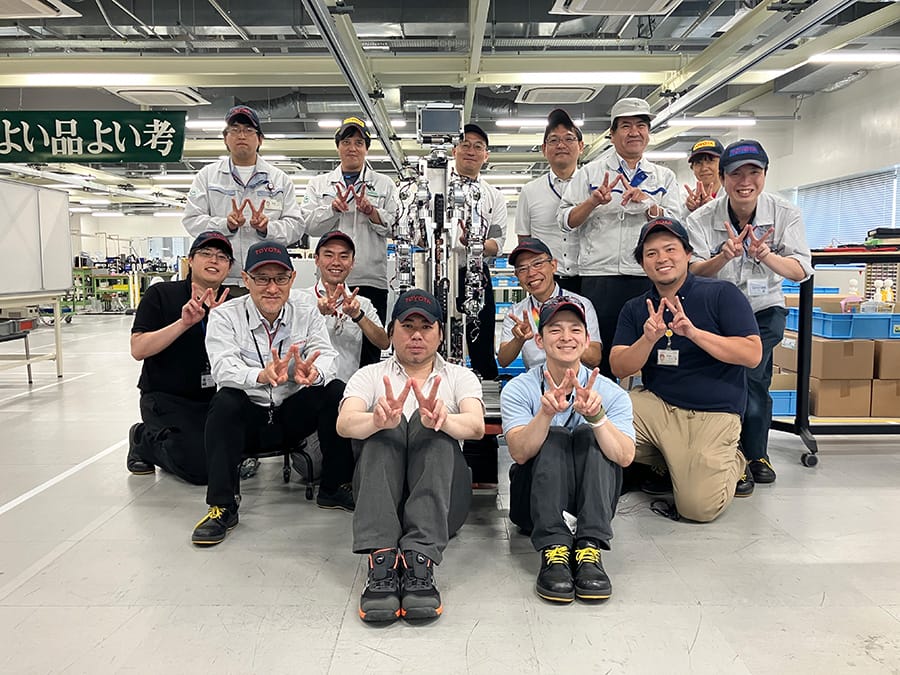
As strengths for commercialisation, Toyota cites high-quality data from its 60 plants worldwide and from about 18,000 skilled craftsmen known as "takumi", and says it will use that data to improve robot performance. It aims to have robot foundation models, general-purpose AI that can handle a wide range of tasks, learn efficiently from the takumi and also help teach people. Toyota also points to automation of processes streamlined under the Toyota Production System (TPS), to the quality, durability and reliability built up in car manufacturing, and to know-how gained from its autonomous-driving software platform.
One of the few results disclosed so far is the "factory control platform". It combines a just-in-time production system with a traffic-control mechanism, and Toyota says plants that adopted it cut lead time by 50%.
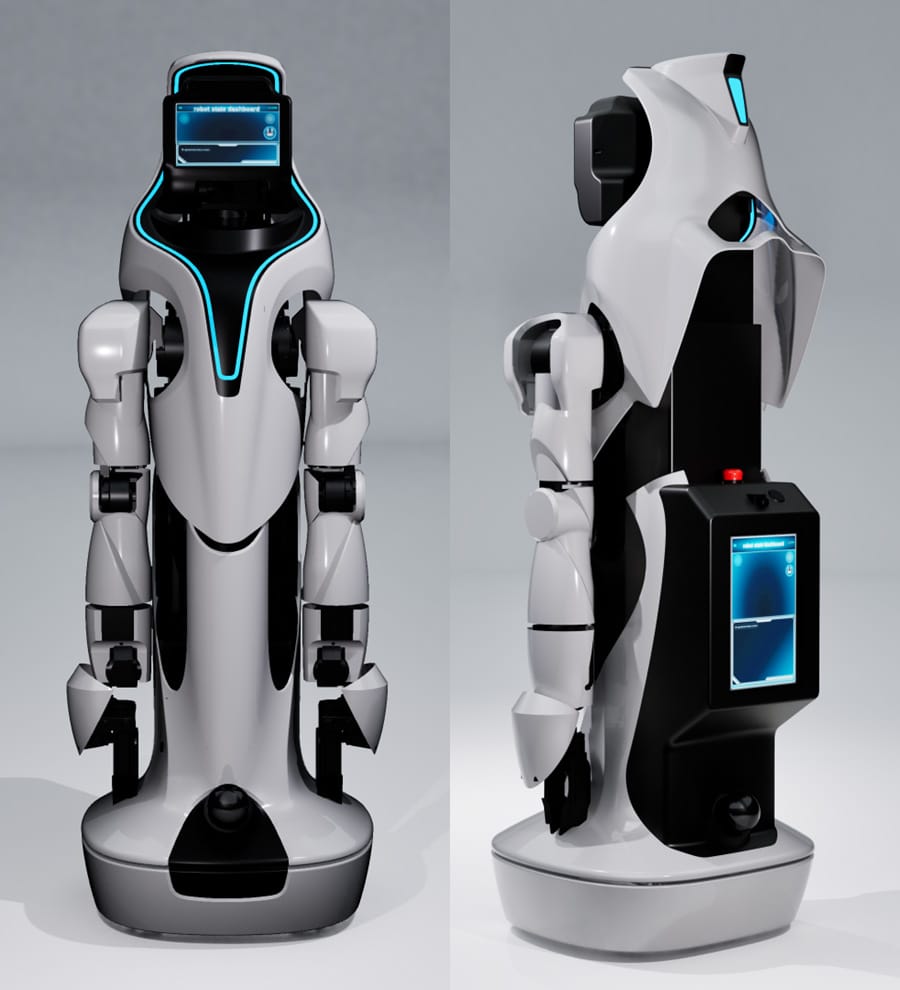
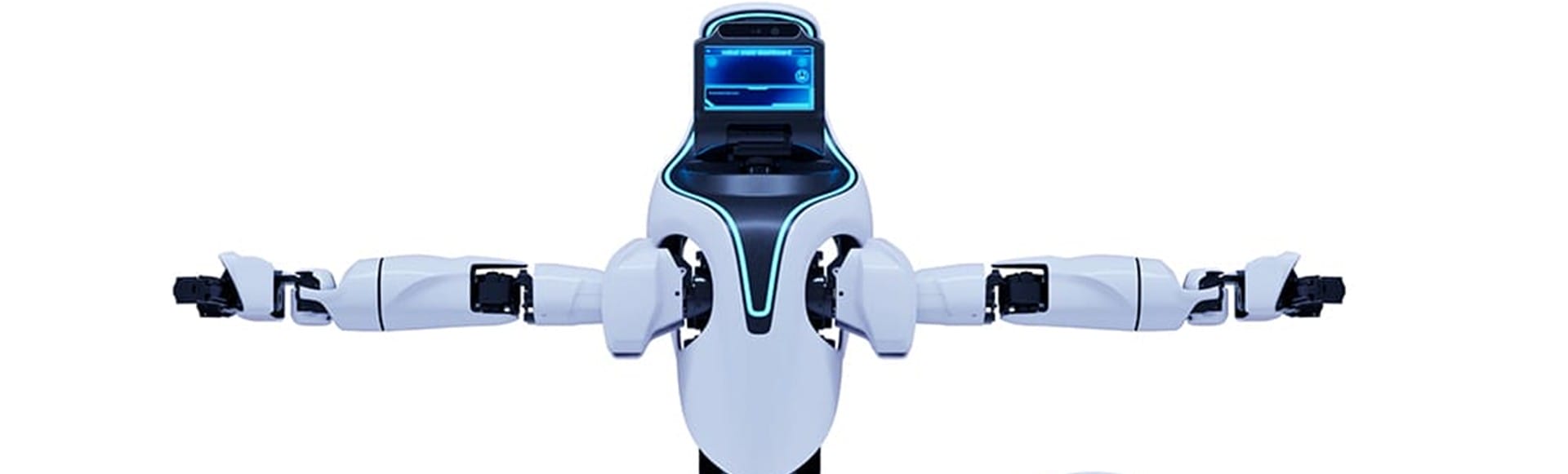
ELEY is one example of the technology. It is a wheeled robot with a two-fingered hand, and it carries an AI developed by Toyota Research Institute (TRI) that learns motions from human demonstrations. Every joint uses a combination of a reducer with a reduction ratio of 10:1 or lower and a high-torque motor. The arm yields smoothly when force is applied from outside, so the robot can touch surrounding objects gently.
A major customer for robot makers, and a possible competitor if external sales proceed
Because the deployment figure includes purchased robots, Toyota and its supply chain could become a major customer for industrial robot makers from 2028. At the same time, Toyota has said it will extend technology refined within Toyota and across its supply chain to other companies and industries, and press reports say it is also looking at external sales. If external sales advance, Toyota would be both a customer of robot makers and a competitor to them.
Even so, the earnings materials describe the offer only as "solution provision". Whether Toyota would sell its robots on a standalone basis or take on whole process-automation projects, and when and in what form, is unclear. Whether Toyota has become a robot maker can be judged only once it shows the products it would sell externally, their prices and the maintenance arrangements.
Suppliers face an open question as well. If suppliers were to fund the 250,000 robots and were asked to connect to Toyota's common control platform, the financial burden and system compatibility would become issues. Neither has been addressed yet.
The odds depend less on unit counts than on turning data into improvement
The developers of ELEY themselves name three challenges: reliability over long hours of operation, repeatability in bringing the hand to the same spot with high accuracy every time, and the data infrastructure the robot learns from. The research team plans to use ELEY under conditions close to a production site, turn data including failures into learning data, and run improvement in short cycles.
Getting robots into the field early could become an advantage. But that holds only if failure data can be standardised and linked to better repeatability and longer operating time. The measures that matter are utilisation, repeatability and the percentage reduction in lead time, not the number of robots installed.
Toyota has a deployment base on a scale that other companies lack. Whether that scale turns into a winning position in the robot business will show in whether field data produces measurable gains in performance once deployment starts in 2028. Any products for external customers would be announced only after that.