NSK Develops a Device That Generates Hydraulic Pressure Only When Needed: Replacing the Always-Running Pump
Japan's NSK has developed an electrically driven unit that generates hydraulic pressure only when it is needed. For a machine tool's tool-unclamping mechanism, NSK estimates it can cut power consumption by about 89% versus a conventional hydraulic pump, and shorten the actuation…
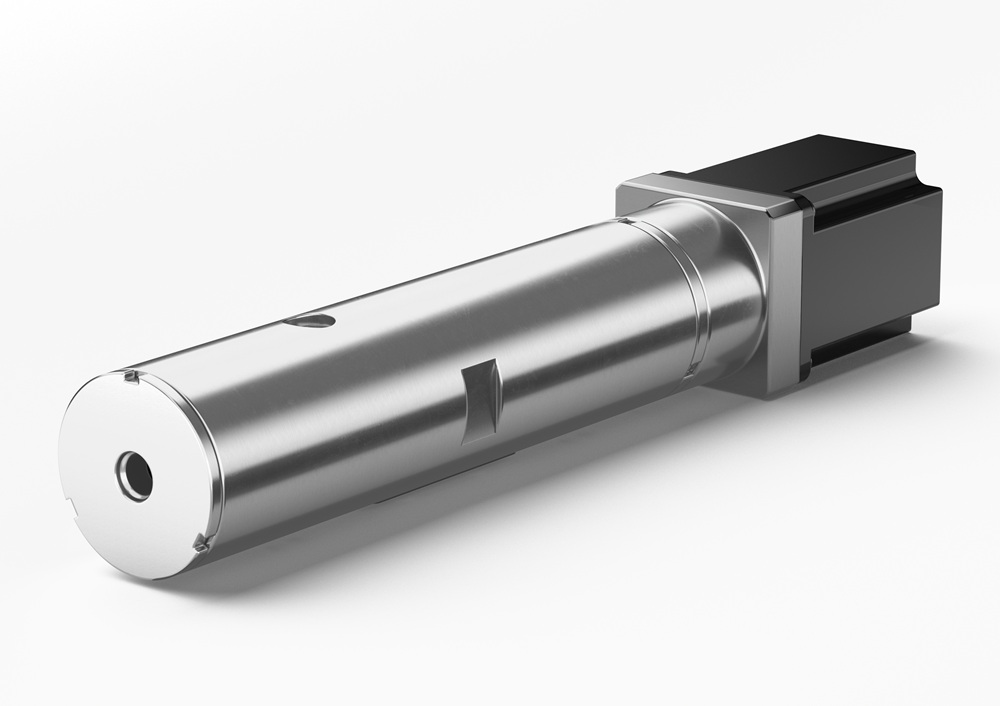
Japan's NSK has developed an electrically driven unit that generates hydraulic pressure only when it is needed. For a machine tool's tool-unclamping mechanism, NSK estimates it can cut power consumption by about 89% versus a conventional hydraulic pump, and shorten the actuation time from about one second to about 0.2 seconds versus a pneumatic method. By replacing a hydraulic pump that runs continuously even on standby with a drive that acts only when needed, the components maker is signalling that the push for energy saving and decarbonisation is now reaching the hydraulics around machine tools.
Key points
- On 25 September 2026, NSK announced it had developed a hydraulic-pressure generating device, the "Electric Hydro Booster". Using a ball screw to generate hydraulic pressure is an industry first (as of August 2026, according to NSK).
- A motor's rotation is converted into linear motion by a ball screw, which pressurises the oil. By operating only when needed, it removes the continuous running on standby.
- In an estimate for a tool-unclamping mechanism, power consumption is cut by about 89% versus a conventional hydraulic pump. NSK puts this at about 815 kilograms of CO₂ saved per machine tool per year, though it has not disclosed the operating assumptions behind the estimate.
- Actuation time can be shortened to about 0.2 seconds, against about one second for a pneumatic method (in the same estimate). Intended uses are machine tools, hydraulic presses and industrial robots.
- NSK will show it at JIMTOF 2026 (26–31 October 2026, Tokyo Big Sight), with market launch planned for fiscal 2027.
An "industry-first" method: generating hydraulic pressure with a ball screw
On 25 September 2026, NSK announced it had developed a new hydraulic-pressure generating device, the "Electric Hydro Booster". Generating hydraulic pressure with a ball screw — a component in which balls circulate between a threaded shaft and a nut to convert rotation smoothly into linear motion — is an industry first, according to NSK's own research as of August 2026. Intended uses are machine tools, hydraulic presses and industrial robots. NSK will unveil it at JIMTOF 2026 (the 33rd Japan International Machine Tool Fair, 26–31 October 2026, Tokyo Big Sight), with a market launch planned for fiscal 2027.
Why conventional hydraulics consume so much power
NSK cites two conventional methods for comparison: the hydraulic pump and the pneumatic (air-driven) method.
A hydraulic pump keeps its motor running — and consuming power — even on standby, when no hydraulic pressure is being used. A pneumatic method, by contrast, is slow to build pressure. Prioritising energy efficiency sacrifices speed, while prioritising speed raises power consumption: a longstanding challenge in hydraulic systems.
This is becoming more pressing as manufacturers push to save energy and decarbonise. A plant's electricity consumption is counted in its emissions as Scope 2 — the CO₂ a company emits indirectly through purchased power. A pump that draws current even when idle is an easy target for cuts.
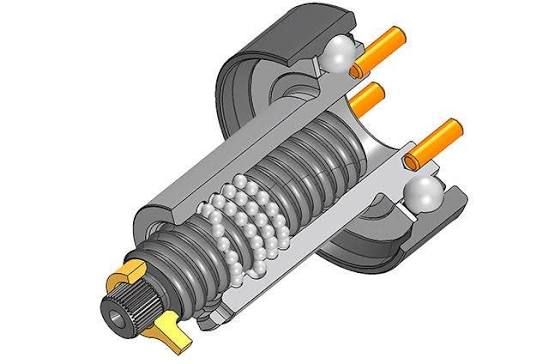
How it works — from "always pressurising" to "pressurising only when needed"
The Electric Hydro Booster converts the motor's rotation into linear motion via a ball screw, using that force to push and pressurise the oil. Rather than circulating oil continuously like a pump, it moves the ball screw to build pressure only at the moment hydraulic pressure is required.
The effect comes through two separate routes. First, operating only when needed removes the continuous running on standby and cuts power consumption. Second, the ball screw's high responsiveness speeds up the build-up of pressure. That energy saving and speed arise from two different mechanisms is what sets it apart from the conventional methods.
The figures carry different comparison bases. The roughly 89% cut in power consumption is against a "conventional hydraulic pump", while the actuation time of about one second down to about 0.2 seconds is against a "pneumatic method" — both being estimates for a machine tool's tool-unclamping mechanism (the mechanism that attaches and detaches the tool on the spindle). NSK puts the saving at about 815 kilograms of CO₂ per machine tool per year, but has not disclosed the operating assumptions behind that estimate.
How to read the 89% — it works where hydraulics are used intermittently
The number is large, but the situations where it pays off are narrow. Tool changing needs strong force for an instant and is used only intermittently. Long standby, momentary pressurisation — this is exactly the use where "pressurise only when needed" works best. The roughly 89% cut is a figure that emerges precisely because standby is long in this application.
Conversely, whether the same effect holds where large flow is applied over long periods cannot be judged from the estimates shown. Any advantage in continuous pressing or in processes that require constant high holding force is, for now, unclear. It should be read on the premise that not every hydraulic mechanism will see a 90% cut.
Even so, hydraulic mechanisms that are "idle for long stretches, pressurised intermittently" — such as those around a machine tool's spindle — are common on the shop floor. Replacing just those adds up in standby-power savings. That said, the device's dimensions and the conditions for fitting it to existing equipment have not been disclosed, so ease of replacement is something to confirm.
Industry implications and the remaining questions
In this development, NSK is proposing not a standalone component such as a bearing or ball screw, but hydraulic-pressure generation as a functional unit — and selling it on the value of energy saving. It shows how NSK is expanding beyond individual components into functional units. For machine-tool makers, it could help demonstrate the energy efficiency of their equipment.
The focus is how far it can extend beyond tool unclamping. The ranges of pressure, flow and holding time, along with operating frequency and installation cost, will decide the boundary where it beats conventional methods. Proving that applicable range and real-machine savings before the fiscal-2027 launch is the key to expanding beyond tool unclamping.