Mazak Partners with an AI Firm to Turn 40-Plus Years of Machining Data into Process-Planning AI
Japan's Yamazaki Mazak, a major machine-tool manufacturer, announced on 16 October 2026 a business collaboration with Japan's ABEJA, a Tokyo-based AI company. The two will jointly develop AI that proposes machining process plans, trained on more than 40 years of data accumulated…
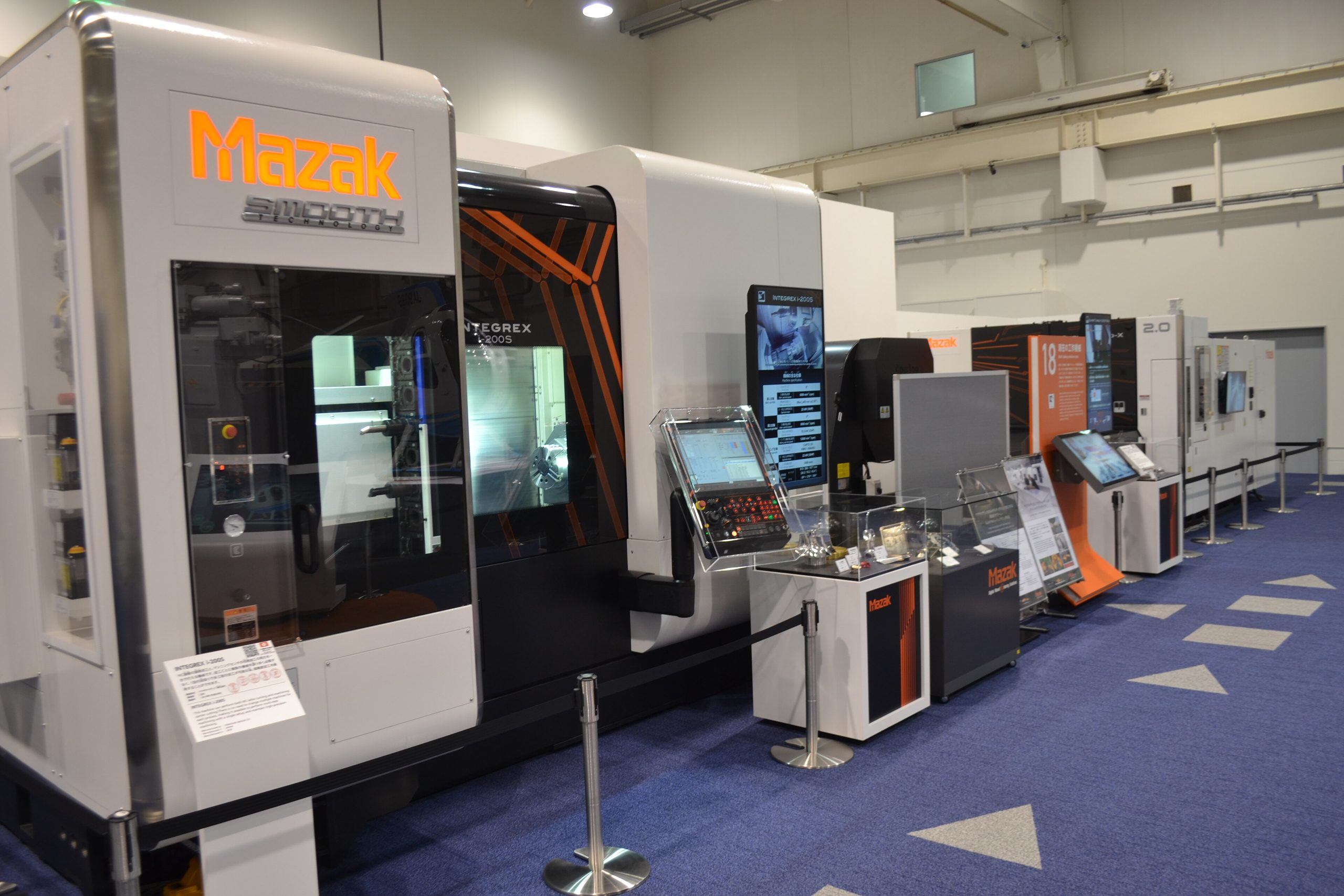
Japan's Yamazaki Mazak, a major machine-tool manufacturer, announced on 16 October 2026 a business collaboration with Japan's ABEJA, a Tokyo-based AI company. The two will jointly develop AI that proposes machining process plans, trained on more than 40 years of data accumulated in "MAZATROL", Mazak's conversational CNC. They are targeting a service launch by the end of fiscal 2028.
The move points to a business in which a machine-tool maker keeps delivering value from shop-floor data long after the machine is installed.
Key points
- ABEJA is an AI company listed on the Tokyo Stock Exchange's Growth market in 2023. Its core business is a platform for running AI in day-to-day operations rather than leaving it at the trial stage
- The partners will co-develop three areas on ABEJA's AI platform, "ABEJA Platform": process planning, production scheduling and a learning environment for robot behaviour
- The process-planning AI will learn from MAZATROL data on materials, tools, cutting conditions and machining sequences, and propose process plans for new parts. After deployment, it will be further trained on each customer's own machining records
- The first process-planning AI is targeted for commercialisation by the end of fiscal 2028. Mazak plans eventually to build the AI into its machine tools and automation systems. The relationship is a business collaboration; no capital tie-up has been announced
The partner: a company focused on keeping AI running
Founded in 1919, Yamazaki Mazak sells lathes, multi-tasking machines and other machine tools worldwide. ABEJA, by contrast, is little known in manufacturing. Founded in 2012, it listed in 2023 on the Growth market, the Tokyo Stock Exchange's segment for emerging companies, and runs a single line of business built around its enterprise AI platform, "ABEJA Platform".
ABEJA's strength lies less in AI models themselves than in the systems needed to deploy and operate them continuously in day-to-day business. ABEJA Platform handles data collection and processing, model training, deployment and retraining on a single platform. The company promotes a "zero PoC" approach: rather than stopping at a proof of concept, the trial run before full adoption, it designs systems for live operation from the outset.
A second strength is the ability to store and process data within the customer's own IT environment. The platform can be configured so that data never has to leave that environment, and it has reportedly been deployed in government-related projects, including work for Japan's Acquisition, Technology & Logistics Agency, the defence procurement body. In June 2026, ABEJA was also selected for GENIAC, a generative-AI development support programme run by Japan's Ministry of Economy, Trade and Industry and the New Energy and Industrial Technology Development Organisation (NEDO).
Mazak has not said why it chose ABEJA. But machine-tool users' machining data is highly confidential, and the AI is meant to keep learning after deployment. ABEJA's strengths in continuous operation and in processing data that stays with the customer appear to fit Mazak's plan.
The division of labour is clear. Mazak brings the machine tools and machining know-how; ABEJA brings the platform that trains the AI and keeps it running on the shop floor.
Three pillars: process planning, scheduling and robot learning
The first pillar is an AI agent for optimising machining processes. It will automatically draw up and propose process plans for each part, covering machining methods, machining sequence and cutting conditions.
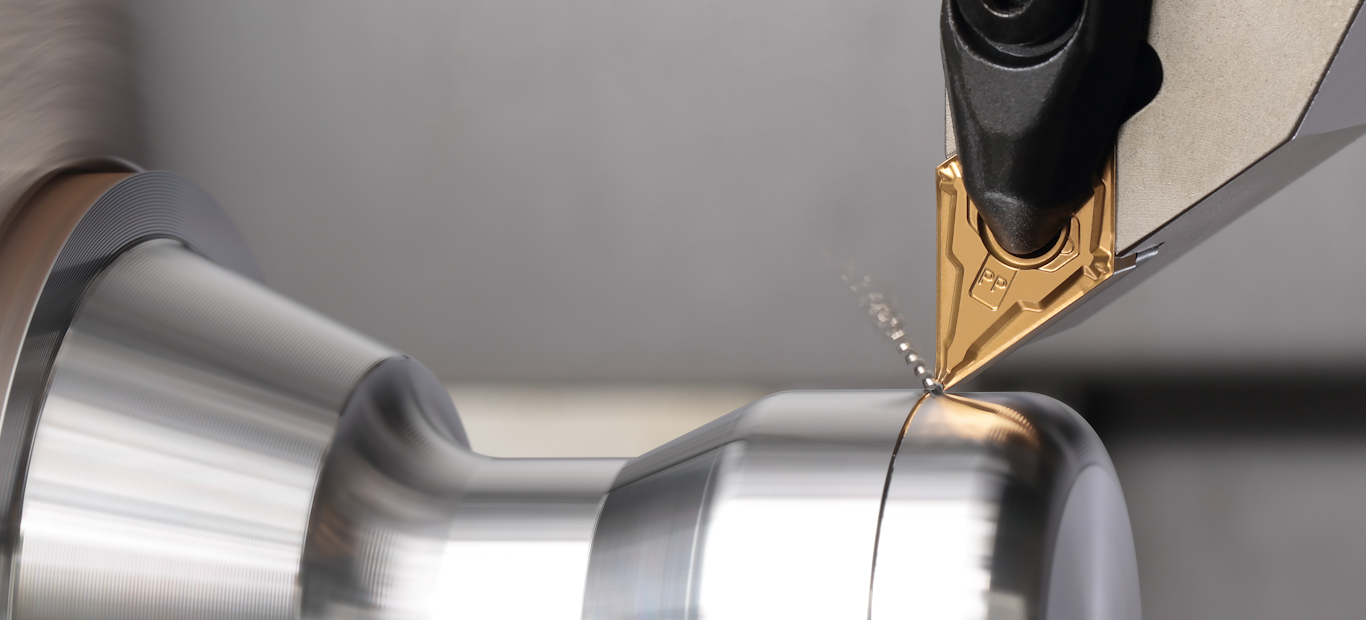
Process planning means deciding which tool to use, in what order, and at what spindle speed and feed rate. It has a major effect on quality and machining time. The work relies heavily on the experience of skilled engineers, and the know-how often remains tacit knowledge: uncodified, experience-based knowledge held by individuals.
The second pillar is an AI agent for optimising production schedules. It will propose production plans based on the production schedule, equipment utilisation, inventories of materials and components, and shift information. The system will learn from schedules recorded before and after changes, so that when a parts shortage or a rush order occurs, it can propose a revised plan drawing on similar past cases.
The third pillar is a learning environment for robot behaviour. Covering robots, material-handling equipment and autonomous mobile robots (AMRs), it will handle everything from collecting work data to training and evaluating models and verifying motions on real equipment.
Shop-floor work data will be gathered through teleoperation and cameras showing the worker's point of view. Using VLA (vision-language-action) models, which learn by linking images, language and actions, the partners aim for autonomous operation in the future. With practical use in mind, they plan to build up know-how in collecting training data and building models from an early stage.
The asset: structured machining decisions inside MAZATROL
The heart of the partnership is the AI's training material.
MAZATROL is a conversational CNC (computer numerical control) system that Mazak commercialised in 1981. Operators create machining programs by entering information such as material, shape and tools in a question-and-answer format, so the inputs tend to be stored as structured data, organised item by item.
The joint development will extract machining know-how and decision criteria from this archive, so that when data for a new part is entered, the AI can produce a draft process plan.
Yosuke Sawada, a senior executive officer at Mazak, said in effect that more than 40 years of data accumulated through MAZATROL is taking on new value in the era of large language models (LLMs), and that the aim is a manufacturing AI that codifies shop-floor expertise and decision-making. ABEJA CEO Yosuke Okada likewise said that the competitiveness of physical AI, which applies AI to machines that sense and act in the physical world, is determined by the quality of training data.
Years of accumulation alone will not decide the outcome, however. What matters is whether records spanning different eras and machine models can be put into a common format and linked to the machining results those process plans actually produced. Forty years of data is a strong starting point, but it does not by itself create an advantage that competitors cannot close.
AI trained per customer, with data kept in the customer's environment
Training will proceed in two stages. First, a base model will be built from data from Mazak's own factories. After deployment, it will be further trained on each customer's machining records and logs, adapting to that plant's materials, equipment and quality standards.
Mazak President Takatsugu Yamazaki described a vision in which customers grow the AI using their own experience, and set "production that never stops" as the goal.
This raises the question of customer data. Machining logs contain cutting conditions and set-up know-how that customers have refined over many years. Customers may be wary of sending that to a machine-tool maker's or AI company's cloud.
As noted, ABEJA Platform can process data within the customer's environment, and the announcement emphasised data sovereignty.
Okada also signalled interest in extending AI use to manufacturing sites outside Japan. Customer attitudes and regulations on taking data outside the customer's environment differ by country and region. Whether machining know-how can be learned and used without leaving the customer's environment is likely to be not merely a security feature but a condition for adoption overseas.
The partners also assume a "Human in the Loop" approach, in which AI decisions are not sent straight to equipment but checked and corrected by people before use. This can be read as a design choice for shop floors where errors in process planning could lead to defective parts or damage to tools and machines.
Okuma joins a shared platform; Mazak starts with process planning
Japanese and German makers long held the top positions in the global machine-tool market, but Chinese and Korean manufacturers are gaining ground. Against this backdrop, Japanese makers are moving to differentiate not only on machine performance but also on operational value, including process planning and automation.
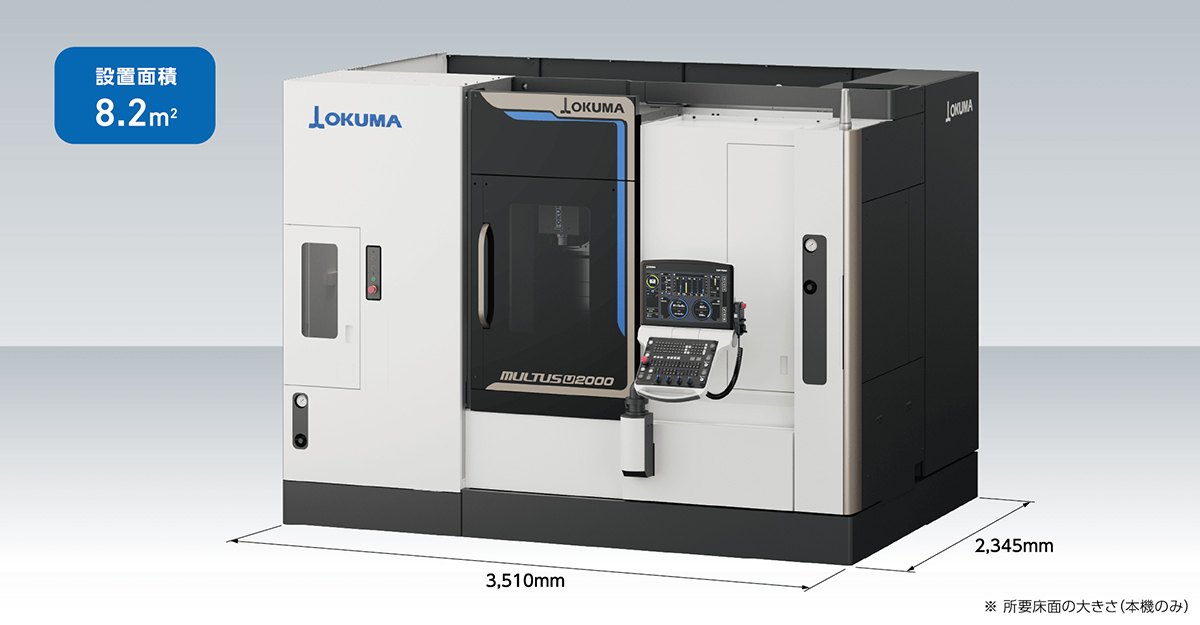
Japan's Okuma, another machine-tool manufacturer, has joined as one of the investors in Noetra, a company building a domestically developed foundation model for physical AI, meaning a broadly trained model that can be adapted to many industrial tasks. Noetra is backed by 44 companies, including SoftBank, Sony Group, NEC and Honda.
Mazak, for its part, is bringing in a platform from a specialist AI company and starting with implementation in a concrete task: process planning. The former is participation in a cross-industry shared platform; the latter is a narrowly focused joint development. They operate at different levels, and there is not yet enough evidence to judge which strategy is better.
In September 2026, Mazak announced it would invest about ¥16 billion to open a research and development centre, the "Mazak Innovation Hub", next to its headquarters in August 2027. The centre will include space for joint development with outside partners, and Mazak plans to pursue collaboration there, including on physical AI. The ABEJA partnership fits within that direction.
Commercialisation by fiscal 2028 hinges on how much rework skilled engineers still need
The announcement marks the start of joint development. Product specifications, pricing, delivery model and compatible machine models have not yet been disclosed.
If per-customer training improves the accuracy of its proposals, Mazak could keep earning software-service revenue and maintain customer relationships after a machine is delivered. If, on the other hand, the AI cannot be used in plants that also run other makers' machines, its value will remain confined to Mazak's installed base.
In the end, commercial success will depend on one thing: whether the AI can cut the time skilled engineers spend correcting its proposed process plans by enough that customers find it worth paying for. The joint development is a test of whether 40 years of machining data can be turned into recurring revenue.