Japan’s Machine Tool Surge Sends a Message to India: Build Process Capability, Not Just Capacity
Japan’s machine tool orders are rising again, but the signal for India is not about Japan alone. It is about the next stage of manufacturing competition.
Japan’s machine tool orders are rising again, but the signal for India is not about Japan alone. It is about the next stage of manufacturing competition.
Factories will not win only by installing more machines. They will win by building stronger process capability.
In May 2026, Japan’s total machine tool orders rose 37.4% year on year to 176.833 billion yen, according to the Japan Machine Tool Builders’ Association. Although the figure was lower than the record level in March and the second-highest level in April, it remained historically high. Orders increased year on year for the 11th consecutive month.
A separate survey by Nikkan Kogyo Shimbun showed that orders at four major Japanese machine tool makers rose 51.4% year on year to 52.683 billion yen in May. Export orders jumped 60.0% to 41.596 billion yen, confirming that overseas demand remains the main driver.
For India, the important point is not simply that Japanese machine tools are selling well overseas. The original order details show signs of stronger demand from India at some Japanese machine tool makers, especially in automotive dies and molds, four-wheeler applications, and two-wheeler applications.
This is a small but important signal. India’s manufacturing base is still broad and uneven, but parts of it are clearly entering a new phase. The next question for Indian factories is not only how to expand output, but how to produce more complex parts with higher accuracy, better repeatability, lower scrap, and more stable quality.
India’s next race is process capability
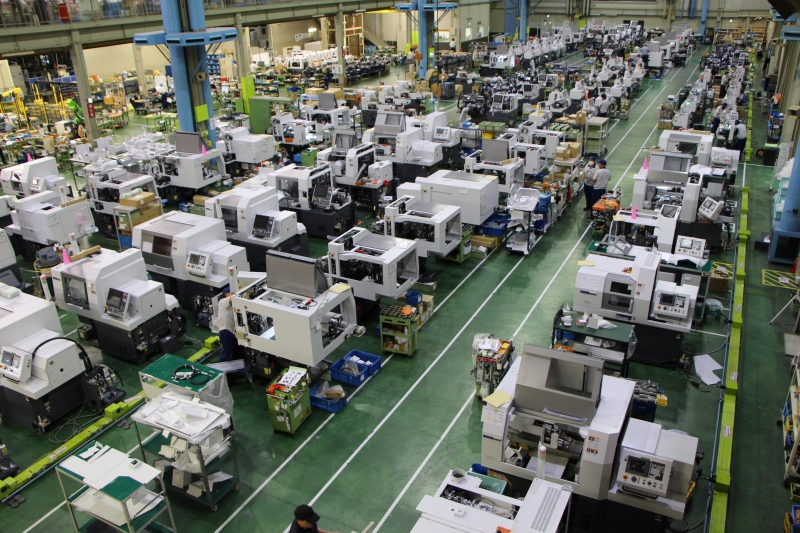
India has long been a major market for production equipment. Its automotive, two-wheeler, engineering, metalworking, and component industries have created a large base of factories that need machining capacity.
For many years, the central question was how to increase output. More machines, more shifts, and lower unit costs were often enough to compete.
That logic is changing.
As India moves deeper into automotive components, electric vehicles, precision parts, electronics, aerospace, medical devices, and data-center-related infrastructure, the required level of machining is rising. Manufacturers increasingly need tighter tolerances, stable repeatability, better surface quality, shorter setup time, and stronger process control.
In May, Makino Milling Machine reported stronger demand from India for dies and molds used in automotive parts. Tsugami also saw orders grow in India, mainly for four-wheeler and two-wheeler applications.
These signals are not enough to say that the entire Indian machine tool market has shifted to high-end equipment. But they do show that selected parts of India’s manufacturing investment are moving toward higher process capability.
India is still buying machines to expand capacity. But in higher-value sectors, it is also beginning to buy the ability to machine more difficult parts more accurately and more consistently.
Automotive remains the core, but the components are changing
The automotive sector remains one of the most important drivers of machine tool demand in India.
India has scale in two-wheelers, passenger vehicles, commercial vehicles, and auto components. But the content of automotive manufacturing is changing. Electrification, hybrid systems, lightweighting, safety requirements, and higher fuel-efficiency standards are increasing the complexity of components.
Motors, inverters, battery-related parts, precision gears, thermal management components, housings, shafts, and dies require better machining accuracy than many conventional mass-production parts.
This changes the investment logic for Indian suppliers.
In the past, a supplier could compete mainly by adding machines and reducing cost. Going forward, competitiveness will depend more on whether the supplier can reduce scrap, improve yield, stabilise quality, shorten setup time, and integrate processes.
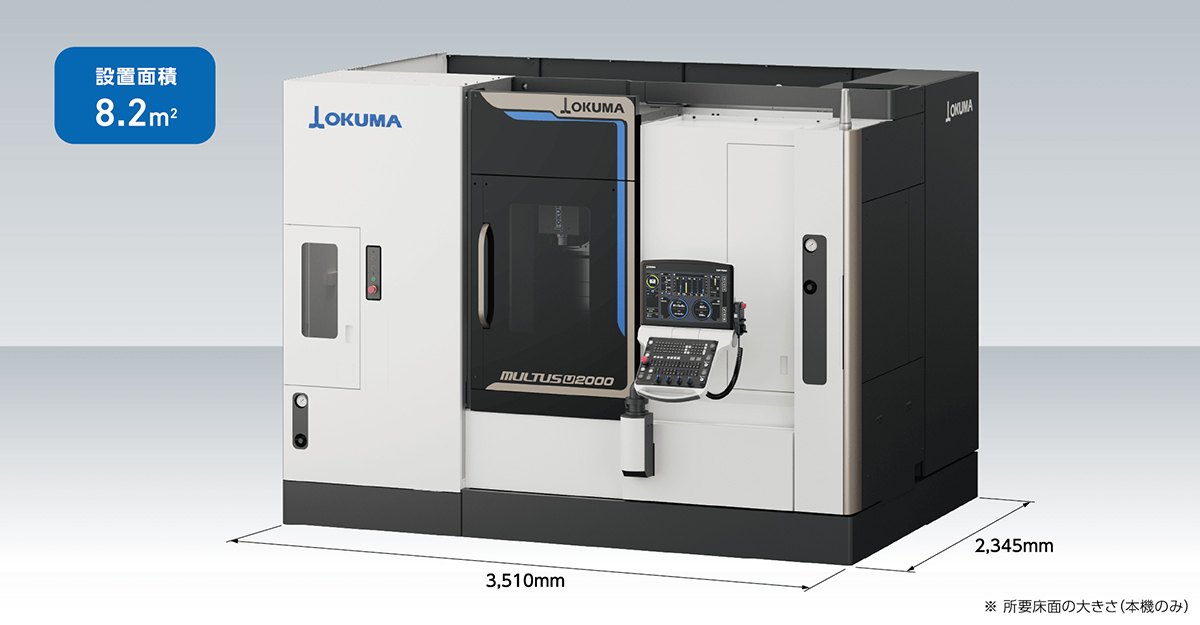
That is why demand for high-rigidity machining centres, CNC lathes, multi-tasking machines, five-axis machining centres, and automation-ready systems is likely to grow.
For Indian auto parts makers, the real question is no longer only, “How many machines do we need?” It is, “What level of process capability do we need to supply the next generation of components?”
Dies and molds are not a niche issue for India
The increase in Indian demand for automotive dies and molds deserves particular attention.
Dies and molds sit at the foundation of mass production. They determine product accuracy, surface quality, cycle time, repeatability, and the consistency of downstream production. If the die or mold is inaccurate, the entire production process becomes unstable.
For India, stronger die and mold capability is not a niche issue. It is one of the foundations for localising higher-value manufacturing.
Automotive, home appliances, electronics, packaging, precision plastics, and industrial components all depend on tooling quality. If India wants to move up from assembly and basic component production to higher-value manufacturing, the strength of its die and mold ecosystem will matter.
Policies such as “Make in India” and production-linked incentive programs form part of the broader background. They are not a direct explanation for Japan’s May order figures. But they point to the same direction: India wants to deepen local manufacturing, and deeper manufacturing requires stronger tooling, mold, jig, fixture, and precision machining capabilities.
For Japanese machine tool makers, this creates an opportunity. Japan has long been strong in high-precision machining, thermal stability, machine rigidity, and long-term reliability. These qualities are critical in die and mold production.
For Indian manufacturers, the issue is not only the purchase price of the machine. It is whether the machine can maintain accuracy over time, reduce rework, shorten the development cycle, and support stable mass production.
Electronics and data centres will raise the bar, but gradually
India’s current machine tool demand is still led by automotive and general engineering. But the next wave of higher-precision demand may come from electronics, data centres, and semiconductor-related manufacturing.
Data centres require more than servers. Around them, there is demand for power systems, cooling components, precision structures, optical communication parts, connectors, and metal enclosures. These areas may not all require semiconductor-level precision, but they do require stable, repeatable, and increasingly high-quality machining.
Electronics manufacturing also creates demand for molds, jigs, fixtures, precision housings, and production equipment components. As India attracts more electronics manufacturing investment, the supporting ecosystem of machine tools, tooling, and precision parts will need to deepen.
Semiconductor-related manufacturing is not yet the main driver of India’s machine tool demand. But if India wants to build a deeper semiconductor ecosystem, precision metal parts, vacuum components, tooling, jigs, fixtures, and automation systems will become unavoidable.
That does not mean India has already become a large direct market for semiconductor-related machine tools. It means the direction of travel is clear: selected parts of India’s manufacturing base are moving toward more demanding production environments.
Machine tools are becoming process platforms
The recent strength in Japanese machine tool orders shows a broader global shift.
In the United States, demand is strong in aerospace, energy, power generation, and data-centre-related applications. These sectors require large-part machining, difficult-to-cut materials, and high reliability.
In China, demand is increasingly linked to data centres, optical communication, semiconductor equipment, smartphones, and advanced automotive components. The focus is moving from volume to machining value.
India’s pattern is different. Its current core remains automotive, two-wheelers, dies and molds, general engineering, and industrial components. But the direction is similar: factories are moving from basic capacity expansion to process capability.
This means machine tools are no longer just production equipment. They are becoming process platforms.
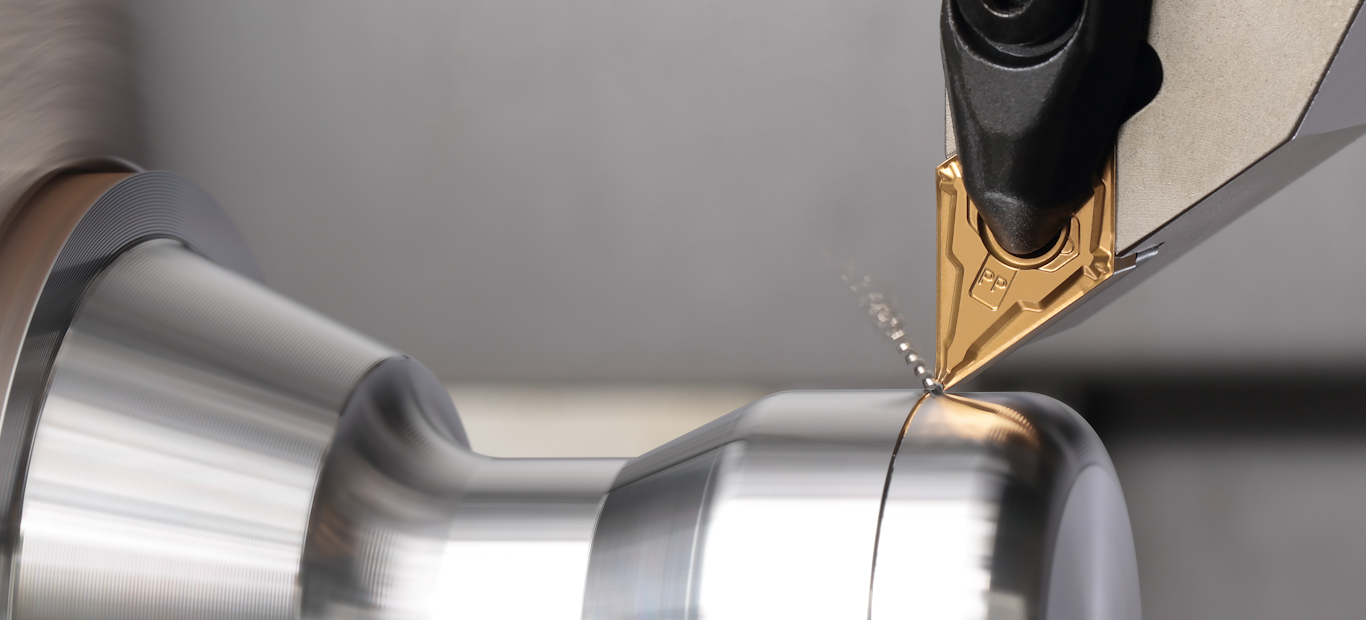
The value of a machine is now measured not only by spindle speed, positioning accuracy, or cutting power. It is measured by whether it helps the customer improve yield, reduce defects, shorten cycle time, integrate processes, and support automation.
This is also where Japanese suppliers must adapt. Selling a high-quality machine is no longer enough. Customers increasingly need application engineering, machining know-how, process design, automation proposals, local service, and support after installation.
For India, this point is especially important. Many factories can buy machines. Fewer factories can fully use them to create stable, repeatable, high-value production.
Supply constraints may affect India’s investment timing
Strong demand also brings a practical risk: supply constraints.
The Japan Machine Tool Builders’ Association has raised its 2026 full-year order forecast from 1.7 trillion yen to 2 trillion yen. In a strong demand environment, the ability to produce machines, secure key components, and manage delivery schedules becomes a competitive factor.
Some production delays have already been seen due to shortages of oils and related materials. In machine tool production, the supply of control equipment, castings, ball screws, linear guides, spindles, sensors, and lubricants can directly affect lead time.
For Indian manufacturers, this has a practical implication.
Waiting too long to decide on equipment investment may increase the risk of delayed delivery, especially for high-end machines. In sectors such as automotive, aerospace, electronics, data centres, and semiconductor-related manufacturing, priority customers may secure production slots earlier.
The purchasing decision therefore needs to consider not only price, but also delivery timing, service availability, application support, and automation readiness.
In the next investment cycle, the best machine may not simply be the cheapest machine or the fastest machine on paper. It may be the machine that arrives at the right time, fits the process, and comes with the support needed to stabilise production.
What Indian manufacturers should take from Japan’s order surge
Japan’s machine tool order surge is not just a Japanese industry story. It is a signal of where manufacturing investment is heading.
For India, the message is clear: the next stage of competitiveness will come not only from adding machines, but from building process capability around them.
For Indian auto component makers, that means investing in machines that improve accuracy, repeatability, and productivity. For die and mold makers, it means reducing rework, improving surface quality, and shortening development time. For electronics and data-centre-related suppliers, it means preparing for tighter tolerances and more stable production. For companies hoping to enter semiconductor-related supply chains, it means building a culture of process control.
India has a large domestic market, a strong base of automotive and engineering suppliers, and a growing role in global supply chains. But to move up the manufacturing value chain, factories must invest not only in machines, but in the ability to use those machines at a higher level.
That is the real meaning of the current rise in Japanese machine tool orders.
The world is not simply buying more machines. It is buying precision, stability, automation, and process knowledge.
For India, the opportunity is to move faster into higher-value manufacturing: precision gears, EV components, dies and molds, electronics parts, tooling, jigs, fixtures, and production equipment components.
The warning is equally clear. The next race in manufacturing will not be won by the factory that installs the largest number of machines. It will be won by the factory that builds the strongest process capability around them.