Japanese Machine-Tool Builders Expand US Service Networks, Chasing Reshoring and AI Data-Centre Demand
Japan's major machine-tool builders are expanding their sales and service networks across the United States. A US policy push to reshore manufacturing has coincided with capital spending in AI data centres (DCs), aerospace and medical manufacturing. The builders are expanding…
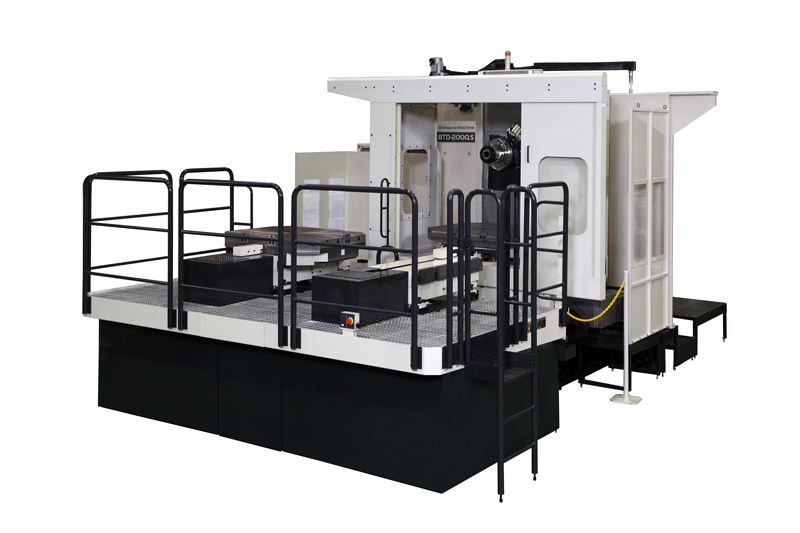
Japan's major machine-tool builders are expanding their sales and service networks across the United States. A US policy push to reshore manufacturing has coincided with capital spending in AI data centres (DCs), aerospace and medical manufacturing. The builders are expanding dealer networks and opening local repair sites to capture the demand. The test is whether they can turn the current growth in orders into recurring income from maintenance and process support.
Key points
- North American orders reached ¥232.4bn in January–June 2026, up 36.6% year on year and above ¥200bn in a half-year for the first time, according to final figures from the Japan Machine Tool Builders' Association (JMTBA).
- Shibaura Machine will expand its large-machine dealer network from eight to 12–13; Citizen Machinery will relocate and enlarge its sales base in the US north-east.
- Okuma has opened a roughly ¥3.7bn plant in the US to repair core parts; Yamazaki Mazak has opened a support centre in Arizona.
- Machining tied to data centres — coolant pipe fittings for liquid-cooled DCs, moulds for optical-fibre connectors — is driving the orders.
Adding dealers, opening repair sites
Shibaura Machine will raise the number of dealers for its large machine tools — used to cut cylindrical workpieces — from eight to 12–13. With demand rising in aerospace and energy, it will recruit new dealers in priority regions: the West Coast, where the aerospace industry clusters; Florida; and Texas, a centre of the energy business. It will also use IMTS 2026, the international manufacturing technology show that opened in Chicago on 14 September, to find them. President Shigetomo Sakamoto stresses that a sales network only counts if service follows: a supplier that cannot service properly, he says, will not even make the shortlist.
Citizen Machinery (Miyota, Nagano) will relocate the New England base of the sales company it jointly owns with Marubeni, moving it within the region to Connecticut for start-up around July 2027. The site area will be 1.5 times its current size, big enough to host the company's own shows, and headcount will increase by several from the current 70. New England is dense with job shops — contract machining firms handling parts for many sectors — and the company will pitch process integration, such as lathes with built-in laser machining, and robot-based automation.
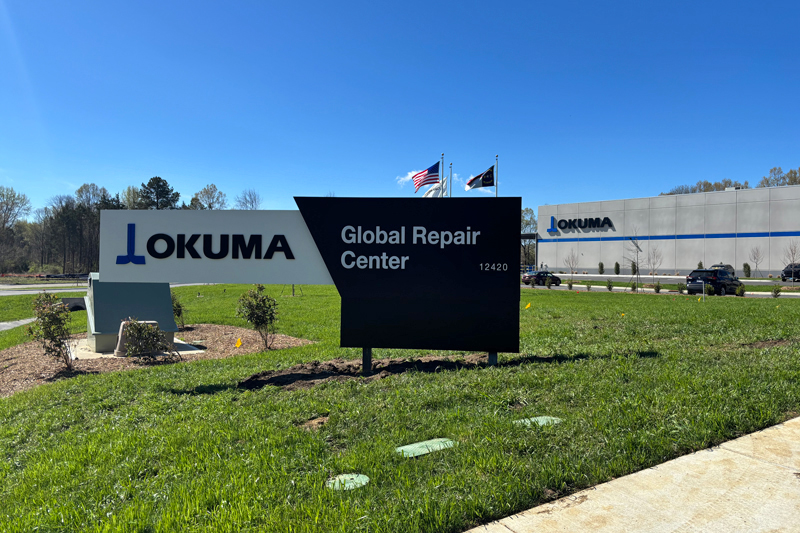
Makino Milling Machine has signed a dealer agreement with trading house Yamazen for the same region — its first time appointing a Japanese trading house as a dealer there — to expand sales of five-axis machining centres (MCs) to job shops. Okuma has invested about ¥3.7bn to build and start up a plant at its subsidiary Okuma America (North Carolina) to repair spindles and other core parts. The roughly 3,250-square-metre "Global Repair Center" handles locally the repairs previously sent back to Japan, removing the return leg and shortening repair lead times. Yamazaki Mazak has opened a support base, the "Phoenix Technical Center," in Arizona, where semiconductor-related capital investment is brisk. It is the company's 11th US site and includes a showroom for test machining and customer programming courses.
North American orders top ¥200bn in a half for the first time
Behind the moves is a convergence of capital spending in the US. North American orders came to ¥232.4bn in January–June 2026, up 36.6% on the same period a year earlier and above ¥200bn in a half-year for the first time, JMTBA final figures show. July alone was ¥40.4bn, up 51.4% year on year — the 12th consecutive month of year-on-year growth and the second consecutive month above ¥40bn. Equipment renewal at the job shops that machine parts is lifting the orders.
At the leading edge is machining tied to AI data centres. Citizen Machinery says demand is surging for the coolant pipe fittings used in liquid-cooled DCs, which cool servers with liquid; its lathes, particularly suited to machining long, small-diameter bars and short, medium-diameter bars, fit such work well. Sodick, known for electrical discharge machines (EDMs), also reports strong demand for the moulds used to make the optical-fibre connectors that carry light signals inside DCs.
What machine tools handle, though, is not the semiconductors at the heart of a DC but the "surrounding" work — pipe fittings, moulds, equipment parts. DC demand shows up first in fittings and connector moulds, while the spread to semiconductor production equipment is still limited. Even at Citizen Machinery, orders for such equipment are fewer than for fields like medical and are only "gradually increasing." Together with steady aerospace and medical demand, the builders are first tapping the broad base of machining needs.
Machine-tool builders tilt towards after-sales earnings
Common to the moves is a tilt toward earning from after-sales service rather than the sale alone. Okuma president Atsushi Ieki points to strengthening the high-margin service business to build a base that keeps generating profit after delivery. Shifting core-part repairs from Japan to the US aims at both a customer benefit — shorter repair lead times — and maintenance revenue generated locally. Capital spending swings widely with the cycle; layering service income onto one-off equipment orders can also smooth the earnings.
Citizen Machinery's expanded dealer-training programme follows the same logic. Unless each dealer is equipped to propose process integration and automation and to draw out a machine's performance on site, it is hard to win a contest decided by proposals rather than price. Sakamoto's point about not making the shortlist is precisely about this proposal capability.
Direct sales or dealers: two ways to cover a vast market
On how to cover a vast country, strategies diverge. Where most lean on dealer networks, Sodick covers the US mainly through direct sales. It plans to raise service staff for EDMs and other machines from 95 now to 110–120 by the year ending December 2029, and to lift the Americas' share of sales — including South America — from about 15% now to 20% over the same span. President Yuji Akutsu, who spent about 30 years posted in the US, keeps a long-standing policy of "home-based support" over fixed offices, running with just four sites as service staff travel to customers directly from home.
Direct sales let a firm hold customer information and service quality in-house, but covering a large country with a sparse site network is heavy on people and fixed costs. A dealer model deploys faster and is lighter on investment, yet maintenance quality hinges on the dealer's capability. Makino chose Yamazen for its record of "knowing the US customers"; service quality depends on the dealer selected. Shibaura's dealer recruitment in priority regions and Citizen Machinery's dealer training are both answers to the same question — how to contain that quality risk.
Repair-plant utilisation and service margins will decide the payback
Whether the expansion pays off rests on absorbing the rising fixed costs with service income. Opening repair plants and support sites and adding service staff all inflate fixed costs. The points to watch: repair-plant utilisation, the number of machines handled per service worker, whether maintenance quality holds even through dealers, and how far each company discloses service revenue to show the margins.
North American orders have topped the prior year for 12 straight months. But if the DC and AI investment now leading the way runs its course, the enlarged networks could turn into a burden. The still-limited spread to semiconductor-production equipment suggests that the demand base has yet to widen fully. Localising sales and repair is only a first step in deepening involvement in the US market. The measures to watch are repair-plant utilisation, machines handled per service worker, service profitability, and whether the builders extend localisation as far as production and parts procurement — the last being the clearest sign of how far they will commit to the US market.