Four Forces Behind Japan's Rising Machine Tool Sales to the US: Reading America's Metalworking Investment
Japan's machine tool sales to the United States are rising. But the headline growth cannot be read straight as "US demand is expanding." A sales figure blends four different forces: US demand, a weak yen, Japanese builders' market share, and local production inside the US.…
Japan's machine tool sales to the United States are rising. But the headline growth cannot be read straight as "US demand is expanding." A sales figure blends four different forces: US demand, a weak yen, Japanese builders' market share, and local production inside the US. Separate the four — and mark what can and cannot be confirmed — and the current phase of US metalworking-machinery demand comes into focus.
Key points
- US demand for metalworking machinery (USMTO — the value of orders placed within the US, all builders combined) reached US$2.77 billion in January–May 2026, up 31.9% year on year. May alone was US$583.4 million (down 1.8% on April; orders covered 1,922 machines, more than in April)
- In the Japan Machine Tool Builders' Association (JMTBA) final report for May, Japanese builders' orders from North America came to about US$240 million (converted at ¥155 to the dollar throughout), the fourth-highest on record. The industry mix, however, shifts from month to month
- The rise in sales to the US is a composite of demand, currency, share and local production. Only two can be cleanly isolated: US demand (confirmable via USMTO) and the weak yen (confirmable as fact). A gain in Japanese builders' share cannot be proven, owing to differences in how the statistics are compiled
- Japanese brands produce inside the US — Yamazaki Mazak in Kentucky among them — and at DMG Mori roughly half of the machines it sells in the US are said to be made in Germany. Japan's export statistics badly understate Japanese brands' actual US sales
- USMTO's sector breakdown points to aerospace (including new capacity for space programmes) as the main driver, with power and data-centre-related demand also lifting orders, while orders from contract machine shops have softened for several months
Why "rising US sales" cannot be read as US demand
Machine-tool orders are a leading indicator of manufacturing capital investment. Using Japan's machine tool sales to the US as a lens on American capex is therefore reasonable — but only after the sales figure is broken down.
A Japanese builder's US sales figure is a composite of four forces: first, US demand; second, the weak yen; third, Japanese builders' market share; and fourth, local production inside the US. Only the first speaks to "US demand." The other three reflect the Japanese builders' own circumstances or statistical effects.
What matters is that the four differ in how far they can be confirmed. US demand can be checked directly against US statistics. The weak yen is a confirmable fact. But a gain in Japanese builders' share cannot be proven, for reasons of statistical definition set out below. Local production is a confirmable fact, yet it does not inflate the sales figure — it hides sales from Japan's export data. Take them in turn.
Demand — USMTO as the "clean" gauge
The straightest mirror of US demand is not a Japanese statistic but an American one. USMTO (US Manufacturing Technology Orders), compiled by AMT (The Association For Manufacturing Technology), counts metalworking machinery ordered within the US regardless of the builder's nationality. It is free of yen conversion and of Japanese market share — a "clean" reading of demand.
USMTO is strong in 2026. The January–May total was US$2.77 billion, up 31.9% year on year. May came in at US$583.4 million, down 1.8% on April, though orders covered 1,922 machines, more than in April. Single months wobble, but the trend since the start of the year is clearly one of expansion. This figure is untouched by currency or share, so "US demand is genuinely rising" can be confirmed as fact.
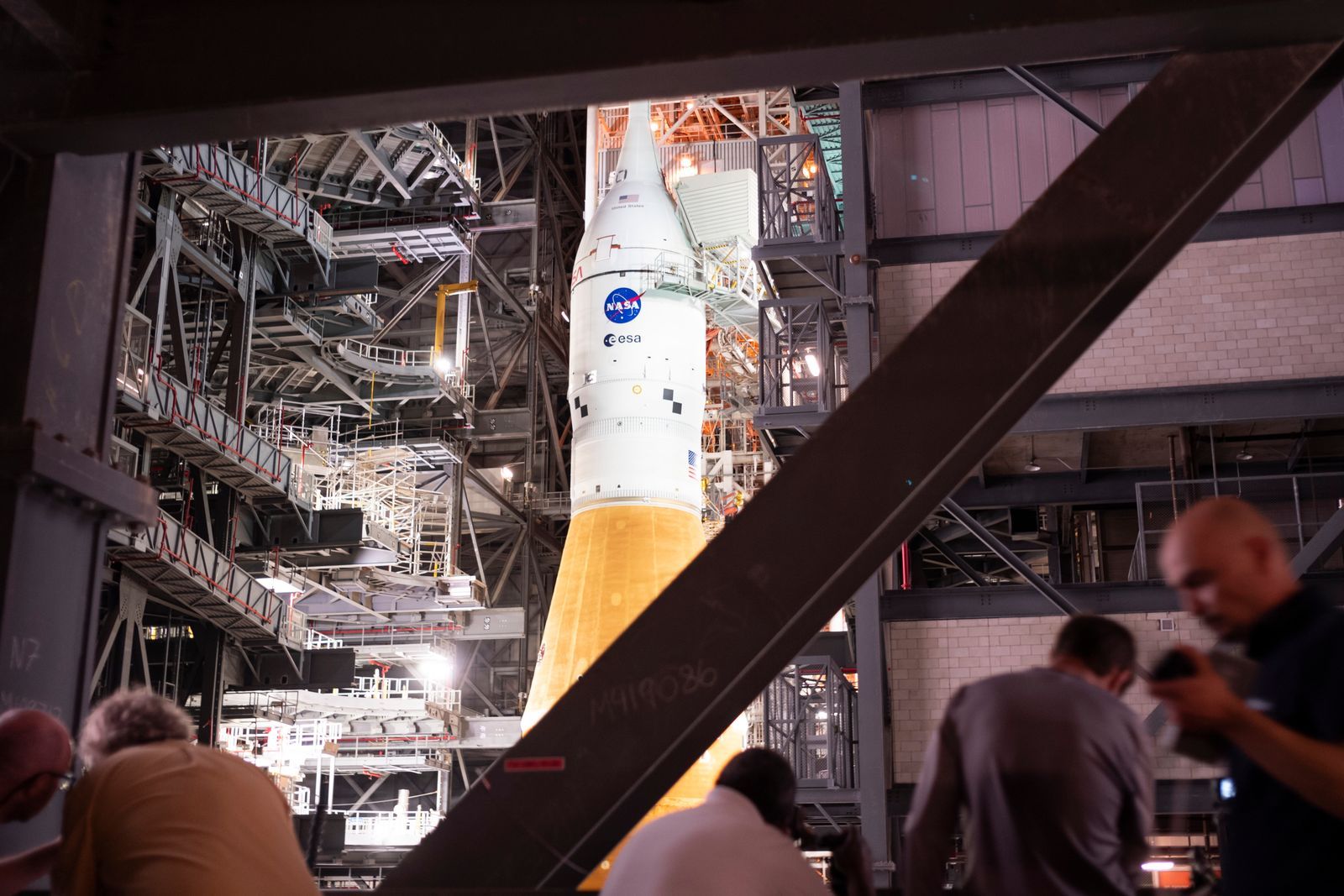
The growth is concentrated in particular sectors. In recent months USMTO cites aerospace as the main driver, with new demand for space-programme production capacity added in. Power infrastructure and data-centre-related investment are lifting orders too. Meanwhile, orders from contract machine shops — which take in work without captive end-customers — have softened for several months. Large, long-cycle sectors are leading the investment, while the base of general-purpose machining is not yet in full swing. That is how the "quality" of demand reads.
Currency and share — a confirmable weak yen, an unconfirmable share
Turn to the Japanese statistics and part of the growth turns out to reflect the builders' own circumstances. In JMTBA's May final report, overseas orders rose 37.6% year on year, of which North America accounted for about US$240 million, the fourth-highest on record. In the June preliminary figures, total orders topped roughly US$1.3 billion (¥200 billion) for the first time in a single month, with overseas orders climbing to about US$940 million. Preliminary figures, though, run only to totals, domestic and overseas orders; the regional and sector breakdowns wait for the final report.
This Japanese-side growth needs to be split into two forces. The weak yen is a confirmable fact. JMTBA's order values and growth rates are denominated in yen, and a weak-yen phase inflates foreign-currency orders once converted, making growth look larger than the underlying volume. The direction of the effect is unambiguous.
Share, on the other hand, cannot be confirmed. Japanese builders are certainly competing with European and Taiwanese makers in high-precision, multi-tasking work, but JMTBA's North American orders (orders received by Japanese builders) and USMTO (demand ordered within the US) differ in geography, currency and scope. The ratio between them gives a sense of direction on share, but cannot be treated as a precise share figure. How much of Japan's headline growth is US demand and how much is currency and share cannot be separated quantitatively from public statistics. This is territory where assertion should be avoided.
Local production — sales that never appear as "exports"
The fourth force, local production, works not to inflate the sales figure but to hide it from the statistics. Japanese-brand machine tools do not necessarily arrive from Japan.
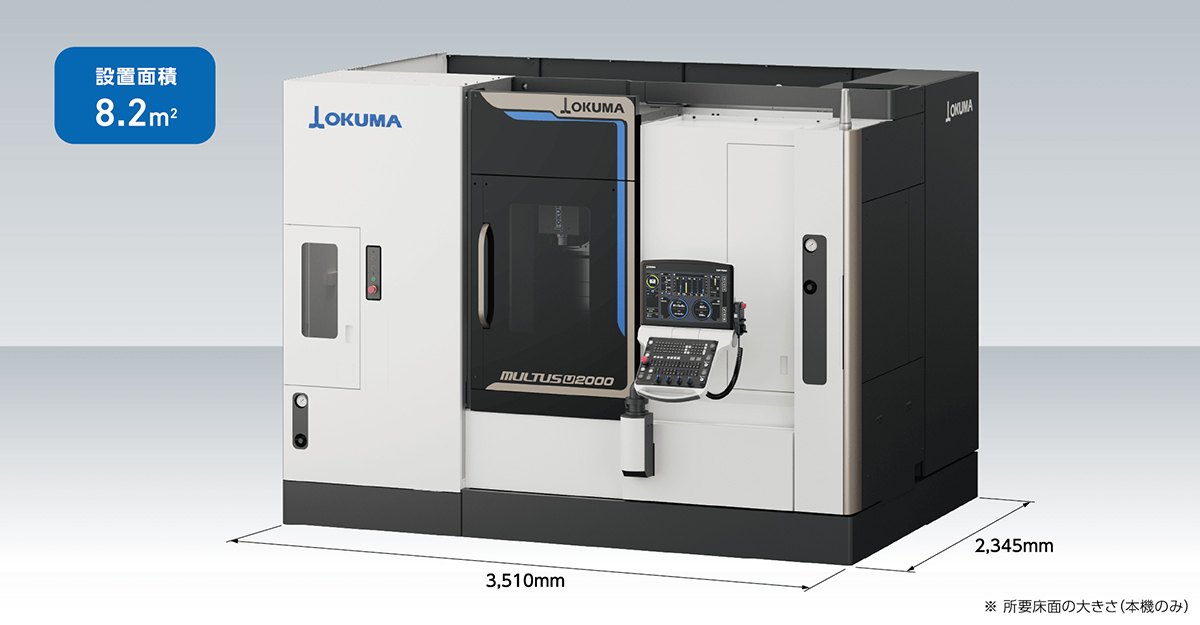
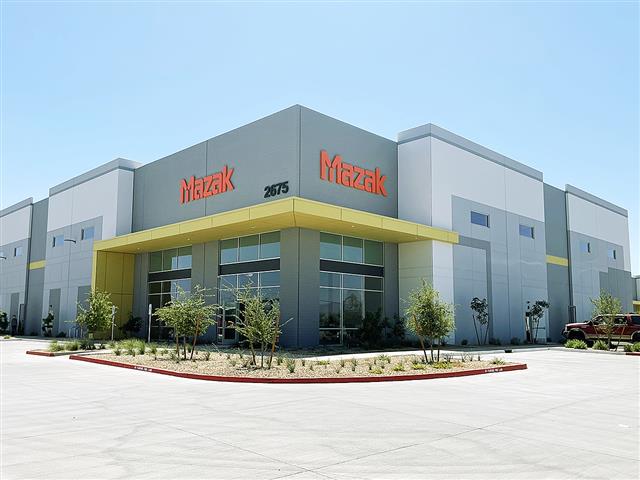
Yamazaki Mazak is emblematic. In 1974 it became the first Japanese builder to produce overseas, at Florence, Kentucky, and today designs and builds more than 70 models in the US at a site of some 90,000 square metres. DMG Mori has a base in California, Makino in Ohio, and Okuma in North Carolina. Given tariffs, lead times and local support, production close to demand is rational.
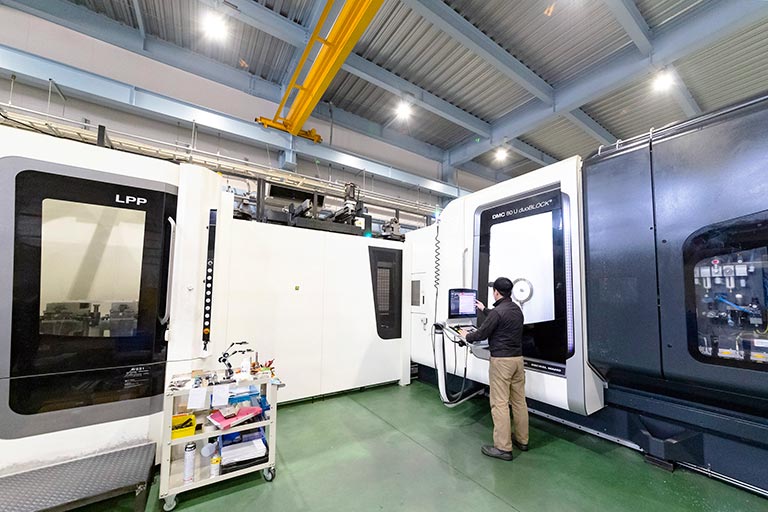
The supply picture is more tangled still. According to DMG Mori president Masahiko Mori, about half of the machines the company sells in the US are made in Germany. Japanese-brand machines are being supplied not from Japan, nor from within the US, but from Germany. "Japanese brands' US sales," in other words, fit neither Japan's exports nor a simple Japan-made-versus-US-made split. Japan's export statistics badly understate Japanese brands' actual US sales. To see US demand, look to USMTO; to see the benefit to Japan's economy, look to Japan's exports and orders. The two show different faces and must be read apart.
What the demand comes down to — aerospace, defence, data centres
With the forces sorted, looking only at the demand side shows where America's metalworking investment is occurring. The aerospace, power and data-centre segments identified by USMTO line up with what companies describe.
Company figures, though, need care over scope. DMG Mori's January–March 2026 quarter brought consolidated orders of about US$1 billion, a record on a quarterly basis (up 28.8% year on year), with double-digit growth across every region including the Americas. This is a worldwide consolidated figure, not the US alone; but the drivers the company names — data centres, semiconductors, aerospace, defence and energy — match USMTO's sector trend and corroborate the "quality" of demand. The company has raised its full-year guidance to about US$3.6 billion in revenue (a forecast, not a result).
Defence in particular is concrete. Mori has indicated that defence-related orders account for about 20% of the company's total in the US, and that demand should continue for the next two to three years until the security environment settles. On tariffs, Okuma president Atsushi Ieki said at a May 2025 earnings briefing that US tariff policy "could be a trigger for a manufacturing recovery" and that "the situation is difficult, but it is also an opportunity to turn it to our advantage," viewing a reshuffling of production bases inside the US as a lift to capital investment.
Automobiles are the contrast. In JMTBA's North America data, May's automotive orders fell below about US$20 million for the first time in ten months. That is a single month's figure and cannot on its own settle a shift in the centre of gravity. But taken together with aerospace and power leading USMTO, and several executives naming the same sectors as drivers, the weight of investment has most likely tilted away from automobiles.
What to watch — "replacement" or "structural"
US demand for metalworking machinery is in an expansionary phase. USMTO — immune to currency and share — bears this out with double-digit growth, and Japanese builders' US sales are riding the wave, helped along by the weak yen. That much can be confirmed.
The open question is whether this demand is temporary replacement demand or structural investment. Three indicators are worth watching. First, whether aerospace, power and data centres keep rising in USMTO's sector breakdown, and whether the softness in contract machine shops bottoms out. Second, which sectors gain weight in the North American breakdown of JMTBA's final report. Third, whether the regional orders of DMG Mori and Okuma keep rising as a trend beyond single-month wobbles.
If it is the replacement of ageing equipment, demand will eventually run its course. But if the multi-year defence pipeline, the tariff-driven reshoring, and data-centre power demand are real, the investment will carry a spread of several years. On the evidence so far, the tilt towards structural investment is credible but not yet established: demand is clearly expanding and its composition leans to long-cycle sectors, yet a durable shift has still to be confirmed. Read with its various forces discounted, Japan's machine tool sales to the US become a gauge of whether American capital spending can shift its footing from "replacement" to "structural." The clues to the answer lie in the next final report and the next USMTO.