Factories Return, Workers Don't: How Japanese Machine-Tool Builders Are Automating US Reshoring
American manufacturing is bringing factories back home. But the people to run them are missing. US manufacturing job openings stood at about 470,000 in the spring of 2026. On the floor of IMTS 2026 — one of the world's largest machine-tool shows, held in Chicago through 19…
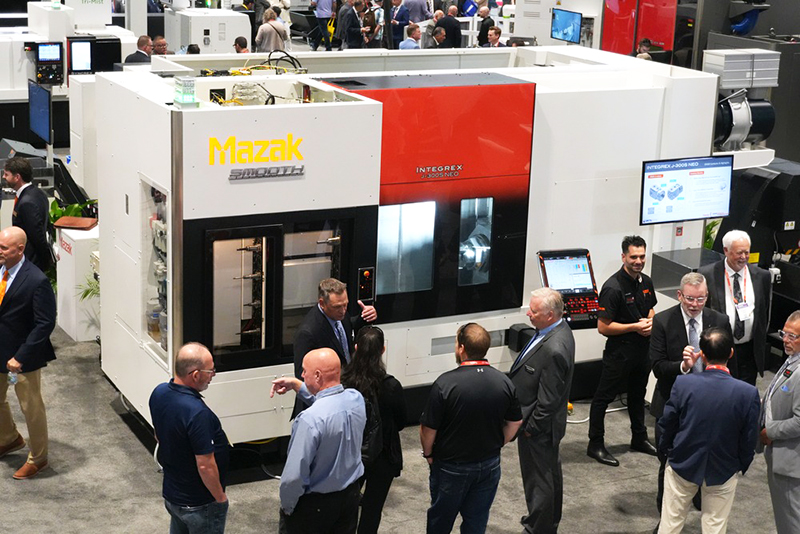
American manufacturing is bringing factories back home. But the people to run them are missing. US manufacturing job openings stood at about 470,000 in the spring of 2026. On the floor of IMTS 2026 — one of the world's largest machine-tool shows, held in Chicago through 19 September — the show floor was dominated by automation designed to close that gap. The credibility of US reshoring will be measured less by factory announcements than by sustained investment in automation.
Factories are returning to America — but the workers are not there
President Donald Trump has made reviving manufacturing a rallying cry, and his tariffs and calls for domestic production have strengthened the momentum behind reshoring. Yet manufacturers still face a severe labour shortage. US manufacturing job openings were about 470,000 in April 2026, and the gap is not temporary: consultancy Deloitte estimates that a widening, structural shortfall could leave some 1.9 million manufacturing jobs unfilled by 2033.
The problem is not only numbers. Skilled machine operators and maintenance technicians are not trained overnight; some roles take one to two years to master. One industry survey found that the availability of skilled workers in the US would do more to bring manufacturing back than tariffs would. Factories can be returned; the people to run them cannot — that is the paradox of reshoring.
AI and data centres drive the machining demand; Boeing holds about a decade of backlog
The heat in the market shows in the figures. Orders from North America for January–June 2026 came to ¥232.4bn, up 36.6% year on year and above ¥200bn in a half-year for the first time, according to the Japan Machine Tool Builders' Association (JMTBA). But the rise reflects less reshoring itself than capital demand from a few growth fields.
AI data centres (DCs) and aerospace are leading demand, with medical devices providing a steady base. As generative AI spreads, data-centre construction is accelerating, swelling machining demand for cooling pipes, optical-fibre connectors and the turbines in the power equipment that feeds them. Aerospace has shaken off its pandemic slump as airlines resume large orders; Boeing carries a backlog put at around ten years, mostly smaller aircraft, and needs to raise output fast. In medical, precision parts such as surgical bone screws are steady.
The headwind inside the tailwind: rising rates and the midterm elections
The blind spot is the risk that political instability could drive interest rates higher. November's midterm elections are expected to be close between Republicans and Democrats. If, after the vote, the administration turns to handouts or tax cuts to lift itself, the fiscal position could weaken and push already-rising long-term rates higher still.
Interest rates are the thermometer of capital spending. Small customers such as job shops — contract machining firms — may cool their appetite for investment as interest costs climb. How long the DC-and-AI tailwind lasts is also hard to read. The tailwind is real, but higher interest rates could still curb investment.
The answer to the labour gap is process integration and unattended operation — and Japan's opening
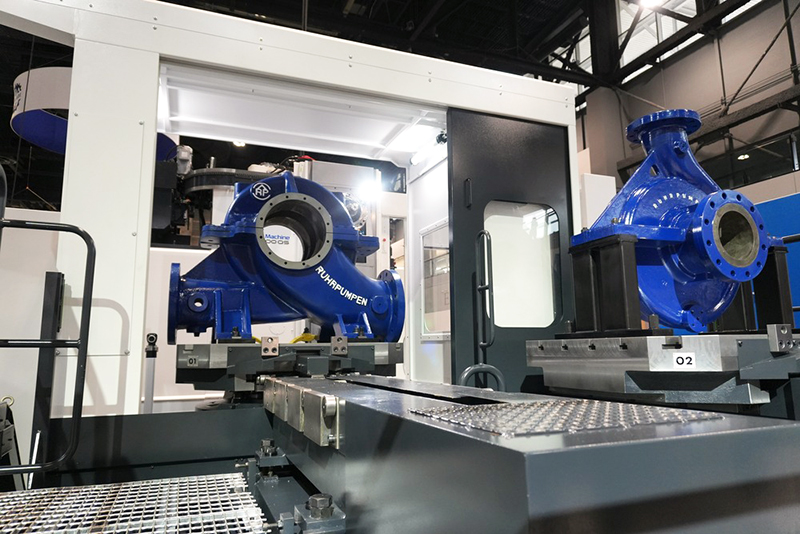
To manufacturers that want to expand output but lack workers, Japan's builders pitch a solution: "process integration" and "unattended operation." Consolidate several processes into one machine and the labour required to transfer workpieces between machines falls. Run it through the night without an operator and the workers needed to keep it going can be pared back.
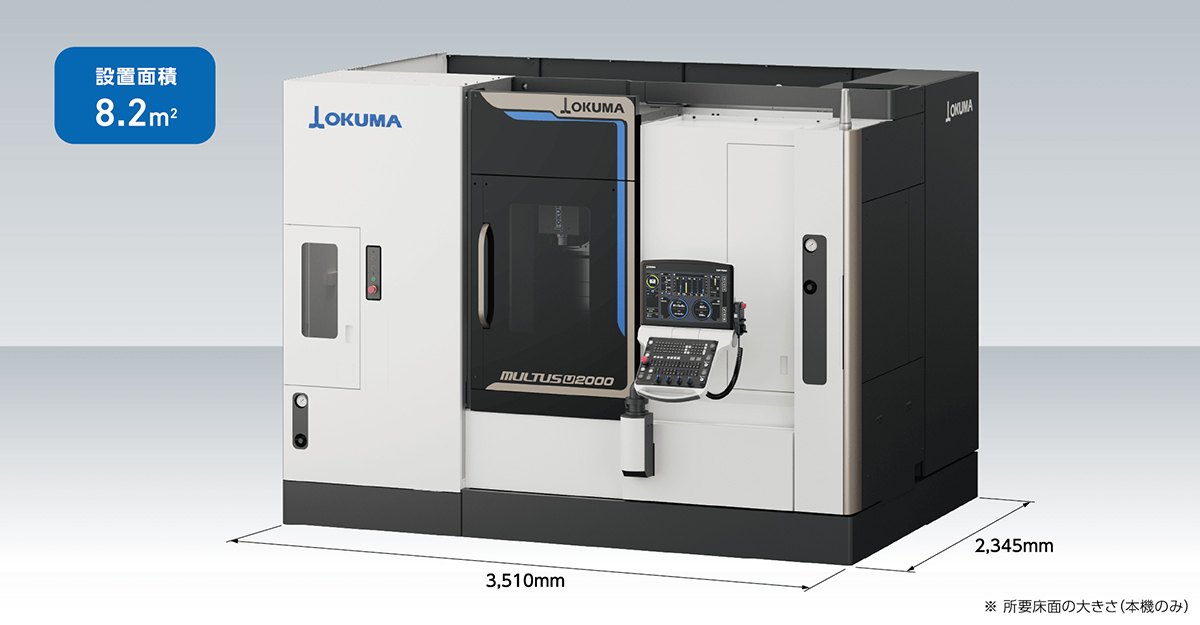
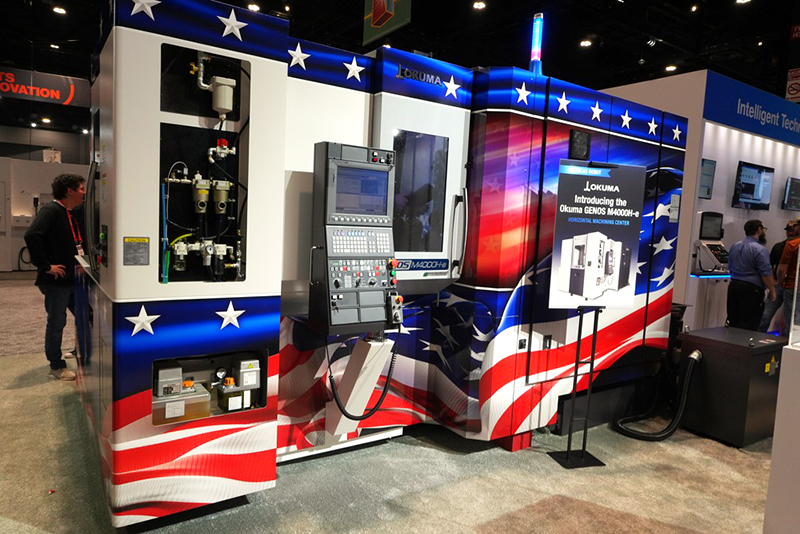
Yamazaki Mazak unveiled — a world first — a multitasking machine with two turning spindles, left and right, that cuts complex shapes in a single unit. Okuma built robots and other automation into nine of the eleven machines it exhibited. Much of this is still a show-floor proposal, but the aim is plain: sell not raw cutting speed or precision, but "a process that needs fewer people."
Automation is no cure-all, however. It can ease the operator shortage, yet the shortage of maintenance technicians to service that automation remains. This pattern — and its limit — of filling a labour gap with automation is not America's alone. It is a challenge that every country pushing local production will meet before long, and the US is its proving ground.
The pitch is not performance but "ready to run once installed": the axis shifts to turnkey
On a floor without skilled hands, a machine is not chosen for being "high-performance" alone. What counts is whether it works once you factor in who installs it and who runs it. That is why demand is strong for "turnkey" — handed over ready to run the moment it is installed. Citizen Machinery proposed a whole lathe-based automation system, right down to a mechanism that automatically measures the dimensions of machined bone screws. Tsugami, under the banner "precision machining, made simpler," put ease of use at the centre of its design.
Competition is shifting from the specifications of a single machine to complete, ready-to-run production systems that deliver results once installed. The scarcer the people to run it, the more this integrated proposition is worth.
How serious the reshoring is will show in the money spent on automation
Reshoring will likely continue for now. But whether the rhetoric is real will show in how much investment stacks up in automation. Three measurable yardsticks exist: whether JMTBA's North American orders top ¥200bn again in the next half; whether small machining firms, sensitive to rate rises, keep investing even as interest costs climb; and whether, at companies that disclose it, the share of revenue tied to automation grows.
Pressed to its core, the question narrows to two. Can the US raise its production capacity without adding people? And would investment in automation hold up if interest rates rose? Until those two answers come in, it is too early to say whether the factories have truly come home.