Easy to understand Die & Mold
It is a metal mold used when mass-producing parts of the same shape. All kinds of products and parts are produced using molds.
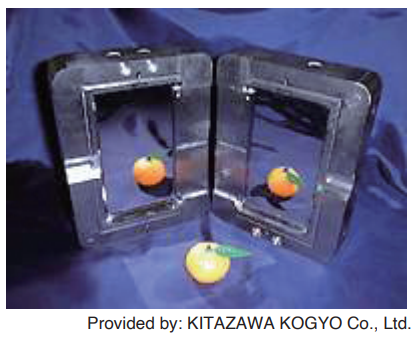
(1) What is a mold/die?
It is a metal mold used when mass-producing parts of the same shape. All kinds of products and parts are produced using molds.
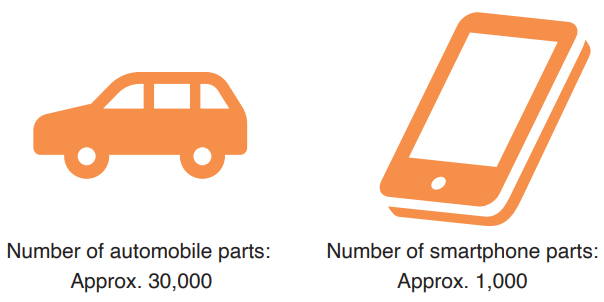
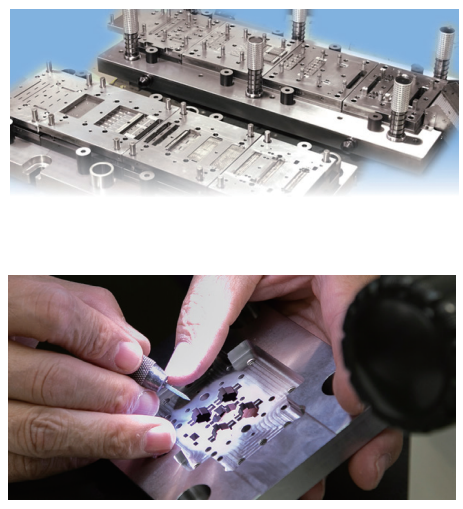
► Most parts are produced by molds
(2) The principle of molds is transfer technology.
Molds can be compared to chocolate molds. For example, you melt chocolate and pour it into a heart-shaped mold. Once it hardens, you take it out. By repeating this, you can make many heart-shaped chocolates of the same size (dimensions) and the same form (shape).
At this time, if you engrave the letters "LOVE" on the bottom of the mold, the same letters will be transferred to the hardened chocolate. Similarly, if you polish the bottom of the mold like a mirror, the surface of the hardened chocolate will become smooth and glossy.
Since a mold uses transfer technology, stricter precision is required for the mold (the heart mold) than the dimensions required for the product (the chocolate). For this reason, it is said that the quality of a product is determined by the mold.
► Mold making is a job that determines product quality
(3) Why are molds necessary?
To mass-produce parts of the same dimensions and shape, producing them with a mold is the best approach in terms of cost, precision, and speed.
If you were to produce 1 million parts of the same shape, and you produced them by cutting each part one by one without using a mold... ① How much would the production cost of a single part be? ② Would the dimensions of all the produced parts be the same?
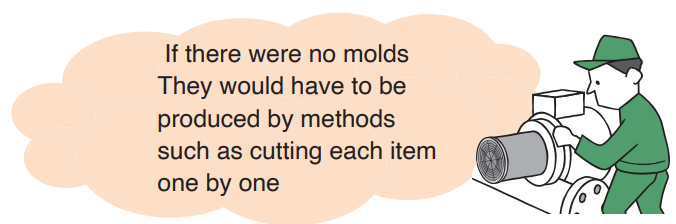
► Molds are important equipment for mass production
(4) Types of Molds/Dies
Molds/Dies can be broadly divided into 2 main categories.
Press Die Parts are produced by applying pressure to iron plates with a die to bend, cut, or draw them. For example, it produces things like automobile bodies.
Plastic Mold Parts are produced by melting materials, pouring them into a mold, and letting them harden. For example, it produces things like PET bottle caps.
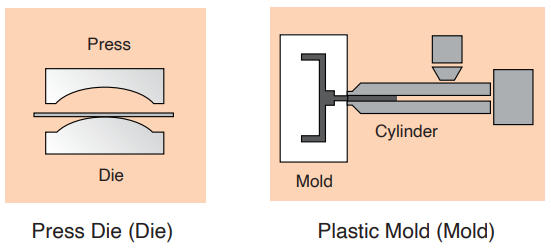
(5) Mold Manufacturing Process (From Demand to Completion and Use)
❶ Product Development (Product Design) A new product has been developed and will be sold. For this purpose, parts will be mass-produced. To mass-produce parts, a mold is necessary. Therefore, it was decided to manufacture a mold. First, the shape data of the parts to be mass-produced is handed over to the mold designer.
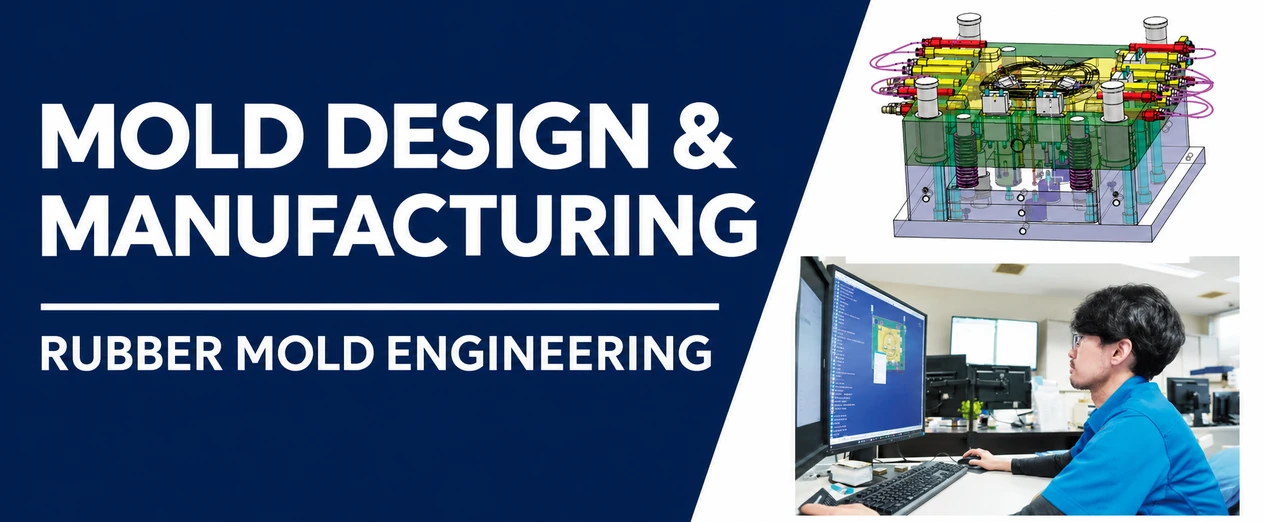
❷ Mold Design and Machining Data Creation Based on the provided shape data of the parts to be mass-produced, the mold designer designs a mold that can mass-produce those parts. Then, based on the completed mold blueprints, they create machining data to operate the machines that manufacture the mold components.
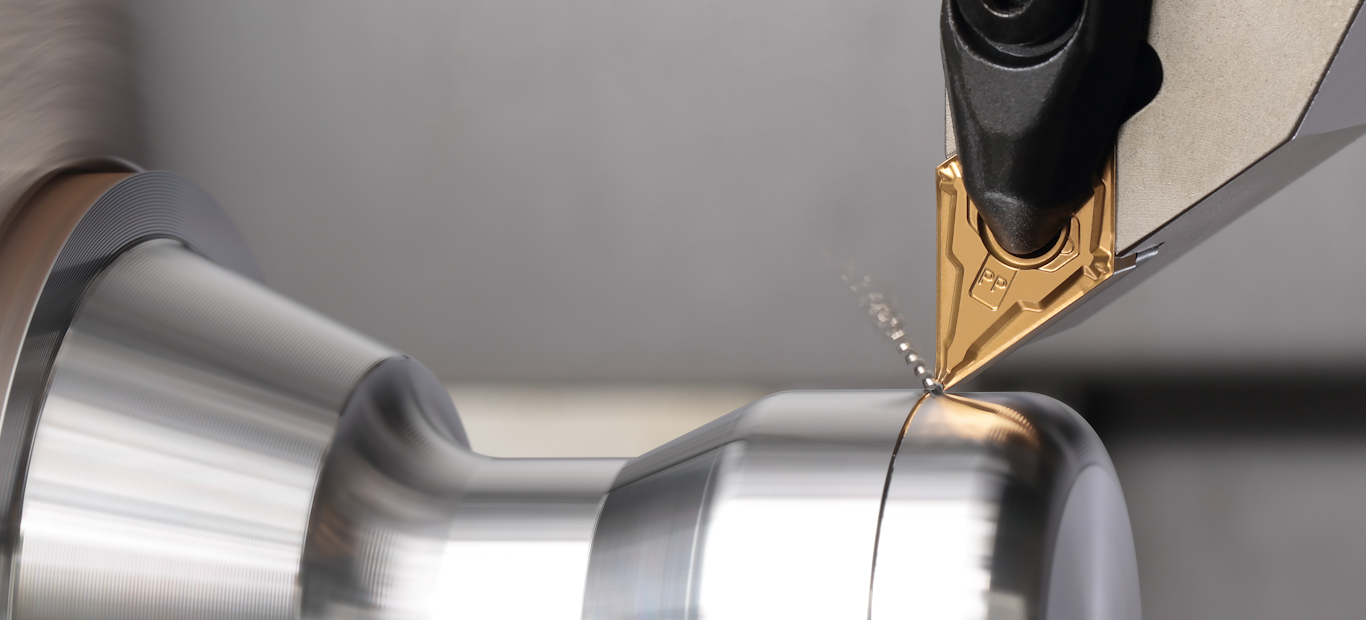
❸ Mold Machining Mold components are machined using machine tools, etc., based on the mold drawings and machining data.
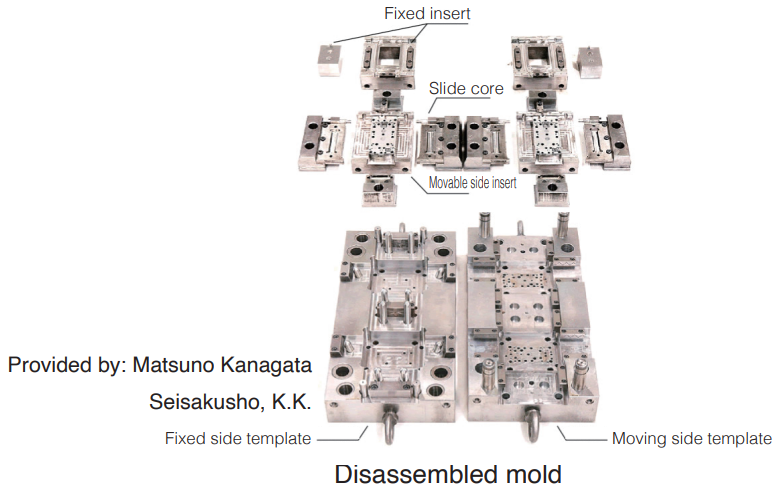
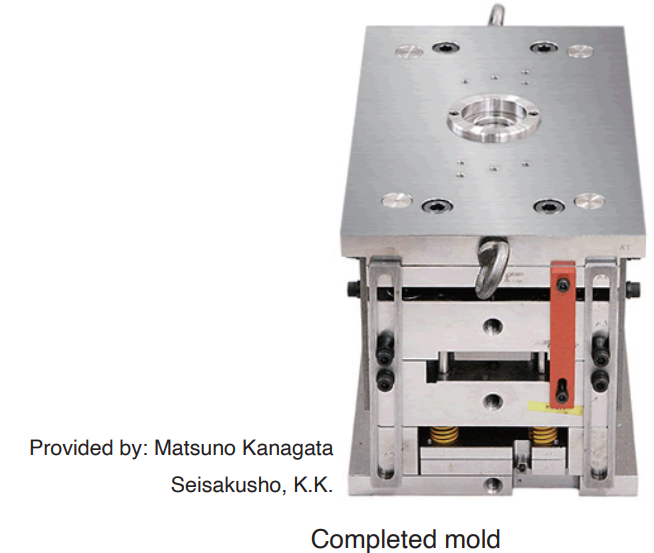
❹ Mold Finishing and Assembly After finishing and adjusting the dimensions and surfaces of the mold components machined by machine tools, the mold components are assembled according to the mold blueprints, the mold is completed, and test production is conducted. Since a wide variety of functional parts such as moving devices, cooling systems, and sensors are incorporated into the mold, a mold is not just a simple tool but a mass production facility.
❺ Mold Completion and Mass Production Start The completed mold is installed in a molding machine (such as a press machine or injection molding machine), and mass production of the parts begins.