DMG MORI Nagaoka to Unite Grinding and Boring Businesses with Planned Annual Capacity for 350 Machines
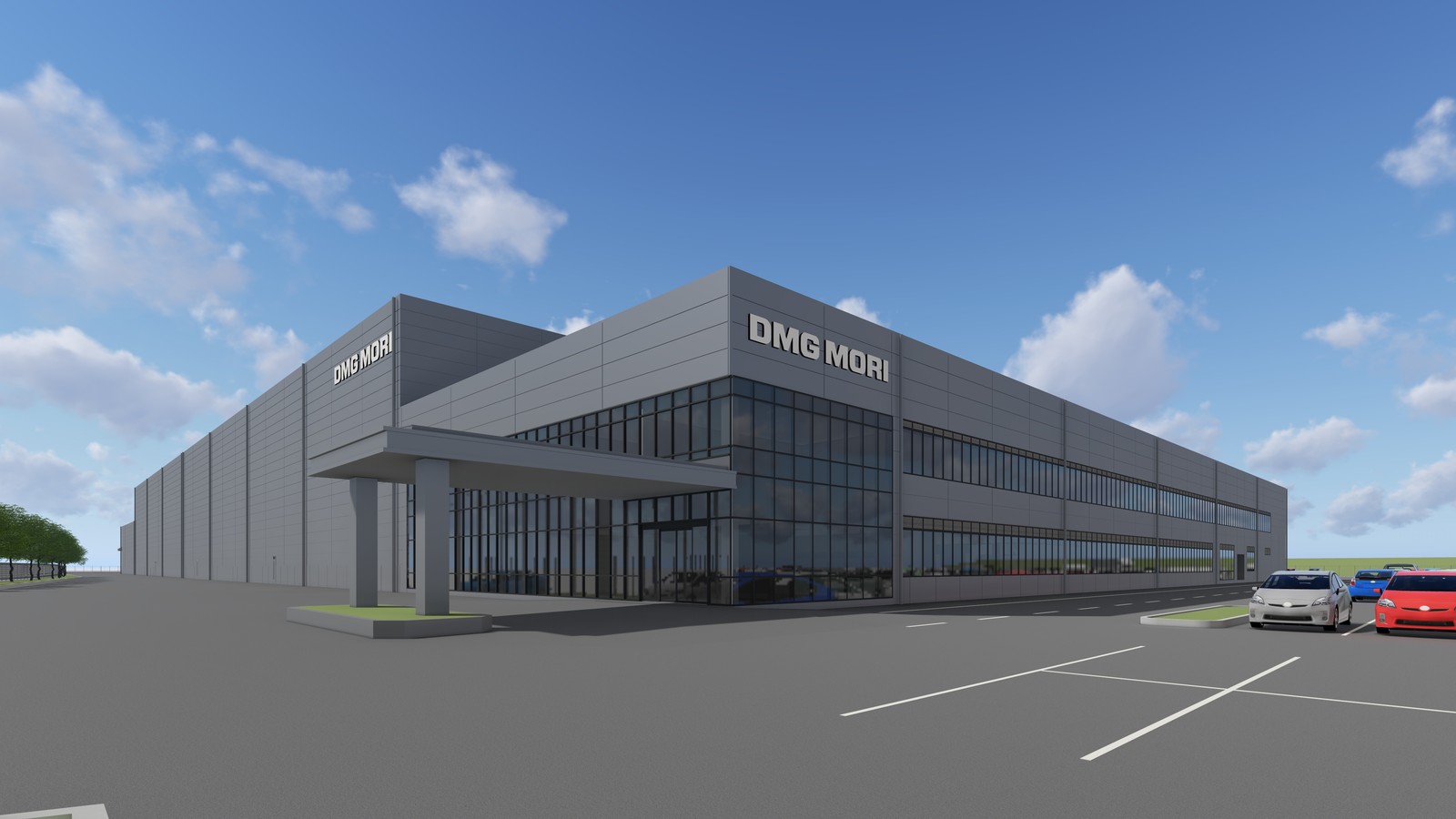
Japan's DMG MORI announced on 19 November 2026 that it will integrate two wholly owned subsidiaries in Nagaoka, Niigata Prefecture, in January 2027, consolidating their businesses into DMG MORI Nagaoka. A new plant being built for about US$95m is scheduled to open in spring 2027 with a planned capacity of 350 machines a year. The question is whether the two companies, which make different core products, can extend the shared components and control systems already used on some models across the whole organisation.
Key points
- What was decided: Japan's Taiyo Koki and Japan's DMG MORI Precision Boring (formerly Kurashiki Kikai) are scheduled to be combined into one company in January 2027
- Scale: A new plant costing about US$95m, with a planned capacity of 350 machines a year and more than 70% of output to be exported
- The focus: Whether shared components and control systems, already used on some models, can spread across development, purchasing and manufacturing
- What to watch: How many models adopt shared components and control systems after the plant opens, and actual production
From a plant for two companies to a single DMG MORI Nagaoka
In February 2025, the Nagaoka plant was reported as a facility for both subsidiaries, to be built for about US$63m and to start operating in 2027. In its August 2026 disclosure of a share offering in overseas markets, DMG MORI said it would allocate about US$95m of the proceeds to the plant.
What is new is that the two companies will be merged into a single legal entity. They are Taiyo Koki, which makes grinding machines that use abrasive wheels to finish part surfaces to high precision, and DMG MORI Precision Boring (formerly Kurashiki Kikai), which makes horizontal boring machines that use a horizontal spindle to machine holes and faces on large parts. Their businesses are to be consolidated into DMG MORI Nagaoka on 1 January 2027, with Hirotake Kobayashi, an executive vice president of DMG MORI, as president.
After the integration, the company plans to combine the two subsidiaries' development, purchasing, manufacturing and administration, and to standardise components and systems while promoting cooperation across departments. DMG MORI intends to develop Nagaoka into one of its main sites in Japan, alongside its Iga plant in Mie Prefecture and its Nara plant.
Annual capacity for 350 machines, with more than 70% for export
The plant is under construction in Takazu-machi, Nagaoka, with a total floor area of about 29,000 square metres. It is scheduled to open in spring 2027, with a planned capacity of 350 machines a year.
It will build two product lines: various grinding centres, mainly vertical, and horizontal boring machining centres.
DMG MORI says that more than 70% of the products made in Nagaoka will be exported. Both subsidiaries joined the group through acquisitions. Taiyo Koki posted sales of about US$59m in the financial year 2024; DMG MORI took a stake in it in 2001 and made it a wholly owned subsidiary in 2025. DMG MORI announced its acquisition of shares in Kurashiki Kikai in 2023.
Extending shared components and controls across two different product lines
The two companies make different core products: grinding machines and horizontal boring machining centres. DMG MORI says combining development, purchasing, manufacturing and administration, and standardising components and systems, are intended to improve productivity and quality and shorten development times. It has not, however, given numerical targets such as the proportion of common components or how much development time will be cut.
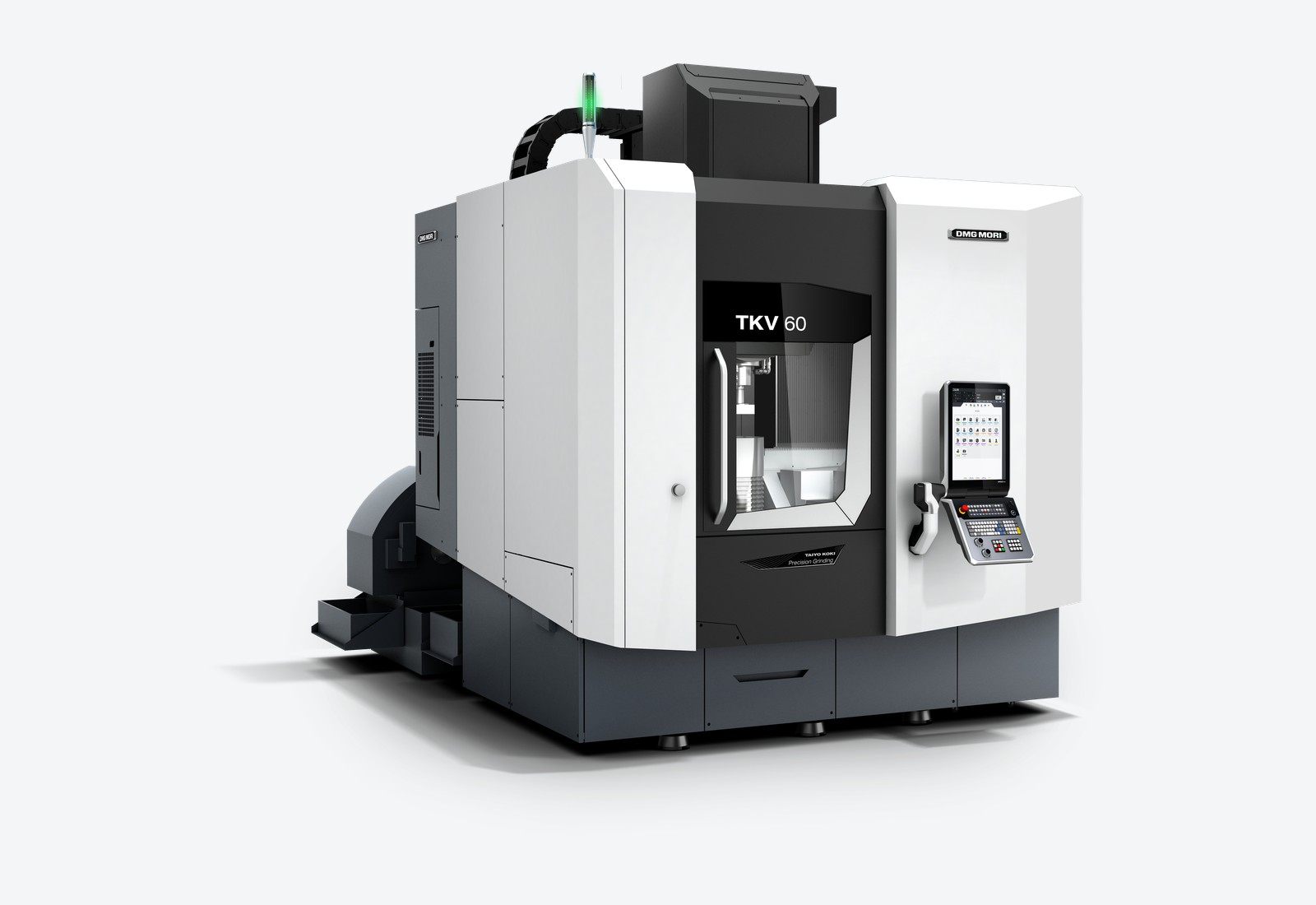
There are already examples of shared components and controls. Taiyo Koki's "TKV 60" vertical combined grinding machine uses a grinding spindle, which rotates the abrasive wheel, developed jointly with DMG MORI, and has adopted DMG MORI's "ERGOline X" control panel. It can also be connected to DMG MORI's "PH Cell" automation system. The "PBN200|1250" horizontal boring machining centre, launched by DMG MORI Precision Boring in September 2026, also combines DMG MORI's chip management and operating interface.
The integration appears to extend this model-by-model adoption across development, purchasing and manufacturing. DMG MORI says it will combine the two companies' grinding and boring expertise with its own five-axis machining, which moves tools and workpieces along five axes, multi-tasking machining, which combines several processes on one machine, automation and digital technology, to strengthen its offering for process integration.
Transition and talent are conditions for the start-up
The announcement does not say how equipment will be moved from the existing plants, how production will be maintained, or what will happen to the existing plants. How the company bridges the gap between the legal integration in January 2027 and the opening of the new plant in spring is a condition for a smooth start-up. The August share offering disclosure described the plant as "scheduled to start operating in January 2027", while the latest announcement says it will "open in spring 2027"; DMG MORI has not explained the relationship between the two.
Talent is another condition. In February 2025, the two subsidiaries were reported to be aiming to employ about 600 people in total by 2030. DMG MORI says Nagaoka is well placed to train and recruit engineers, citing Niigata University, Nagaoka University of Technology and the National Institute of Technology, Nagaoka College. How the company retains and develops engineers with specialist grinding and boring expertise, while pushing standardisation, will also be tested.
70% for export, with overseas customers expected in Nagaoka
An export ratio of more than 70% means the Nagaoka plant will become a supply base for overseas markets. DMG MORI expects customers and engineers from the Americas, Europe, Asia and elsewhere to visit Nagaoka for pre-shipment acceptance, test machining and operator training, and says it will use its global sales and service network to accelerate the roll-out of Nagaoka products.
The company plans to combine grinding and boring technology with five-axis and multi-tasking machining and automation to expand its offering to industries that require high-precision, complex machining, such as aerospace, semiconductors, medical and energy. If the policy of exporting more than 70% is realised, the Nagaoka site will handle more pre-shipment acceptance inspections, test machining and operator training for overseas customers.
The integration plan is set, but the yardstick for results is not
What DMG MORI has set out so far is a planned capacity of 350 machines a year and a policy of standardisation. It has not disclosed the proportion of common components or how much development time will be cut. At this stage, DMG MORI has announced the framework and timetable for an integration that has yet to take place, but has not presented a yardstick for measuring its results. Whether outsiders can verify the benefits of the legal integration will depend on whether DMG MORI shows, in numbers, how far shared components and control systems spread across both the grinding and boring lines when the plant opens in spring 2027.