A Major Japanese Chemical Maker Builds Its First Rare-Earth Refining Plant in 18 Years: How Far Can Neodymium Magnets Break From China?
Japan's Shin-Etsu Chemical will build a new rare-earth refining facility in Fukui Prefecture. It is the first time in about 18 years that the company has added rare-earth production capacity in Japan. According to Japanese media reports, the investment is at least 35 billion…
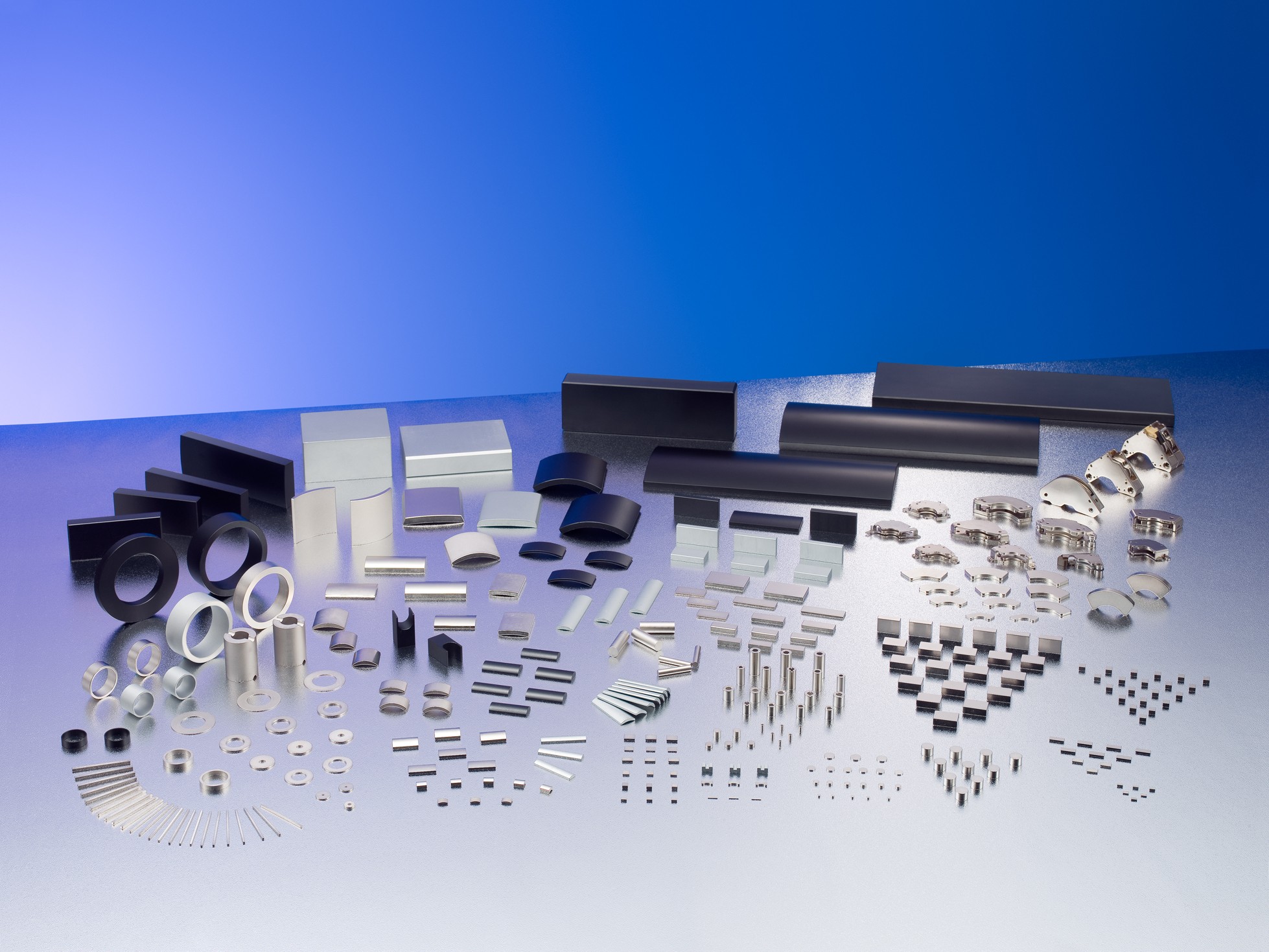
Japan's Shin-Etsu Chemical will build a new rare-earth refining facility in Fukui Prefecture. It is the first time in about 18 years that the company has added rare-earth production capacity in Japan. According to Japanese media reports, the investment is at least 35 billion yen, of which around 17.5 billion yen is expected to be covered by a government subsidy. The plant is intended to raise supply capacity for the neodymium magnets used in electric-vehicle drive motors and similar applications.
Key points
- Shin-Etsu Chemical will build a rare-earth refining facility in Fukui — its first new domestic plant in about 18 years.
- The investment is at least 35 billion yen, with roughly 17.5 billion yen coming from a government subsidy.
- The output is aimed at neodymium magnets for EV drive motors, adding to the company's existing plant in Echizen, Fukui.
- The backdrop is China's tightening rare-earth export controls since 2025.
- The specific site, capacity and start-up timing have not been disclosed.
What was announced is refining, not magnet assembly
Shin-Etsu Chemical said on 10 June 2026 that it would build a new rare-earth refining facility in Fukui Prefecture. It is the company's first new rare-earth production plant in Japan in about 18 years.
The investment is at least 35 billion yen, of which roughly 17.5 billion yen is expected to be covered by a government subsidy. The facility aims to increase supply capacity for the neodymium magnets used in EV drive motors, among other applications.
The new site follows the company's existing refining and magnet plant in Echizen, Fukui. The specific location, capacity and start-up timing have not been disclosed.
The important point is that what is being expanded is not the magnet-assembly stage but the upstream refining — the separation and purification of rare earths. Shin-Etsu is one of the few companies that handles the chain from rare-earth refining through to magnet production within Japan, and this investment thickens the upstream end of that integrated chain.
Why invest now in refining, where margins are thin
The fact that it has been 18 years since the last new plant also shows that, until now, there was little economic case for greatly expanding domestic refining capacity. The separation and purification of rare earths is a stage where China holds an overwhelming cost advantage, and most users have relied on Chinese supply.
What changed the situation is China's tightening of export controls. In April 2025, China added seven categories of items related to medium and heavy rare earths — including dysprosium and terbium — to its export-control list. Reports indicate that in January 2026, tighter dual-use export controls aimed at Japan also took effect.
Neodymium magnets are based mainly on iron and neodymium, but dysprosium and terbium — heavy rare earths — are added so that the magnets retain their strength at high temperatures. EV drive motors run hot continuously, so this heat resistance is essential. And for these heavy rare earths, supply is said to depend almost entirely on China.
In other words, even if magnets can be made domestically, production cannot stand if the supply of the heavy rare earths that go into them is squeezed. This investment appears to be a hedge against that structural weakness.
The bottleneck it aims to fill is the middle stage
A magnet supply chain broadly follows the flow of "mining → separation and purification (refining) → alloy and magnet production." Where Japan is weak is the middle stage: separation and purification.
Extracting the target rare-earth elements from ore requires many stages of solvent extraction, and success depends on accumulated equipment, environmental measures and technical know-how. Because China has long held this stage, Japanese firms have had the technology to make magnets yet still depended on China for purified raw material.
The significance of Shin-Etsu expanding refining capacity lies in bringing this middle stage into Japan. Even if mining itself still relies on overseas resources, integrating everything from purification to the magnet within Japan narrows the range over which Chinese export controls take direct effect.
Even so, expanding refining capacity leaves the question of where the ore and intermediate feedstock ahead of it will come from. Japan has been building supply networks with Malaysia, France and others, but how the upstream raw material will be secured is not visible from this announcement alone.
Half of the 35 billion yen is subsidy
What stands out in this investment is that of the at least 35 billion yen, about 17.5 billion — roughly half — is government subsidy.
This shows that rare-earth refining is a business that is hard to justify on private capital alone. Competing on price against Chinese purified feedstock makes domestic refining difficult to run profitably. It is precisely because the supply network still has to be secured that public money is being put in under an economic-security framework.
Put differently, the value of this plant lies not in cost competitiveness in normal times but in the security significance of a supply that cannot be cut off in a crisis. As with domestic semiconductor investment, investment that cannot be explained by economic rationality alone is now spreading to base materials for manufacturing.
It concerns every manufacturer that uses motors
Neodymium magnets are used not only in EV drive motors but across a wide range — industrial robots, the servo motors of machine tools, wind power and more. Any anxiety over magnet supply reaches all of these downstream manufacturers.
If domestic sites integrating purification through to magnets increase, motor makers and carmakers gain more choice in where they source. It will not resolve dependence on China at a stroke, but the value of securing an alternative when supply is interrupted is large.
At the same time, domestic sourcing is likely to cost more than Chinese sourcing. Finished-goods makers will be forced to weigh stable supply against price. A split may develop — domestic material for security-critical uses, Chinese material for cost-first uses.
What to watch next is capacity and feedstock
What is fixed in this announcement is the investment amount, the broad use and the "first in 18 years" fact. The specific site, capacity and start-up timing have not been made clear.
Several points deserve scrutiny. First, what share of domestic magnet demand the expanded refining capacity can cover. Second, how stably the ore and intermediate feedstock ahead of purification can be secured from outside China. Third, whether a business supported by subsidy can hold up on cost after the subsidy period.
A new domestic rare-earth plant is a step towards supply-chain autonomy. But it is a move to reclaim one stage of the magnet supply chain within Japan, not a shift to independence that reaches all the way up to raw material. Whether this investment actually strengthens the supply network rests on the capacity after start-up and the substance of feedstock procurement.