A Japanese Micro-Machining Specialist Plans a 20% Output Rise, Concentrating Skilled Workers on Assembly
Japan's Roku-Roku Smart Technology, a machine tool maker based in Minato Ward, Tokyo, plans to raise output of its core machine tool range by about 20% in fiscal 2026 from actual fiscal 2025 output, building around 200 micro-machining centres. Demand for drilling the jigs used…
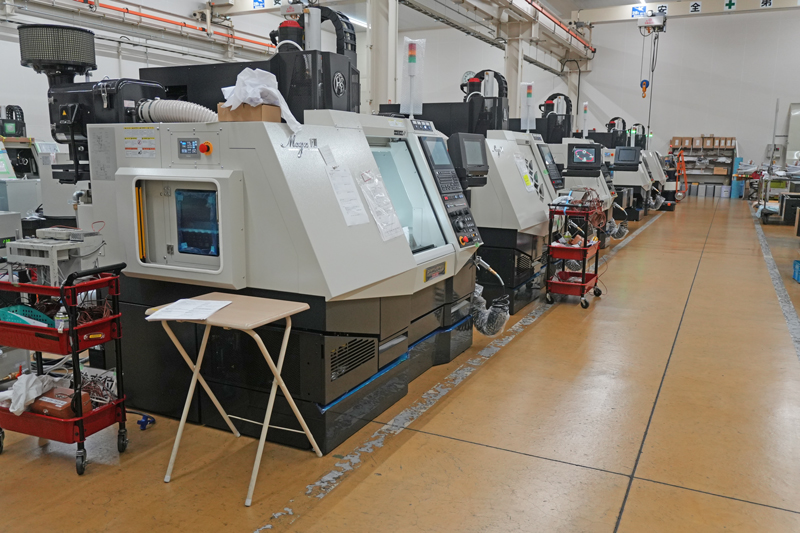
Japan's Roku-Roku Smart Technology, a machine tool maker based in Minato Ward, Tokyo, plans to raise output of its core machine tool range by about 20% in fiscal 2026 from actual fiscal 2025 output, building around 200 micro-machining centres. Demand for drilling the jigs used in semiconductor testing has grown, and lead times have lengthened.
Rather than make a large capital investment, the company is reorganising work so that its skilled veteran assemblers can concentrate on assembly. The question is whether that is enough to shorten lead times.
Key points
- In fiscal 2026, Roku-Roku plans to increase output of its core machine tool range by about 20% from actual output in fiscal 2025. It plans to produce around 200 micro-machining centres at its Shizuoka Plant in Yaizu, Shizuoka Prefecture, its only production site
- Demand centres on drilling extremely small-diameter holes for the semiconductor testing process. That demand surged from 2025, and orders and sales in fiscal 2025 reached record highs. For fiscal 2026, the company expects orders, sales and unit shipments all to set new records
- The increase is centred on the "MEGA-Ⅶ" micro-machining centre. Veteran workers will focus on assembling the cast base with the upper structure, while other tasks are handed to younger staff or outside contractors
- There will be no major capital investment. A milling machine has already been replaced. One gantry-type machining centre is to be added by around the end of 2026, and a five-sided machining centre will be retrofitted (an upgrade of existing equipment) in 2027
"MEGA-Ⅶ" for semiconductor testing anchors a 200-unit plan for fiscal 2026
Roku-Roku Smart Technology was founded in 1903 in Ginza, Tokyo, and changed its name from Roku-Roku Sangyo in 2023. Its core products are micro-machining centres, which cut small parts to tolerances measured in micrometres (one-thousandth of a millimetre). It offers five micro-machining models, some of which achieve a machining accuracy of plus or minus 1 micrometre.
The production increase is centred on the "MEGA-Ⅶ", which the company classifies as a high-precision, high-speed, small-diameter micro-machining centre. Its maximum spindle speed is 40,000 or 60,000 revolutions per minute, and its X, Y and Z axis travel is 410, 330 and 200 millimetres respectively. The machine is suited to spinning small-diameter tools at high speed and performing repeated precision cuts within a small area.
In fiscal 2026 the company plans to produce about 200 micro-machining centres at the Shizuoka Plant. With only one production site, the entire increase has to be absorbed within that single factory.
Generative-AI projects pushed up demand for drilling test jigs
Demand is being driven by semiconductor testing. The main application of Roku-Roku's micro-machining centres is drilling holes in jigs used to test semiconductors, and the company regards drilling holes at a narrow pitch as a particular strength of its machines. In electrical testing of semiconductors, large numbers of fine contact pins are generally brought into contact with a chip's electrodes. The jigs that position those pins require large numbers of extremely small-diameter holes set at tight intervals.
According to the company, generative-AI-related projects began in earnest from around autumn 2024 across East Asia, including Taiwan, South Korea and China, and orders rose sharply. Driven by the spread of AI and data centres, this semiconductor-related demand surged in 2025. Orders and sales in fiscal 2025 reached record highs, but lead times for micro-machining centres have lengthened.
Laser machining is an alternative way to make such holes, and some overseas manufacturers have been proposing it. In spring 2025, however, President Yusuke Yano said that in some cases cutting offers advantages in tight-pitch capability, yield and machining speed. The company regards its strength as offering machining proposals developed with Japanese cutting-tool and tooling makers, rather than selling the machine alone.
Reorganising work to focus skilled staff on assembly
At Roku-Roku, skilled veteran workers assemble the cast base and the upper structure that sits on it to complete each machine. So that the veterans can concentrate on this assembly, the company is handing other tasks to younger staff or outside contractors. It has also enlarged the assembly area. The aim appears to be raising productivity across the whole process by directing veterans' working hours to assembly.
On the equipment side, there will be no large investment. A milling machine has already been replaced, and one gantry-type machining centre is to be added by around the end of 2026. A retrofit of a five-sided machining centre is planned for 2027. Rather than expanding capacity by building a new plant, the plan prioritises reallocating work and making selective equipment upgrades within the existing factory.
The plans also point to a clear near-term priority in capacity allocation. At JIMTOF 2026, the Japan International Machine Tool Fair to be held at Tokyo Big Sight from 26 to 31 October 2026, the company will exhibit an upgraded version of the "AndroidⅢ-MT", a multi-tasking machine that performs both cutting and grinding. While broadening what it offers customers, Roku-Roku appears, for now, to be weighting its production capacity towards the MEGA series for semiconductor testing.
Possible implications for machinery procurement and small-diameter tools
Even with the planned increase, there is a view that long lead times may persist for some time while demand stays strong. If they do, machining firms that make semiconductor test jigs will need to build equipment lead times into their production plans.
Tooling could also be affected. For difficult narrow-pitch work, Roku-Roku recommends small-diameter tools made in Japan or tuned in Japan for specific applications. Rising demand for micro-machining centres may therefore spill over into demand for such tools and tooling.
Next: whether the 200-unit plan shortens lead times
Three points will show whether the plan works: whether Roku-Roku produces around 200 units in fiscal 2026 as planned, whether its expected record shipments translate into shorter lead times, and whether generative-AI investment keeps feeding demand for test-jig drilling in fiscal 2027 and beyond.
Roku-Roku's plan is a production increase that puts the reallocation of work ahead of large capital investment. The measure of its effectiveness is whether redistributing skilled workers' time within the factory alone can turn a 20% rise in output into higher shipments and shorter lead times.