Yaskawa Raises Revenue Forecast to a Record ¥600bn but Cuts Operating Profit Outlook
Japan's Yaskawa Electric, a maker of servo motors and industrial robots, revised its forecasts for the fiscal year ending February 2027 on 9 October 2026. It raised its revenue forecast from ¥580bn to a record ¥600bn, but lowered its operating profit forecast from ¥60bn to…
Japan's Yaskawa Electric, a maker of servo motors and industrial robots, revised its forecasts for the fiscal year ending February 2027 on 9 October 2026. It raised its revenue forecast from ¥580bn to a record ¥600bn, but lowered its operating profit forecast from ¥60bn to ¥57.5bn. The higher revenue outlook reflects the weak yen. The lower profit outlook builds in the effect on production and shipments of a new enterprise resource planning (ERP) system that went live during Japan's long holiday period in 2026. Demand linked to data centres and semiconductors is strong, and orders in the second quarter reached a quarterly record of ¥185.4bn. The question now is whether that order growth can be turned into shipments and profit in the second half.
Key points
- For the six months to August 2026 (the first half of the fiscal year ending February 2027), revenue rose 9.8% year on year to ¥285.6bn, while operating profit fell 5.5% to ¥22.1bn. Of the ¥25.4bn increase in revenue, about 80%, or ¥20.6bn, came from exchange rates.
- The weak yen and higher sales added a combined ¥8.2bn to operating profit, but this was outweighed by higher overhead costs, lower production profit caused by the ERP migration, and restructuring costs in Europe.
- Second-quarter (June–August) orders, converted into yen, were ¥185.4bn, up 38% year on year and 13% on the previous quarter, driven by investment related to data centres and semiconductors.
- To meet its full-year forecast, Yaskawa needs an operating margin of 11.3% in the second half. Even in the second quarter, after recovering from the disruption, the margin was about 9.3%.
Exchange rates account for ¥20.6bn of the ¥25.4bn revenue increase
The first-half figures look very different once currency effects are removed. Revenue rose by ¥25.4bn from a year earlier, but according to the company's disclosure, ¥20.6bn of that was due to exchange rates. Average rates over the period were ¥159.8 to the US dollar (¥146.2 a year earlier) and ¥23.48 to the Chinese yuan (¥20.26), reflecting a sharp weakening of the yen.
The gap between segments is clear. Revenue in Motion Control, which covers servo motors and inverters, rose 21.7% to ¥137.3bn. Simply deducting the ¥10.1bn currency effect the company disclosed still leaves an increase of about ¥14.3bn. Robotics revenue, by contrast, slipped 0.7% to ¥118.4bn; deducting its ¥10.1bn currency effect implies a decline of about 9%.
The company also cites the persistently weak yen as the reason for raising its full-year revenue forecast. It has revised its second-half rate assumptions from ¥145 to ¥155 to the dollar, and from ¥20.5 to ¥22.0 to the yuan.
Three factors pulled profit down
Yaskawa's own breakdown of the change in operating profit shows a ¥4.6bn boost from exchange rates and ¥3.6bn from higher sales. Against this, higher overhead costs subtracted ¥6.3bn, lower added value ¥0.6bn and other factors ¥2.7bn, leaving a net decline of ¥1.3bn.
One of the drags was the ERP migration. After about three years of preparation, Yaskawa switched its core business system to "S/4HANA" from German software group SAP during Japan's Golden Week holidays (late April to early May). At its July results briefing, the company said the system itself was largely stable, but unexpected problems arose as operating procedures were adapted to it, and it halted some production lines in May to review its processes. Factory utilisation across the company in the first quarter was just under 75%, and the resulting fall in production profit came to ¥2.5bn (¥1.5bn in Motion Control and ¥1.0bn in Robotics). Restructuring costs of ¥1.0bn in the European robotics business came on top of that.
Robotics was hit hardest. Overseas sales grew, helped by automotive demand in the Americas and semiconductor robots in China, but sales in Japan fell because of the ERP migration. First-half operating profit in Robotics dropped 43.3% to ¥6.0bn, and the margin fell from 8.8% a year earlier to 5.0%. By region, revenue in Japan fell 3.2% to ¥70.7bn, the only region to decline.
The second-quarter margin recovered to 9.3%
The main impact on profit appeared in the first quarter, and recovery progressed in the second. Robotics operating profit in the first quarter was about ¥0.9bn, a margin of about 1.6%. Working back from the half-year figures, second-quarter Robotics revenue was about ¥61.7bn and operating profit about ¥5.1bn, implying a margin back in the 8% range. The same simple calculation for the group as a whole gives second-quarter revenue of about ¥146.6bn and operating profit of ¥13.6bn, implying a margin of roughly 9.3%.
Yaskawa says the ERP migration has been completed. However, it still lists embedding the new processes in day-to-day operations as a priority, and stops short of saying the disruption is entirely over.
Demand broadens to semiconductor equipment and data-centre infrastructure
Second-quarter orders of ¥185.4bn were a quarterly record. These figures are converted into yen at average rates for the period, however, so they include a boost from the weak yen.
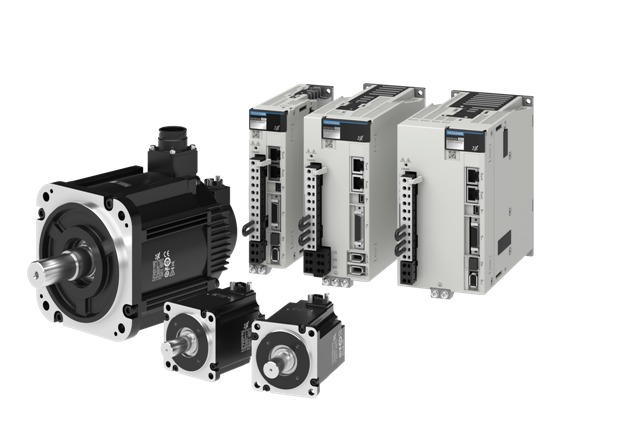
Demand is strongest for semiconductor manufacturing equipment and data centres. AC servo sales rose in every region, led by semiconductor and electronic-component applications and machine tools. Inverter sales grew on data-centre applications and semiconductor manufacturing equipment, as well as oil and gas. In the United States, the company says its "U1000" matrix converter, which suppresses harmonics, won orders for building air-conditioning and server cooling at data centres. Motion Control operating profit rose 32.8% to ¥16.0bn, supporting group earnings.
Demand is not uniform, though. Carmakers in Europe remain cautious about investment, and automotive demand in China fell compared with a year earlier, when there had been large orders. Alongside robots for the automotive industry, demand is broadening to servo motors and robots for semiconductor equipment and inverters for data-centre infrastructure.
Americas up 26%, China up 15%: currency tells a different story
Regional revenue also needs to be read net of currency effects. Revenue in the Americas rose 26.2% to ¥78.1bn, well ahead of the dollar's roughly 9% appreciation against the yen. Alongside data-centre and semiconductor demand, large oil and gas orders also increased.
Revenue in China rose 15.1% to ¥66.7bn, but over the same period the yuan rose by about 15.9% against the yen, almost the same rate. The currency mix of these sales is not disclosed, but a simple calculation that treats all of them as yuan-denominated would leave almost no underlying growth after adjusting for currency effects. The company describes Chinese demand as strong on the back of semiconductor investment, with automation demand in general industry also holding firm. At the July briefing, it also said semiconductor manufacturing equipment in China was being localised to a considerable extent. In the second half, Yaskawa plans to expand orders with "Σ-Mx", an AC servo developed as a strategic product for the Chinese market.
The second-half margin target is about two points above the recovered second quarter
Whether the revised forecast is achievable depends on second-half shipments. Subtracting first-half operating profit of ¥22.1bn from the full-year forecast of ¥57.5bn leaves ¥35.4bn needed in the second half. On second-half revenue of ¥314.4bn, that is an operating margin of 11.3%, about two percentage points above the roughly 9.3% achieved in the recovered second quarter.
The segment revisions show the same pattern. Yaskawa raised its Motion Control revenue forecast by ¥10.3bn to ¥290.3bn, yet cut its operating profit forecast by ¥2.6bn to ¥39.4bn. In Robotics, it raised revenue by ¥11.0bn to ¥251.0bn but cut operating profit by ¥3.2bn to ¥17.8bn. In both core businesses, revenue forecasts are going up while profit forecasts are coming down. The issue is less the volume of orders than cost control and margins during the production ramp-up.
The second-half increase in shipments rests on higher output of servo motors and semiconductor robots, and on component supply from the company's circuit-board plant in Vietnam. At the July briefing, Yaskawa set targets, once production normalises, of raising second-half capacity by 30–40% over the first half in Motion Control, and by 30–40% for semiconductor robots, where production has not kept up with demand. Component supply and production capacity, rather than sales, have become the constraint on earnings.
The speed of the production ramp-up is the biggest internal factor behind 11.3%
Exchange rates will continue to move results. According to the company's sensitivity figures, a 1% move in the dollar changes full-year revenue by about ¥1.6bn and operating profit by about ¥0.4bn; a 1% move in the yuan changes revenue by about ¥1.35bn and operating profit by about ¥0.37bn. The second-half assumption of ¥155 to the dollar implies a stronger yen than the first-half average of ¥159.8.
External factors such as exchange rates remain. Even so, the biggest internal factor in whether Yaskawa can lift its second-half operating margin to 11.3% is how quickly it can ramp up production and normalise shipments. Whether third-quarter (September–November) shipments catch up with the growth in orders, and whether the group margin can rise above the second quarter's 9.3%, will be the first clear test of whether Yaskawa has recovered from the disruption caused by the ERP migration.