Japan's Yamazaki Mazak Plans a ¥16bn R&D Hub: Research, Design and Prototyping Under One Roof
Japan's Yamazaki Mazak, a leading machine-tool maker, will build a new research and development centre for ¥16 billion (about US$110 million). It will gather research, design and prototyping — until now scattered across the site — into one place, aiming to speed up development.…
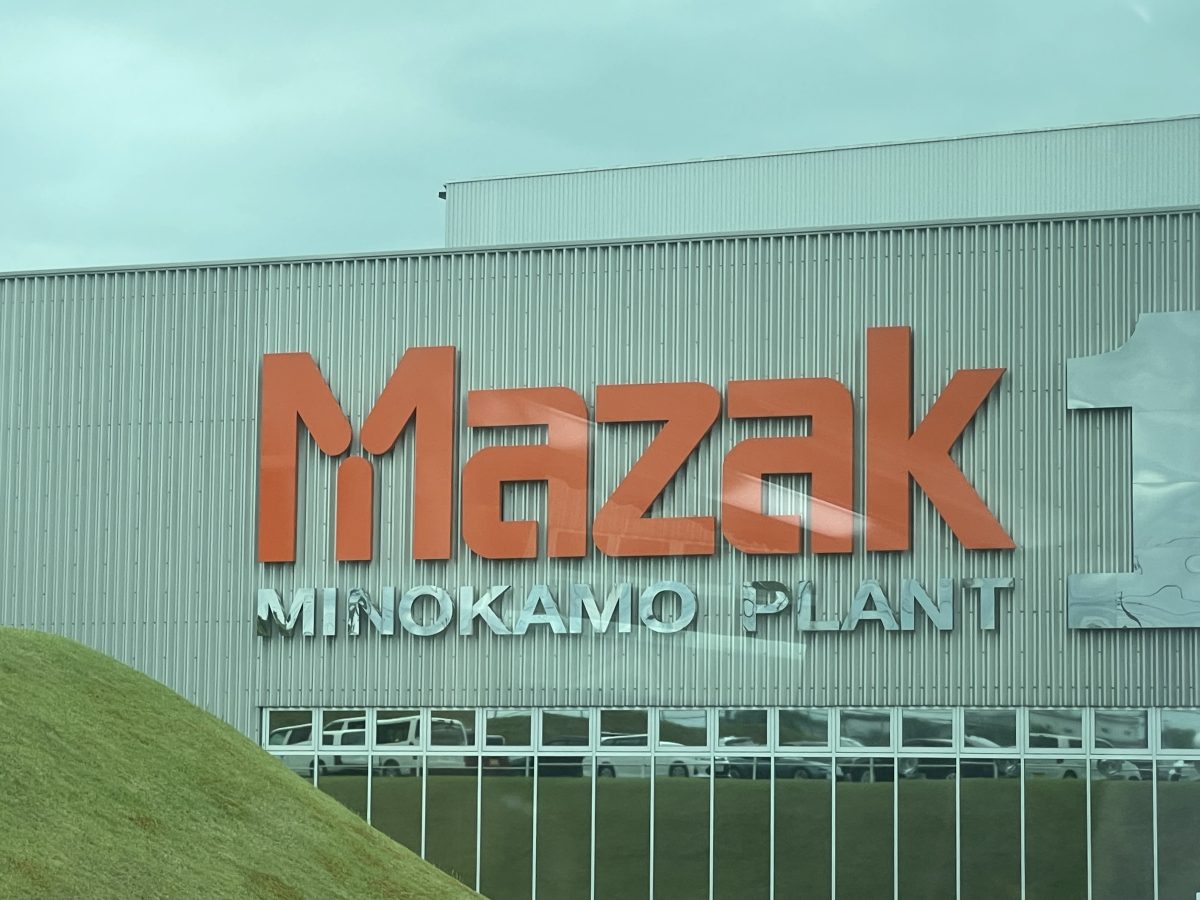
Japan's Yamazaki Mazak, a leading machine-tool maker, will build a new research and development centre for ¥16 billion (about US$110 million). It will gather research, design and prototyping — until now scattered across the site — into one place, aiming to speed up development. The significance lies in what the investment is meant to change: not a new plant, but an overhaul of its development set-up. The move reflects how a new basis of competition — the speed of development and the ability to handle software and AI — is being added to the precision of the machine itself.
Key points
- On 4 September 2026, Yamazaki Mazak announced it will open a new R&D centre, the "Mazak Innovation Hub", in August 2027. The investment is about ¥16 billion (US$110 million).
- It will be built on land next to the headquarters in Oguchi, Aichi Prefecture: a four-storey building with a site area of about 14,488 square metres and a total floor area of about 18,200 square metres.
- Research, design and prototyping functions — currently scattered across the headquarters site — will be consolidated to shorten development lead time (the period from start to completion).
- The hub is positioned as a global development base that will also handle development and prototyping for models produced at overseas plants. Space freed by the move will be converted to production use, to raise output and productivity.
- The company plans open innovation with external research institutes, suppliers and start-ups through a joint-development area, including work on physical AI. Whether this marks a shift away from a go-it-alone approach is the point to watch.
¥16 billion beside the headquarters, three functions under one roof
On 4 September 2026, Yamazaki Mazak announced it will open a new R&D centre, the "Mazak Innovation Hub", in August 2027. The investment comes to about ¥16 billion (US$110 million).
The centre will be built on land adjacent to the headquarters in Oguchi, Aichi Prefecture — a four-storey building with a site area of about 14,488 square metres and a total floor area of about 18,200 square metres. Research, design and prototyping functions that had been scattered across the headquarters site will be brought together in this single building.
For a major machine-tool maker to put ¥16 billion into research and development alone — rather than into production equipment — is significant. Mazak is one of the world's leading makers of lathes, machining centres, multi-tasking machines (which perform several processes in a single set-up) and five-axis machines, and this is an investment that re-anchors the source of its competitiveness in development.
Why now — from the precision of the machine to the speed of development
For a long time, competition in machine tools was decided by overall machine performance: machining accuracy, rigidity, speed and durability. Japan's strength in the world rests on the depth of that craftsmanship.
But competitive priorities are shifting. In recent machine tools, automation combined with AI and robots, the use of operating data, and system software have become increasingly important. On top of the precision of the machine alone, the software that runs it intelligently — and the development capacity to bring out new models quickly as the market shifts — has come to decide the outcome.
As later entrants close in on price and mass-production capacity, holding an edge in the high-value areas where Mazak is strong, such as multi-tasking and five-axis machines, requires widening the gap through the speed of new models and software capability, on top of the quality of the machine. This investment can be read as a direct bet on that shift in competitive priorities.
What consolidation changes — connecting a fragmented process
The core of the new centre is that it physically brings together the three stages of development: research, design and prototyping.
When these functions are split across a site, time is lost to hand-offs and coordination across departments each time work moves from research to design, and from design to prototyping. Round trips also arise, returning issues found in prototyping (the stage of building and verifying a real machine before mass production) back to design. The more fragmented the process, the more this back-and-forth pushes up lead time.
Bringing the three stages into the same building, with a layout that encourages interaction between teams and the sharing of technical expertise, can shorten that back-and-forth. Open offices and cross-departmental meeting areas are likewise seen as aimed at accelerating problem-solving through spontaneous exchanges. In short, the company is using a building — hardware — to try to speed up the organisational process of development itself.
That said, the company has not set a specific numerical target for how much it will cut lead time. Even with functions consolidated, the effect is limited if departmental walls and slow decision-making remain. Whether the physical consolidation can be turned into real development speed will be tested by results once the centre is running.
A global development hub, and the reuse of vacated floor space
The new centre has a second role: a core of global development that will also handle development and prototyping for models produced at overseas plants.
Mazak has production bases in the United States, the UK, Singapore and China, among others. Concentrating the development of models sold in each region at this hub makes it easier to keep common design foundations and quality standards while responding faster to regional requirements. A form of international division of labour comes into focus — development concentrated, production distributed across regions.
The relocation will also free existing space at the headquarters site once development functions move to the new centre. The company has said it will convert that space to production use, to raise output and productivity. The R&D investment thus takes a two-stage form that ends up lifting the production capacity of the headquarters plant.
Co-creation with outside partners and physical AI — a step from going it alone
At the new centre, the company will set up a joint-development area with external research institutes, suppliers and start-ups, and will also carry out joint verification using real machines. Research themes are said to include physical AI — AI embedded in machines that perceive and act in the physical world.
Fields such as AI, software and sensors have become hard for a machine maker to stay at the leading edge of on its own. Taking in outside technology on real machines, and making a permanent in-house venue to verify it together, is an attempt to open parts of its development process to external partners. Yet how far joint development reaches results demonstrated on actual equipment and commercialisation, and how intellectual property and data will be handled, is not clear. Whether this genuinely turns into a shift from going it alone to open development depends on how it is run from here.
Fittingly, moves are mounting in the machine-tool and robot industries to collaborate on technologies that are difficult for any single company to develop alone — three major industrial-robot makers, for instance, are joining forces to build a shared data foundation for physical AI. Mazak's new centre is best seen within that current.
What to watch — the metrics that will measure the ¥16 billion
Whether the investment turns into competitiveness will be measured not by the building's completion but by measurable results after it starts operating. The indicators to watch are concrete.
First, the rate of reduction in development lead time — how much the period from start to completion is cut against the current level. As the company has not disclosed the scale of reduction, the results shown after start-up will be the first basis for judgement.
Second, the number of new products originating from the hub, and the time it takes to roll them out to models produced at overseas plants. Whether it functions as a global development hub will show in these two.
Third, the number of joint developments with outside partners that reach commercialisation. This will show whether co-creation, including physical AI, becomes a real-machine result rather than a slogan.
The centre is scheduled to open in August 2027. How these indicators move in the years that follow is what the ¥16 billion will be judged on. Not the size of the floor area, but the products that emerge from it and the speed of the development cycle, will ultimately determine the return on the investment.