Can Machines Replace Skilled Mould Polishing? Japan's Makino Launches the V600 as Its Core Mould-Machining Model
Japan's Makino Milling Machine has launched the V600, a vertical machining centre that replaces the V56 as the company's core mould-machining model. According to press reports, it can bring everything from machining steel stock through final polishing, once done by hand by…
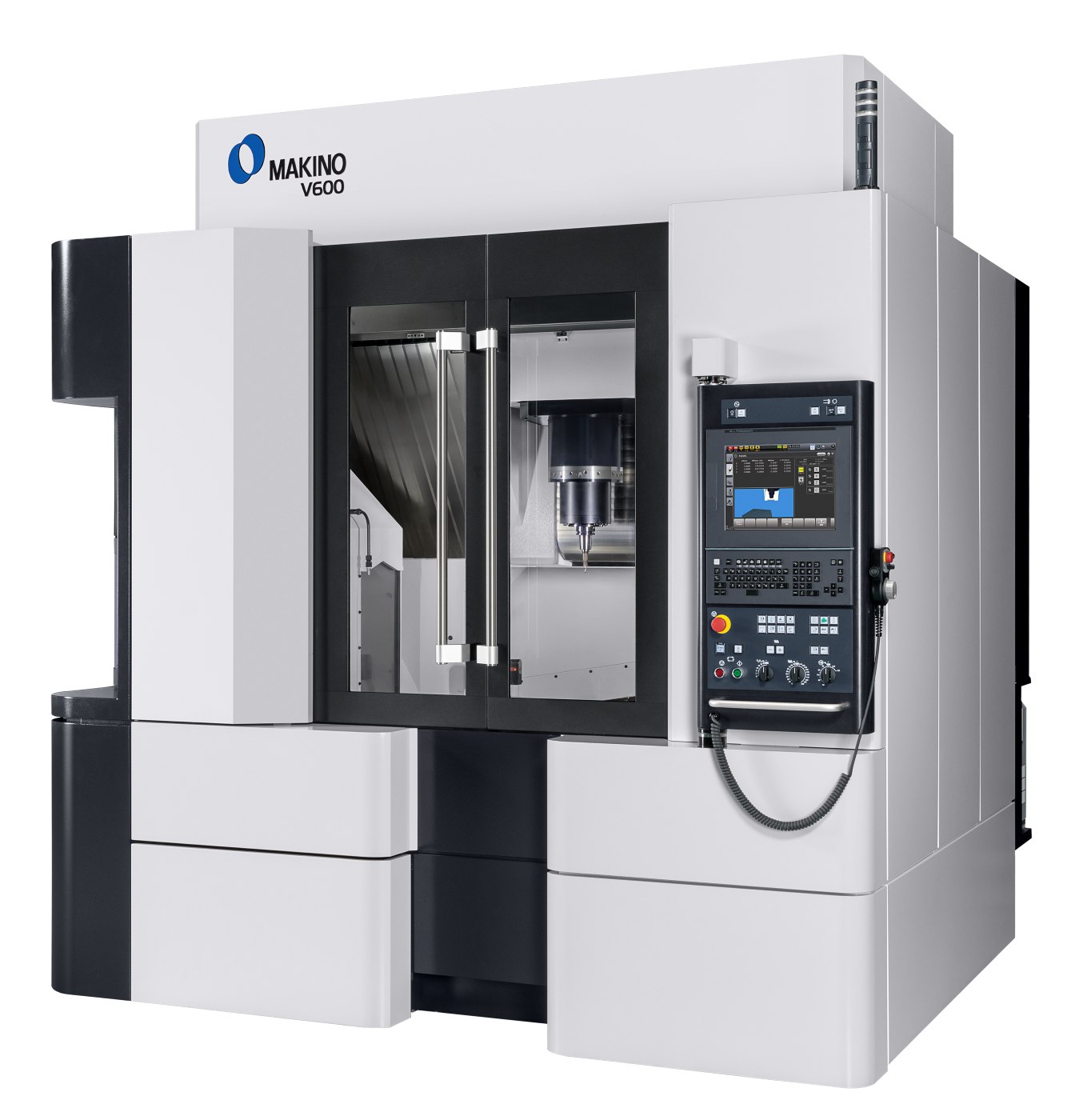
Japan's Makino Milling Machine has launched the V600, a vertical machining centre that replaces the V56 as the company's core mould-machining model. According to press reports, it can bring everything from machining steel stock through final polishing, once done by hand by skilled workers, into a single machine. Makino's official materials, however, give no figure for hand-polishing time saved or for surface roughness. The V600's ability to handle larger moulds is clear, but whether it can replace polishing will come down to validation in production environments.
Key points
- What: The vertical machining centre "V600" went on sale on 23 October 2026. It renews the "V56" series, of which about 3,000 units have been sold, and was first shown at JIMTOF2026
- What changes: Maximum load capacity rises from 800 kilograms to 1,200 kilograms and the machining area is 38% larger, while the footprint is 23% smaller
- Technical focus: Measures against heat generation and temperature change, so that accuracy holds up during long runs
- Worth noting: Press reports say the machine can carry out the final polishing as well. Makino's announcement stresses improved surface quality but does not mention polishing
- The open question: How much hand-polishing time the machine actually cuts on the same mould
About 3,000 units sold: Makino renews its main series for larger moulds
On 23 October 2026, Makino Milling Machine began selling the vertical machining centre "V600". It renews the "V56" series, which has sold about 3,000 units since launch, and was shown for the first time at JIMTOF2026, the Japan International Machine Tool Fair, held at Tokyo Big Sight from 26 to 31 October. Makino is reported to be aiming to sell 200 units a year, mainly to makers of moulds for automotive parts.
The V600 appears to be less a move into a new market than a way of carrying the V56 series' customer base into the next generation. However, neither the V56's sales period nor its recent annual sales volume has been given, so it is not possible to judge how demanding the 200-unit annual target is.
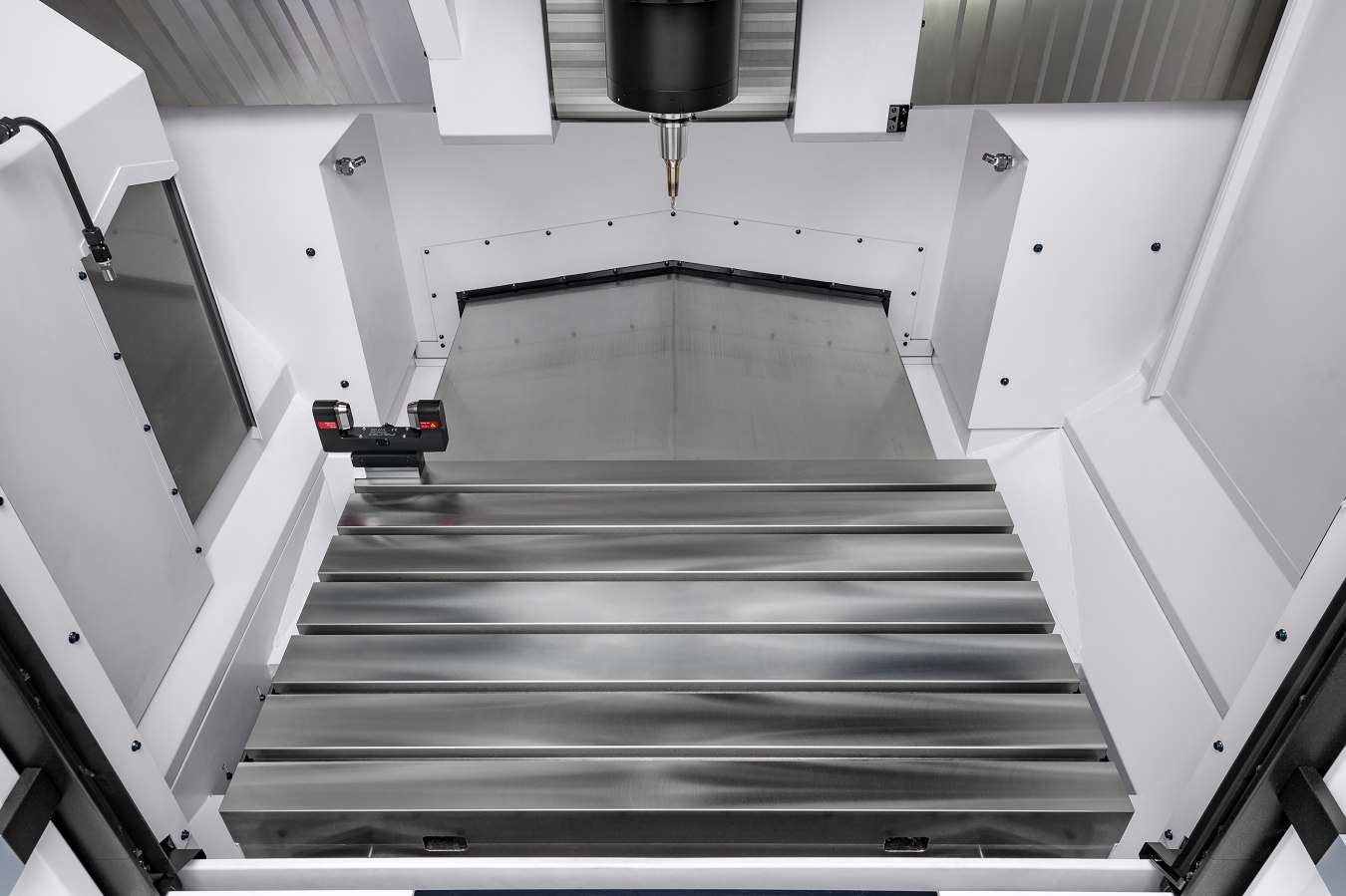
The most visible change is size. Maximum load capacity rises by half, from 800 kilograms on the predecessor "V56i" to 1,200 kilograms, and the machining area is 38% larger. Axis travel is 1,050 × 650 × 450 millimetres, and the maximum workpiece is 1,050 millimetres wide, 770 millimetres deep and 450 millimetres high.
Makino has cut the footprint by 23% while widening the machining range. According to the company, the tool magazine now extends towards the rear of the machine, so machine width stays at 2.7 metres whether the tool magazine holds the standard 20 tools or 60 tools.
Larger workpieces and consistent finishing: the two demands behind the V600
Makino's launch announcement says that workpieces in mould machining are growing larger and more complex, and that demand is rising for consistent finishing that does not depend on individual operators. Against this background, it says, stable machining quality and automation and reduced labour requirements are increasingly important.
On larger moulds, a Makino sales representative explains that as automakers reduce part counts and consolidate components, the moulds that make those parts also tend to grow larger. The higher load capacity is aimed at this demand.
The final stage of mould making is polishing. A mould's surface is transferred to the product's surface, so tool marks are removed to finish it. According to press reports, the V600's higher machining accuracy lets the machine carry out the polishing that skilled technicians have done by hand, bringing everything from cutting the steel to the final polish into one machine. At JIMTOF, this is said to be leading to talks with customers who want to cut the effort spent on polishing.
However, the word "polishing" appears neither in Makino's launch announcement nor on its product page. What the company officially cites is "high accuracy and high surface quality", so the polishing claim rests on press reports, not Makino's official materials.
Thermal displacement and surface streaks addressed; contribution to less polishing is unverified
The first feature Makino cites is stable machining accuracy during long runs, despite ambient temperature changes. It has revised its cooling method to suppress accuracy changes caused by the machine's own heat, and "eSTABILIZER" compensates for changes in the machine's geometry caused by temperature changes in the installation environment. The special-specification "Bed/Column Stabiliser" puts a dedicated fluid inside the castings to suppress thermal displacement.
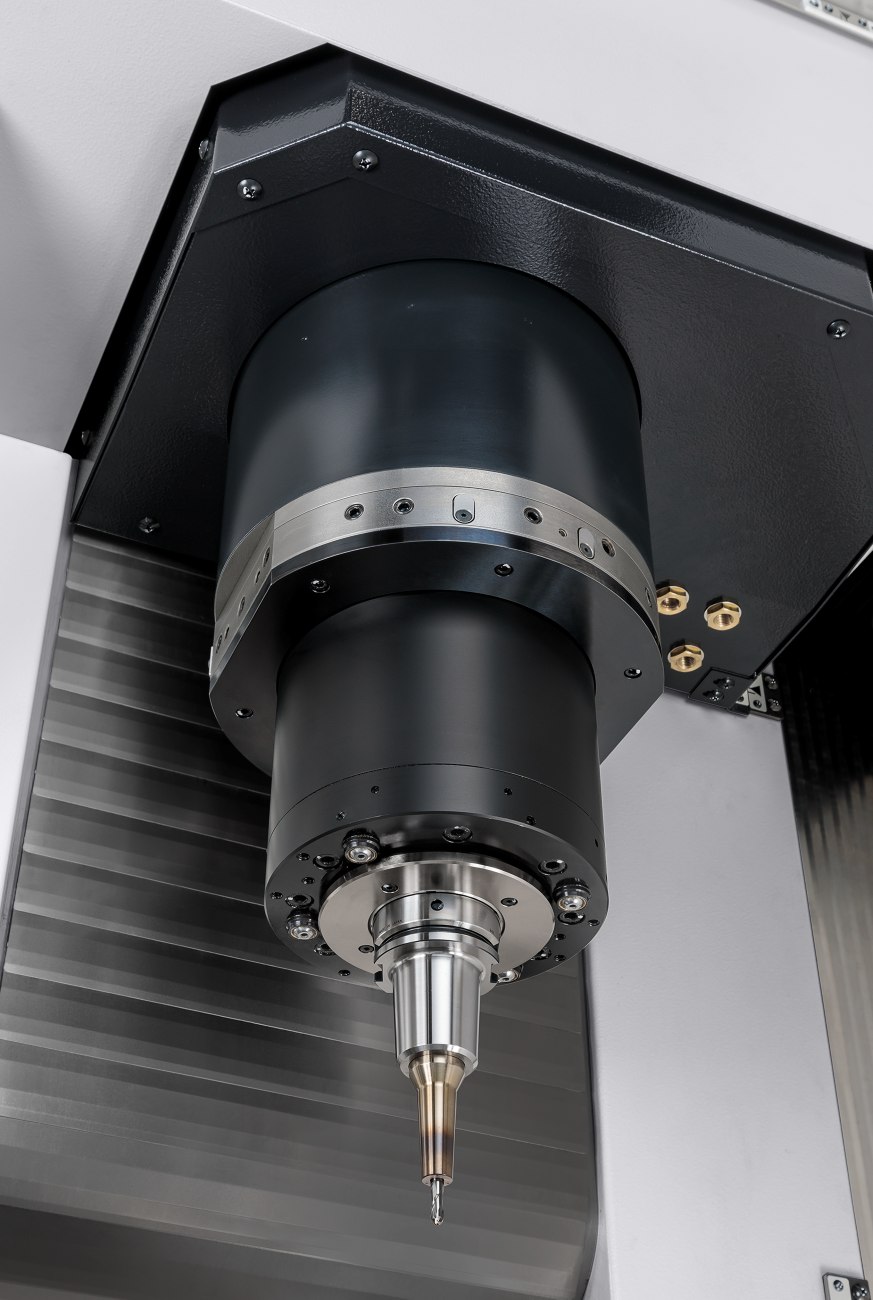
According to the company, the new 20,000 rpm spindle is lighter and smaller while keeping the same output and torque as before, and generates far less heat. The power consumption of the unit that controls spindle and feed-axis temperature falls by 81%, from 8.3 kilowatts to 1.6 kilowatts.
On the machined surface, Makino says improvements to the feed-axis mechanism and control reduce the streaks that appear on the surface when an axis reverses, compared with the previous model. The new "Super GI.6 control" allows finer settings of the machining mode that balances accuracy against run time.
At JIMTOF, a sample resin mould for a humanoid (human-shaped robot) exterior panel, machined on the V600, was shown. Reports say the demonstration deliberately used 13 finishing tools, with a 2.3-micrometre level difference between areas cut by different tools and form accuracy of 5 micrometres or better. The function that measures tool shape and compensates for error was used. These figures indicate the continuity between passes made with different tools, however, and do not directly indicate surface roughness or hand-polishing time.
Mould finishing often runs for a long time, so suppressing thermal displacement could contribute to less hand polishing. This is an inference, not something Makino has stated. How much each of the thermal measures, feed-axis control and tool-error compensation reduces hand polishing is not shown by the available information.
Before installation: confirm size and special specifications
The V600 appears to be a candidate for sites handling moulds up to 1,050 × 770 × 450 millimetres and 1,200 kilograms, where variation in finish across product types, or changes in accuracy during long runs, are problems.
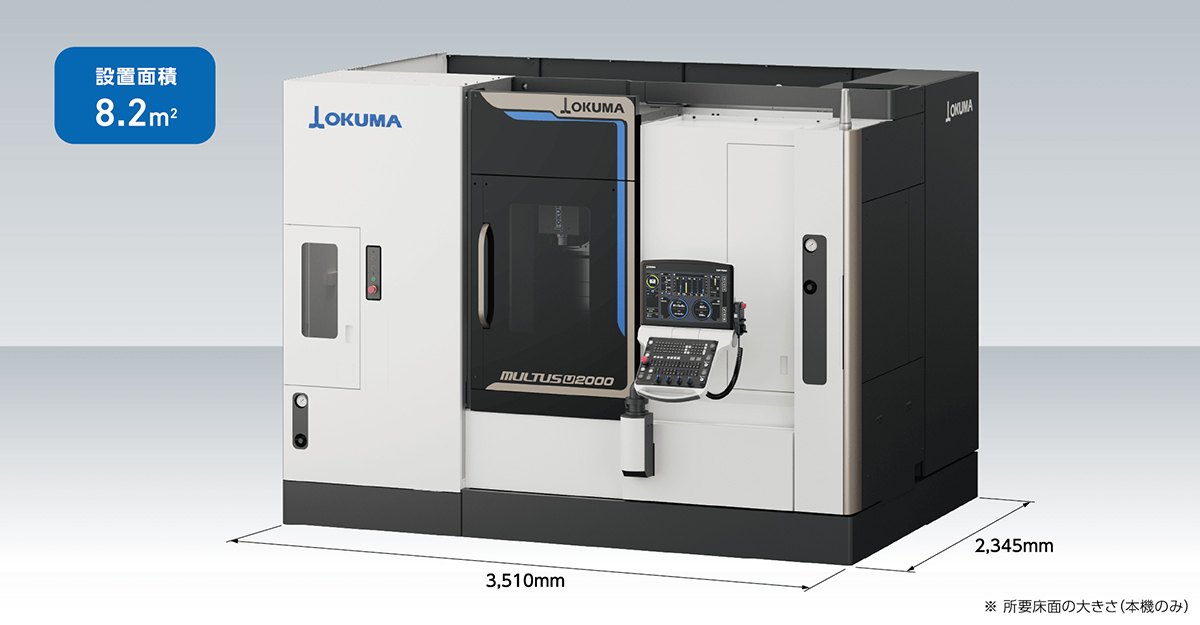
The machine's floor space is 3,760 × 4,380 millimetres (about 16.5 square metres), its height is 2,925 millimetres and its mass is 12,400 kilograms. The 23% smaller footprint is a comparison with the previous model, so the delivery route and floor load capacity need to be checked separately.
A fully automated setup requires more than the standard specification. The robot shutter is a special specification, and coolant capacity rises from 430 litres to 580 litres only if the optional lift-up chip conveyor is chosen. Estimating the benefit of automation requires looking at the configuration, including the specifications needed, and its price. No price appears in the launch announcement and product page.
After installation, the figure to measure is hand-polishing time on the same mould
In Japan's mould industry, where it is hard to compete with Chinese and South Korean makers on price, there is a growing move to show quality in numbers. In a 2026 industry survey of 173 responding companies, measuring instruments ranked ahead of machine tools both for planned and completed installations. Within the same trend, manufacturers are also asking how much manual work can be eliminated.
Neither the launch announcement nor the product page gives figures for the reduction in hand polishing, attainable surface roughness, applicability to mirror finishes and deep shapes, or machining time when accuracy takes priority.
The figure to watch is not unit sales but a before-and-after comparison on the same mould. Until hand-polishing time, surface roughness, shape accuracy and total machining time are shown, the V600 is better positioned not as "a machine that has replaced polishing" but as "a successor to the V56 that may reduce hand finishing".